
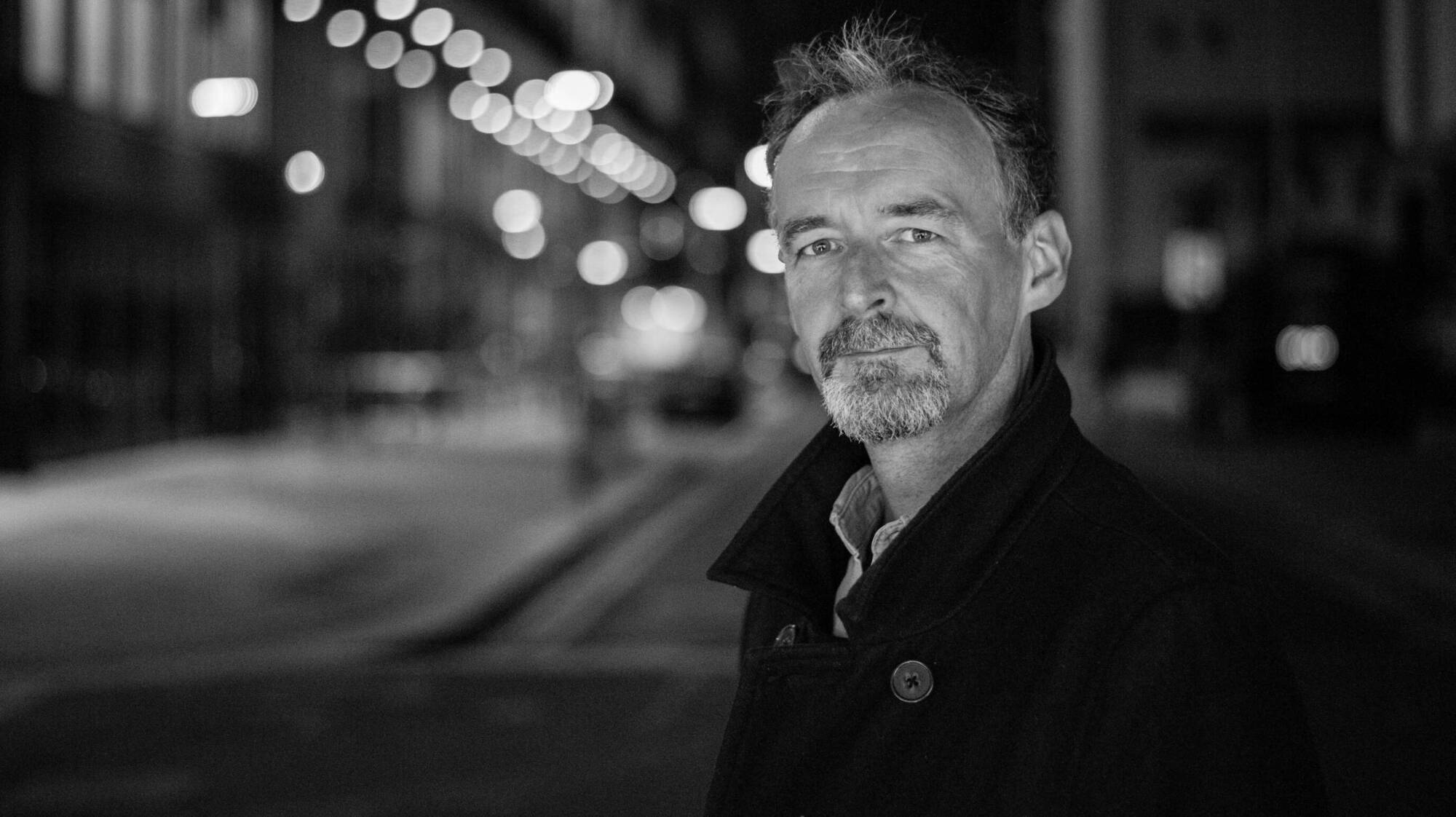
Culture That Made Me: Clonakilty guitarist Bill Shanley picks his touchstonesMemories of Noel Redding in West Cork, and playing with Ray Davies at the London Olympics closing ceremony feature among Shanley’s selections Sat, 05 Sep, 2026 – 21:00Richard Fitzpatrick
Bill Shanley, 54, grew up in Clonakilty, Co Cork. In 1992, he was a guitarist on the iconic A Woman’s Heart album, an early collaboration from many with international artists, as he has toured and contributed to albums with Ray Davies, Gilbert O’Sullivan, Sinéad O’Connor, amongst others.
Memorable gigs include playing with Davies at the closing ceremony of the London Olympics in 2012. He will perform at the Clonakilty International Guitar Festival, September 16-20. See: clonguitarfest.com
Shanley’s Bar
I grew up in the school of music in Shanley’s Bar in Clonakilty. I started playing there as a nine-year-old in the early ’80s. My father was a great musician. He was a piano player, a great session man. The beauty of that was that I was amongst musicians. There was young Noel Redding. There were always visiting musicians that became lifelong friends like Paul Brady or Eric Bell. I came of age there. I was set up to move on in a life of music.
Noel Redding
Noel Redding and his partner, Carol, started finding their feet again in Clonakilty in terms of going out and doing gigs around the same time that I started playing. Noel took me on as a student for about a year. He had never taught music. In his own way, he gave me great lessons. It would be – learn a song, learn a rock’n’roll [riff]. He’d draw pictures, beautiful artwork. He was an art student. I still have his notebook.
What Noel brought to Clonakilty was an eccentricity, a colour. Locals recount the day he arrived in the early ’70s. He came in his big yellow 3-litre Ford Capri. He was probably dressed in tie-dye colours. He came as he was and he shook it up. Bands used to follow over, be it Manfred Mann or his old buddies from Status Quo. He had a big house; he had “the rockstar mansion”, so people came and hung out and played.
Shanley’s was his regular haunt in the early ’80s up to maybe ’87. He had this reputation. People knew him because of his association with Jimi Hendrix, the power trio, but he didn’t hold back from getting stuck into the local town. He was a great community man and a brilliant musician.
Eric Bell
I went to see and meet Eric Bell recently. He played in Dublin. It was Philip Lynott’s anniversary. He did a gig in Whelan’s. I went down. I said hello. It was an amazing gig. You’d forget how good he is. Eric comes from that era where his contemporaries were people like Jimi Hendrix and Eric Clapton. He still brings that high level of playing. He played The Rocker, the big Thin Lizzy song. As a kid, I remember him teaching me that note for note in the kitchen of our house. Amazing.
The Godfather: Part II
The Godfather: Part II is the coming together of a great story, great casting. It’s so beautifully shot. Every scene is a classic, every nuance is just perfect. As Al Pacino’s character is getting more involved in taking over the family mafia business, you can see him getting more distant, colder, less affectionate as a character. He dismisses his family. Kay, his wife, wants to leave him because she can’t handle it. She doesn’t come from that background. The development of that one character in the movie is so good. It’s a masterpiece.
Django Reinhardt
Eric Bell sent me an album in the mid ’80s. He was living in London. I still have it here in my studio. He posted over a cassette of Django Reinhardt and Stephane Grappelli, who was his sparring partner, the great fiddle player. This was an album from way back, from 1935. I’ve listened to it a thousand times. I listen to it for the beauty and how pleasant it is. Django Reinhardt was a gypsy. His caravan as a kid went on fire. He spent a year in hospital. He came out with two fingers that he could play guitar with, so he created this left-hand technique. He made great music.
Paul Brady
Paul Brady’s Hard Station is a great Irish rock album. It came out in 1981. I came to it late. It was Paul’s first time delving into his own songs. When I listen to the album, it conjures up those pictures of the early 1980s, which were tougher times. There’s emigration. He talks about less savoury characters in Dublin, robbing cars, this or that. Crazy Dreams, Hard Station, great songs. It’s a classic album – the musicianship on it, Paul’s production, his guitar playing, his delivery. It’s a thing of beauty.
Ray Davies
I was a real fan of ’60s music. People said, “Are you a Beatles or Stones fan?” I would say, “I’m a Kinks fan.” Ray Davies is incredibly prolific. I’ve seen his process up close. I was in a dressing room with him once. We were in Canada doing a festival. We were going on stage in about an hour. He was over at a desk writing a lyric. He was putting together a show that involved a choir. He was shooting off the cuff, putting down lyric ideas. He’s so good at his craft that he instinctively gets it right firsthand. There isn’t much editing. He’s totally on it as a lyricist, and as a music producer. The thing about Ray is that as well as writing all the Kinks music, he also produced it. He didn’t bring in some big time American producer. He didn’t make it easy on himself. Amazing.
London Olympics
The Olympics was all kept under wraps, as to who would be performing. I was with my family down in West Cork, on holidays. We [Ray Davies + Friends] had come back from an American and an Asian tour. I got to Clonakilty. Then I headed over for a day to Dagenham, London to rehearse. All under wraps. The show was on a Sunday, the closing ceremony. We put on a gig in Shanley’s Bar on the Saturday night because there was no point in sitting around thinking about what was happening too much. Next morning, I flew to London. The show was spectacular – the magnitude of it.
Being involved in the Olympics, what I noticed was on the day – every band was there, from Pink Floyd and The Who to Ed Sheeran – everyone was humble because no one band was bigger than the Olympics. Everyone was just glad to be there. From Ray’s point of view, we sang Waterloo Sunset, the quintessential London song. So here we were in Ray’s lifetime doing his song at London 2012. These things won’t come around again. It came off well. I was delighted to be part of it. The next day, I flew back in the morning. I was down in Inchydoney with my family enjoying the beach, thinking, did I just do that?
East of Eden
John Steinbeck’s East of Eden is a brilliant story. It’s fabulously written. When I first read it, it seemed a very modern, hip book even though it was written in an era going back over a century ago in California. It’s a great story about intertwining families and hardships, and how their lives overlap. The imagery is very vivid. It’s a classic.
Dónal Lunny
I loved the recent Dónal Lunny documentary, In Time, on RTÉ. It was written and directed by Nuala O’Connor. It’s a very enjoyable watch, a great portrayal of Dónal Lunny. It puts across his immense contribution to the music world.
Read More
Tom Dunne: I’ve been saying it for years but you have to see the Fontaines
Jon Ronson: Modern men and their troubles adjusting to a changing world
x
185th Anniversary Offer
Six months of digital access for €18.50
Already a subscriber? Sign in
No obligation. Ts&Cs apply.
More in this section
Seamus O’Rourke: ‘These bachelors couldn’t understand why women weren’t more into them’
Mr Moonlight: RTÉ commissions drama based on one of Ireland’s longest-running murder trials
Cork venue reveals lineup for jazz festival weekend
#music