
Sweden’s election will go down to the wire, the tightest in its history, and one that will hinge on the complete counting in coming days of late-arriving ballots and votes from overseas.
At the beginning of the night, exit polls indicated the center-left bloc was on course to reclaim power. By morning, its lead stood at three seats, still leaving wide open a scenario in which the governing coalition nudges ahead. A similar development occurred in 2022, only this time the far-right long shut out would join a government for the first time.
The opposition forces headed by Social Democrat Magdalena Andersson command 176 seats versus 173 for the ruling bloc led by Prime Minister Ulf Kristersson when 94% of votes had been counted. All party leaders said the result was too close to call on election night. Turnout was also down from the last election, at about 80%.
The new deadline to look out for is Wednesday, when officials will count ballots that didn’t reach polling stations in time for election day. The tally consists mainly of advance votes cast in other municipalities over the weekend, as well as late-arriving ballots from Swedes living abroad.
The count can be extended to Thursday if necessary, according to the Swedish Election Authority, leaving the country of almost 11 million people and the Nordic’s biggest economy, home to Volvo AB and H&M AB, in an unprecedented state of uncertainty.
The late tally can be significant. In 2022, about 218,000 valid votes were added to the preliminary Riksdag result after election night, according to official data.
“So far, the market seems to be taking the election results in stride, even though the krona has weakened by barely one öre against the euro,” economists at lender SEB AB said in a client note.
Four years ago, the difference between the blocs ended up being around 50,000 votes, and back then, exit polls also failed to correctly predict the winner who turned out to be Kristersson.
The risk for Social Democrats, hoping to stage a comeback, is that Swedish expats tend to tack right and therefore their votes have the potential to tip the scales against the left-leaning group. In Peru, it was the diaspora that eventually gave conservative Keiko Fujimori the edge in a razor-thin election.
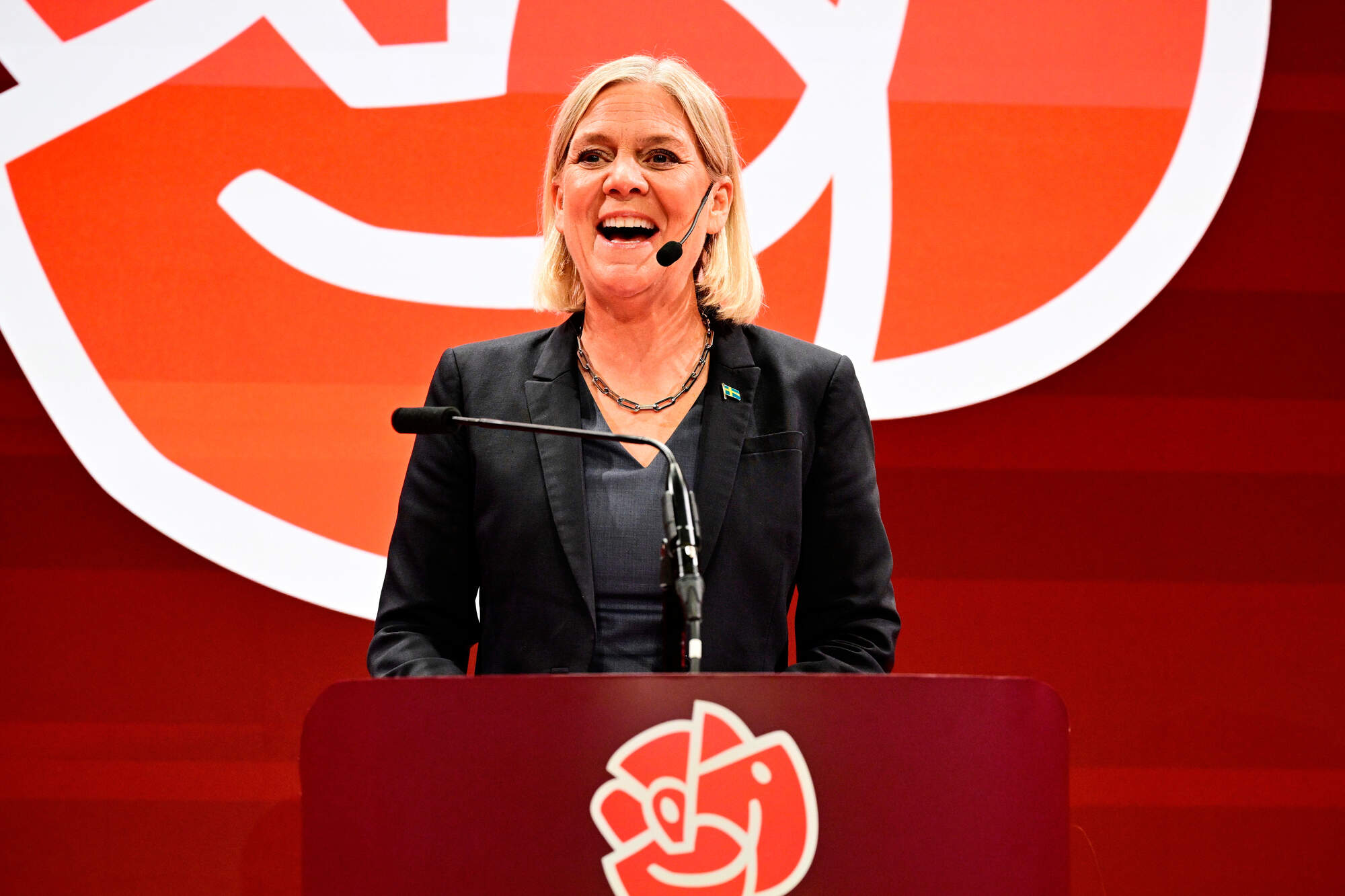
Speaking at her party’s election-night celebration, Andersson struck a note of cautious optimism.
“Now we will wait for the final election result,” she told supporters at the Stockholm Waterfront conference center. “Every vote that has been cast must be counted.”
She added: “It appears that it will be very close, and that means that regardless of what the final election result turns out to be, there is reason to seek a new spirit of cooperation in Swedish politics.”
This was not the speech she was hoping to give. At the start of the evening Benny Andersson of ABBA fame showed up at the Social Democrats’ headquarters to bust out a version of Mamma Mia, adapting the lyrics to her name.
Even if she prevails, this is set to be the worst result for the Social Democrats in more than a century. And even if the center-right bloc emerges on top, and Jimmie Åkesson succeeds in his goal of joining government, his Sweden Democrats suffered a drop in support and is no longer the country’s second-biggest party.
The political landscape, if anything, has become more fragmented and an election that was meant to be clarifying, a de-facto referendum on the far right, has revealed a country that is deeply split along increasingly ideological lines.
Indeed, any bloc that emerges that is able to form a government, will do so with the narrowest of margins.
Any talks will be complicated and can take as long as months, given it was gains from the smaller parties on both sides of the political spectrum that buoyed their blocs, and those groups will exact their demands in the negotiations.
A victory for Kristersson, who successfully slashed crime rates during his tenure, would be a vindication of his gamble to break a long-standing taboo that had kept the rising nationalist party with neo-Nazi roots at arm’s length.
It would usher a new era in Swedish politics, one where progressive politics and a welcoming attitude to refugees had long been the norm. By giving Åkesson a formal seat at the table, Swedes can expect him to have greater say on topics ranging from immigration to foreign policy.
–With assistance from Charlie Duxbury, Jonas Ekblom, Rafaela Lindeberg and Anand Katakam.