
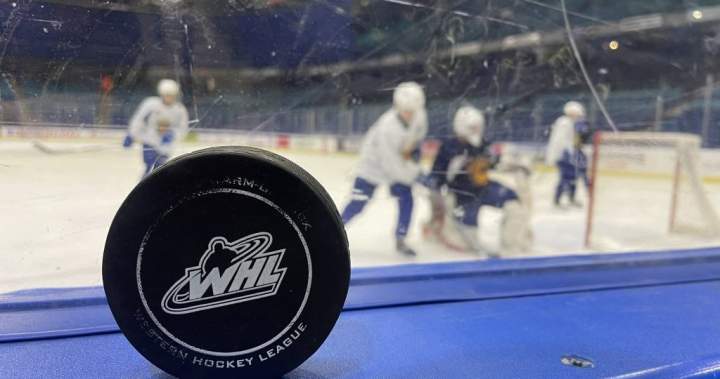
The Western Hockey League (WHL) is using the preseason to test a new rule that could change the way three-on-three overtime is played.
The league is experimenting with a “no return” rule, which prevents teams from intentionally taking the puck back across the blue line once they have entered the offensive zone during overtime.
If a team does bring the puck back into the neutral zone, play is stopped. The ensuing faceoff is moved into the offending team’s defensive zone and that team is not allowed to make a line change.
The trial is designed to cut down on teams repeatedly leaving the offensive zone to regroup and maintain possession, instead encouraging players to attack once they cross the blue line, speeding up the game.
“Taking it back in overtime definitely has its pluses in getting a chance and stuff like that but also at some points one team may not touch the puck in a whole overtime because a team just keeps taking it back out of the zone so it would definitely speed things up and make it a lot more interesting,” said defenceman Dayton Deschamps.
Story continues below advertisement
“It makes you play in the o-zone, and I feel like sometimes in overtime you can get a little safe. I think with that rule you gotta try and make a move,” said defenceman Matthew Paranych.
Get daily National news
Get daily Canada news delivered to your inbox so you’ll never miss the day’s top stories.
By providing your email address, you have read and agree to Global News’ Terms and Conditions and Privacy Policy.
And while many players with the Regina Pats like the “no return” rule or at least find it interesting, Regina Pats general manager and former player Dale Derkatch thinks differently.
“What I find is there are more whistles now. The play stops and then you have to take the puck from one end all the way down to the other end set up for a face off so I find it kind of slower,” said Derkatch.
One potential challenge with the rule is determining what qualifies as deliberately bringing the puck back across the blue line. Officials will have to make judgement calls on whether a player intentionally retreats into the neutral zone or if it was forced back by pressure, a deflection, hit or loose puck.
- League-leading Als set to host surging Lions
- Snowbirds to make final flight at Grey Cup in Calgary
- Prime unveils ‘Wednesday Night Hockey’ schedule
- NBA awaits Raptors, Clippers to submit Kawhi trade
-
Tiger Woods changes his plea in Florida DUI case
-
‘Lake Ontario, actually’: Adam van Koeverden responds to Trump’s ‘Lake America’ name change
-
Single game tickets for Saddledome farewell season go on sale
-
Messi announces retirement from international soccer
“I talked to the refs there and they’re still trying to get the hang of it but it’s a new rule and we just gotta get used to it and yeah it’s a difficult one to try and follow,” said winger Connor Bear.
“It would be hard to kind of dictate what’s bringing the puck across the blue line and what’s not. I think you know maybe if you get hit the refs deems it as you took it over the blue line. If you had possession of the puck it could be a faceoff in your zone and a no change if your tired as well,” added Paranych.
Story continues below advertisement
Throughout the preseason, the WHL will evaluate the impact of the rule, including its effect on scoring opportunities, shots and the number of games decided in overtime rather than a shootout.
After the trial, league general managers are expected to vote on whether the rule should be adopted moving forward.