
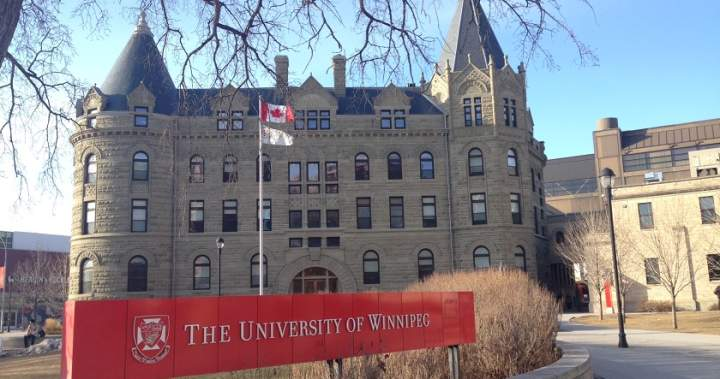
As some schools worry about artificial intelligence in the classroom, one in Winnipeg is making it mandatory.
This year at the University of Winnipeg Collegiate — the high school located on U of W’s campus — all Grade 9 and 10 students will have to take a two-hour AI literacy module in their social studies class. Associate dean Cameron Cerasani says the school wants students to think about how they use it, not have it think for them.
“Critical thinking is kind of the foundation: what is AI, what are the limitations, what does it do? We talk about privacy,” Cerasani says. “But we just want them to continue to think about it, rather than just use it blindly.”
The module will go through what AI is and isn’t capable of, how to use it effectively, as well as issues around privacy and misinformation.
Story continues below advertisement
Cerasani says many students are already using it in their schoolwork in various ways, like brainstorming for assignments. But some, he says, are more hesitant.
Get daily National news
Get daily Canada news delivered to your inbox so you’ll never miss the day’s top stories.
By providing your email address, you have read and agree to Global News’ Terms and Conditions and Privacy Policy.
“They think they’re going to be accused of plagiarizing, they’re gonna be accused of cheating and all this other stuff, so they’re just avoiding it,” he says. “Which, I don’t think is a good thing either, because it’s going to be out there in the world, they’re going to have to interact with it at some point.”
He hopes by teaching students about it early, they will then be able to bring those critical thinking skills into post-secondary school.
For those students who want to dive deeper, Cerasani is also teaching a Grade 10 elective on the subject. He’s expecting the material to evolve throughout the year as the AI landscape continues to evolve.
- U of T nurse practitioner student looks to break barriers in new Scarborough program
- Ontario was warned of ‘suspicious’ OSAP activity at a few career colleges: documents
- Saskatchewan MP shares vision for new northern university
- New Brunswick banning student phone use in public schools
-
Calgary schools welcome back students
-
Building lifelong healthy habits
-
NB announces policy banning student phone use in public schools
-
Canada recruits dozens of leading and emerging researchers
“Looking at current events, I’m planning on bringing in guest speakers in all different industries, saying, how is AI affecting your industry?” Cerasani says.
AI researcher Brenda Stoesz, who works with the Centre for Advancement of Teaching and Learning at the University of Manitoba, says educators and students need to be constantly asking questions about these tools.
“Building in those questions into the use of the tool. So, what’s wrong with the output, for example? How would you change this? Do you think you can rely on this information, do you need to verify it?” Stoesz says.
Story continues below advertisement
She says the important thing is learning to apply those skills to any AI.
“Technologies are always changing, so it’s not about using a particular tool but knowing how to approach tools, and learning as you go.”