
Article content
Canada’s housing problem for decades has been a lack of apartments, leading to low vacancy rates. And developers were reluctant to build, especially in provinces with rent control.
Sign In or Create an Account
or View more offersArticle content
Times have changed since the national purpose-built rental vacancy rate dipped to 1.5 per cent in 2023. In fact, a panel of real estate executives at the Canadian Apartment Investment Conference this week debated whether Canada is building almost too many units now.
Article contentWe apologize, but this video has failed to load.Try refreshing your browser, or
tap here to see other videos from our team.We apologize, but this video has failed to load.Try refreshing your browser, or
tap here to see other videos from our team.Article content
Story continues below
This advertisement has not loaded yet, but your article continues below.
Article content
“With all this new supply coming to especially Vancouver and Toronto, are we headed towards an oversupply situation?” asked Cynthia Jagger, executive vice-president of capital markets at real estate company CBRE Canada.
Article contentArticle content
Her question comes at a time of unprecedented new supply, some of it driven by a moribund condominium market that has seen developers convert proposed projects into rental towers after investors pulled out of high-rise units.
Article content
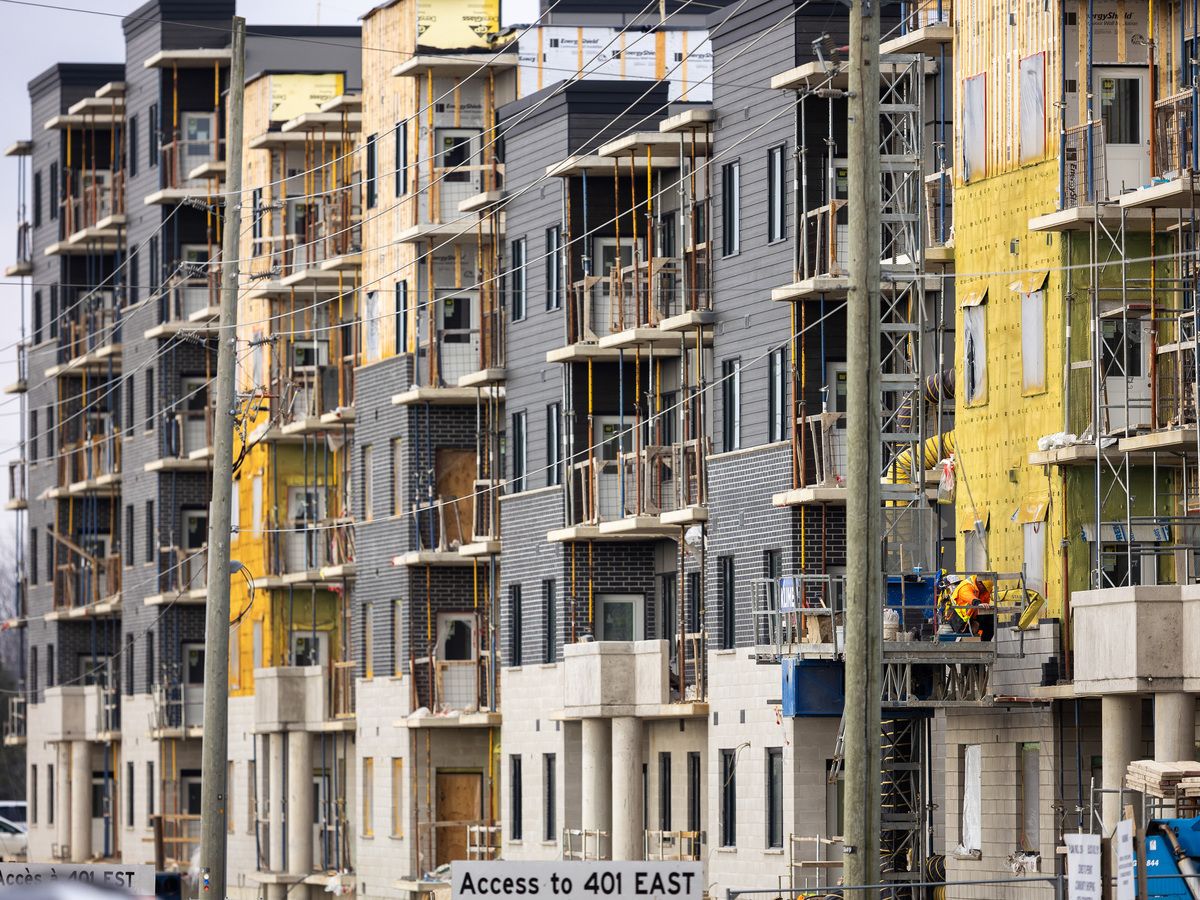
The numbers are dramatic: Canada Mortgage and Housing Corp. reports that 122,295 purpose-built new rentals broke ground in 2025. Construction has only escalated, jumping from 95,852 in 2024 and 81,134 the year before that.
Article content
A decade earlier, the country produced only 35,176 rental units in 2015, which was higher than 6,531 in 1998. CMHC stats only go back to 1990, but the 1980s are not described as a period of high rental stock, with some developers blaming tax changes for a reluctance to build.
Article content
The upside to all the recent building is that the national vacancy rate has finally started to climb, hitting 3.1 per cent for purpose-built rental apartments at the end of 2025, but CMHC still says affordability is a challenge in some markets.
Article content
Story continues below
This advertisement has not loaded yet, but your article continues below.
Article content
Rent control is like putting a lid on a boiling pot. It’s very good for noise and not very good for pressure. It will be a big mistake.
Benjamin Tal
Article content
Benjamin Tal, deputy chief economist at the Canadian Imperial Bank of Commerce, kicked off the conference with a presentation in which he assailed the province of Manitoba for revisiting rent control at a time when supply is correcting the market.
Article contentRead More
- Garry Marr: Should you buy a house in the middle of a trade war?
- Garry Marr: Here’s why using your TFSA to fund a child’s education could make sense
- Story continues belowThis advertisement has not loaded yet, but your article continues below.
Article content
“This is crazy; we have been through this game before,” said Tal. “Rent control is like putting a lid on a boiling pot. It’s very good for noise and not very good for pressure. It will be a big mistake.”
Article content
Manitoba apartments are exempt from rent control at a certain rate; the province is raising the monthly rent exemption threshold from $1,670 to $2,000 effective Jan. 1, 2027.
Article content
Average asking rents in Manitoba reached $1,643 in August, down 0.3 per cent from a year ago, according to Rentals.ca. The average in-place rate has climbed from $1,163 per month at the end of 2022 to $1,358 in the province, according to CMHC’s latest data.
Article content
“The good news is when I talk to Ontario, Quebec or B.C., nobody is talking about rent control. We are moving in the right direction on rental construction,” said Tal.
Article content
It’s a bit of a bloodbath there.
Greg Jones
Article content
The question may be whether supply will start to fall. The new norm in the sector is uncertainty as developers try to figure out what to do with their land, according to Greg Jones, president of SkyDev, a Guelph, Ont.-based real estate company in the Skyline Group of Companies.