
This section is The content in this section is supplied by Business Wire for the purposes of distributing press releases on behalf of its clients. Postmedia has not reviewed the content. by Business Wire Article content
- Report shows consumers expect mobile wallets to evolve beyond payments into integrated platforms for travel, rewards, commerce and AI-powered services
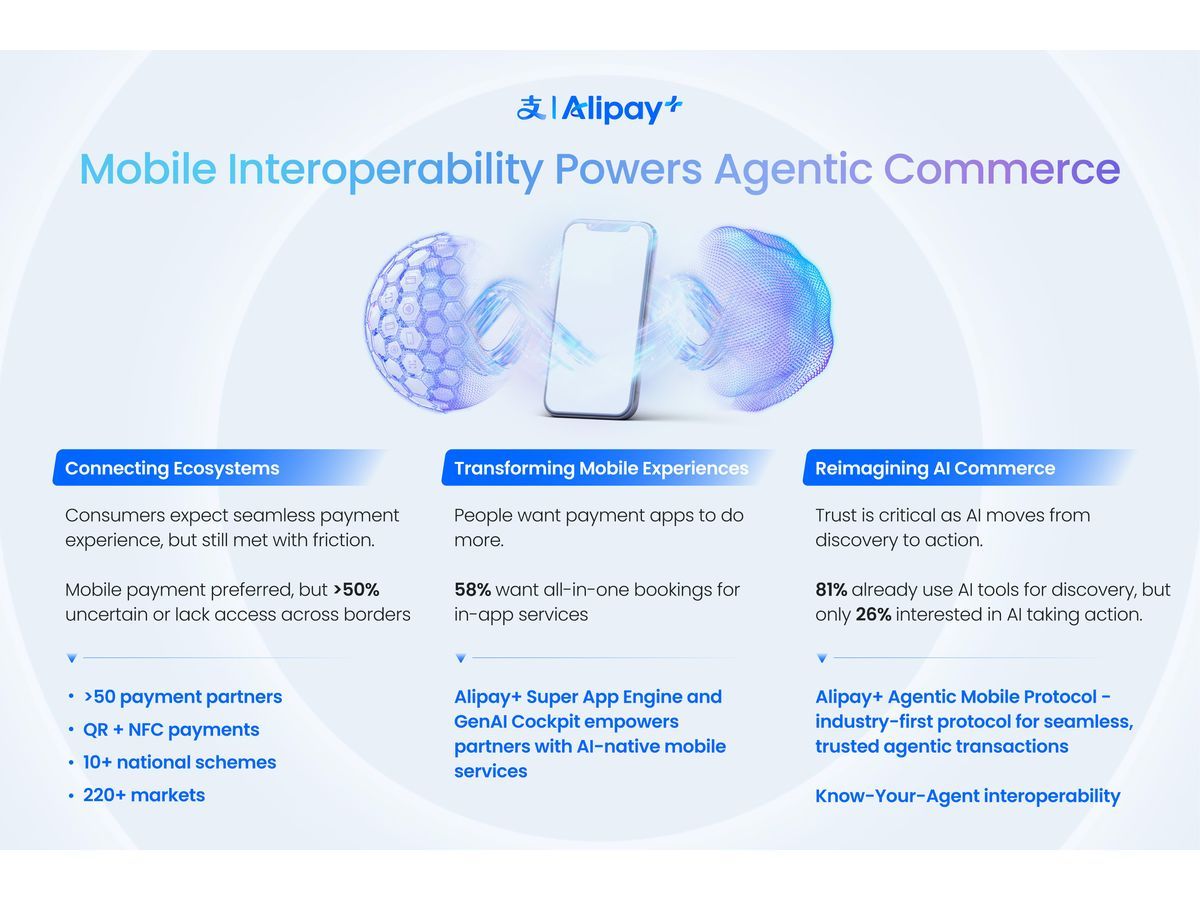
- Cross-border payments remain fragmented with more than half of consumers lacking access to preferred payment and facing uncertainty over payment acceptance
- AI adoption is accelerating across discovery and planning, but 43% express privacy concerns, and strengthening trust needed to scale AI-enabled commerce
Sign In or Create an Account
or View more offersArticle content
Story continues below
This advertisement has not loaded yet, but your article continues below.
Article content
SINGAPORE — A new report by Alipay+, the unified wallet gateway of Ant International, in partnership with S&P Global, reveals a growing “commerce digitalisation gap”, with people increasingly expecting seamless mobile payments and intelligent digital assistance, yet friction – from inconsistent payment acceptance to trust in AI – still define their experience.
Article contentWe apologize, but this video has failed to load.Try refreshing your browser, or
tap here to see other videos from our team.Article contentArticle content
The study, which surveyed 6,000 consumers across nine markets in Asia, Europe and the US on their cross-border spending habits, points to a major shift underway in global commerce — one where e-wallets, AI and interoperable digital ecosystems are becoming foundational to how consumers discover, transact and engage across borders.
Article contentKey findings:Article content
- Travel exposes gaps in global commerce infrastructure: More than half of consumers cite uncertainty around merchant acceptance (53%) or lack of access to preferred payment methods (54%), leading one in four to still carry cash as a fallback.
- Shift to hyper-local, high-frequency spending highlights need for localised payment acceptance: Food and beverage (67%) and local attractions (66%) now see the largest increase in traveller spending, with more than half of consumers (54%) spending more at local shops and eateries than malls or chain restaurants.
- Consumers want payment apps to do more: Restaurant reservations (61%), all-in-one booking (58%), and attraction access (57%) emerged as the most in-demand in-app services globally.
- AI adoption stronger for exploration than action: While 81% already use AI tools for travel discovery and planning, consumers become more selective as AI moves closer to bookings, refunds and payments.
- Trust critical to agentic commerce: Global privacy concerns remain high at 43%, reinforcing need for trusted platforms within consumers’ daily behaviours.
Article content
“The world has already become mobile-first and borderless, and the challenge now is whether commerce infrastructure can evolve quickly enough to keep pace with consumer expectations,” said Douglas Feagin, President of Ant International. “The next phase of global commerce will not be defined by whether payments are digital, but whether ecosystems are intelligent, interoperable and globally connected.”
Article contentInteroperability foundational to cross-border commerceArticle content
Consumers are moving fluidly between e-wallets, cards, QR codes and NFC-based payment ecosystems across borders. Yet the travel journey remains fragmented across local payment environments, creating growing friction between rising consumer expectations and existing commerce infrastructure.
Article content
Story continues below
This advertisement has not loaded yet, but your article continues below.
Article content
Mobile payments are now the preferred method for everyday, in-destination spending for food, shopping and local attractions, while cards continue to dominate pre-trip bookings, particularly for those in Germany and the United States. Mobile payments, across both QR NFC, are also rapidly gaining traction, with 63% of consumers already using them for most transactions while travelling. Preferences, however, diverge across markets, with consumers from China, Malaysia and Thailand preferring QR payments, while those from the US, UK and Germany favour NFC-based, card-linked wallets.
Article content
Respondents who do not use digital payments express a clear intent to adopt them, saying they are either “very likely” (49%) or “somewhat likely” (51%) to use these methods on future trips.
Article content
This divergence is creating growing friction across the travel journey. More than half of consumers cite concerns around transaction security (62%), exchange rates and fees (56%), unfamiliar payment terminal steps (56%) and merchant acceptance (53%) when using mobile payments abroad. Friction also begins before consumers depart, with 54% reporting challenges using preferred payment methods during pre-trip bookings.
Article content
As a result, one in four still carry cash as a fallback, particularly among older consumers and in markets perceived as less interoperable.
Article contentConsumers are consolidating around integrated wallet ecosystemsArticle content
Travel is accelerating the shift from payment apps into global-native wallet ecosystems, as consumers gravitate towards integrated platforms that combine discovery, booking, payments, rewards, and in-destination services within a single experience.
Article content
This shift is being driven by growing complexity across the travel journey itself. Consumers increasingly cite overwhelming choices, fragmented booking platforms and lack of destination-specific guidance as major frustrations when planning travel. At the same time, rewards and cashback (52%), better FX rates (51%) and expense tracking (50%) rank among the strongest drivers of wallet usage globally.
Article content
Demand for integrated in-app travel services is also accelerating, with consumers expressing strong interest in restaurant reservations and payments (61%), all-in-one travel booking (58%), attraction tickets and passes (57%), and local transportation booking (54%).
Article content
Expectations, however, vary across markets. Consumers from China, Thailand, Malaysia and Singapore show stronger demand for integrated experiences within a single app, while those in Japan and Germany prioritise security, transparency and predictable payment experiences.