
Article content
General Motors Co. says it will spend $144 million so that its Oshawa, Ont. assembly plant can build more kinds of the vehicle that has emerged as a sore spot in Canada’s trade war with the United States: pickup trucks.
Sign In or Create an Account
or View more offersArticle content
Today, suburban moms, executives, crunchy hikers and rural cowboys are all likely to drive a pickup, which has evolved far beyond its utilitarian roots, with price tags on new high-trim models often topping $100,000 and luxury features such as quilted leather seats, concert hall audio, intelligent air suspension systems and high-output engines.
Article contentWe apologize, but this video has failed to load.Try refreshing your browser, or
tap here to see other videos from our team.We apologize, but this video has failed to load.Try refreshing your browser, or
tap here to see other videos from our team.Article content
Story continues below
This advertisement has not loaded yet, but your article continues below.
Article content
Midsize SUVs and sedans may outsell pickups in raw numbers, but U.S. automakers count on the latter as a high-margin, low-volume product that forms the core of their profits.
Article content
Trade war or not, GM and other automakers are forging ahead on plans to increase production in Canada, which may be why U.S. negotiators are so focused on enforcing higher tariffs on Canadian-made pickups.
Article content
“Trucks are the most profitable vehicles in a manufacturer’s portfolio, hands down,” Joe McCabe, president of consultant AutoForecast Solutions LLC, said. “They’re high margin and people are spending money on them like they’re going out of style.”
Article content
Under the recently rejected trade deal, U.S. negotiators agreed to lower tariffs on Canadian-made vehicles to 15 per cent from 25 per cent, but not on medium- and heavy-duty pickups.
Article content
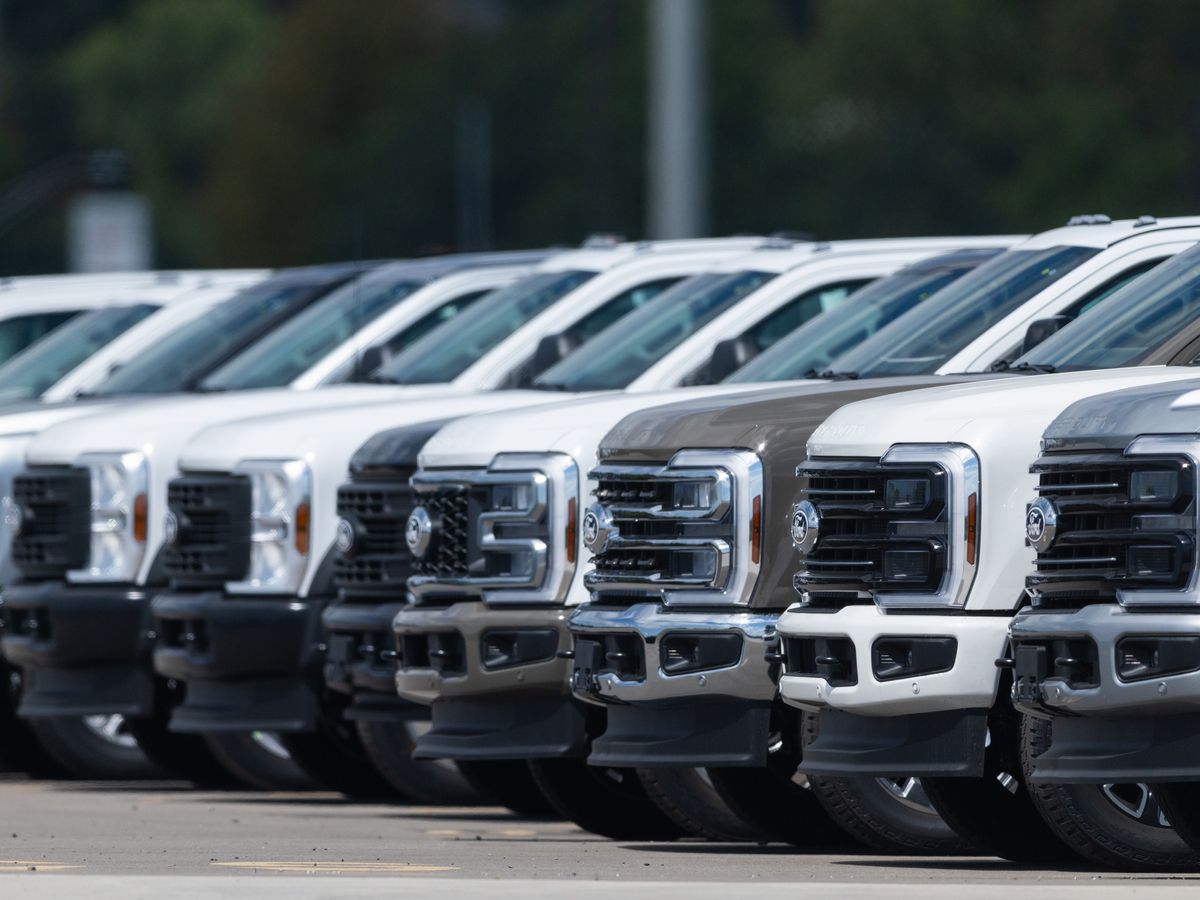
Prime Minister Mark Carney cited that exception as a reason why trade talks broke down, saying it would have threatened GM’s Oshawa plant and also Ford Motor Corp., which is still finishing a $5 billion investment at its Oakville, Ont., plant, where it plans to start building its F-Series Super Duty pickups this fall.
Article content
Story continues below
This advertisement has not loaded yet, but your article continues below.
Article content
He said the proposed U.S. deal “would have made the production (of pickups) uneconomic over time.”
Article contentRead More
- Terence Corcoran: The economics of free trade are being lost in the fog of trade war
- After $1.1-billion GM deal, Unifor faces tougher test with Stellantis
- Story continues belowThis advertisement has not loaded yet, but your article continues below.
Article content
Still, with an estimated $1 trillion in goods traded between the two countries, the situation is testing just how important pickup trucks are to Canada and its economy.
Article content
Ford’s F-Series pickups have been the overall best-selling vehicle in Canada for 16 straight years and have held the same title even longer in the U.S.
Article content
But measured by volume, auto production in Canada has largely shifted to Japanese-owned automakers, Honda Motor Co. Ltd. and Toyota Motor Corp., neither of which manufacture pickups here.
Article content
Less than 10 per cent of the 1.2 million vehicles produced in Canada in 2025 were pickups, but they represented about 25 per cent of the 10 million vehicles produced last year in the U.S.
Article content
McCabe said U.S. negotiators’ focus on medium- and heavy-duty pickups may be more of an emotional argument in some ways.
Article content
“It’s sort of like baseball and apple pie. The White House is saying, ‘We’re the pickup, we invented it, it’s our job,’” he said. “Our view is, ‘Yeah, but Canada uses pickup trucks, not just the U.S.’”