
Article content
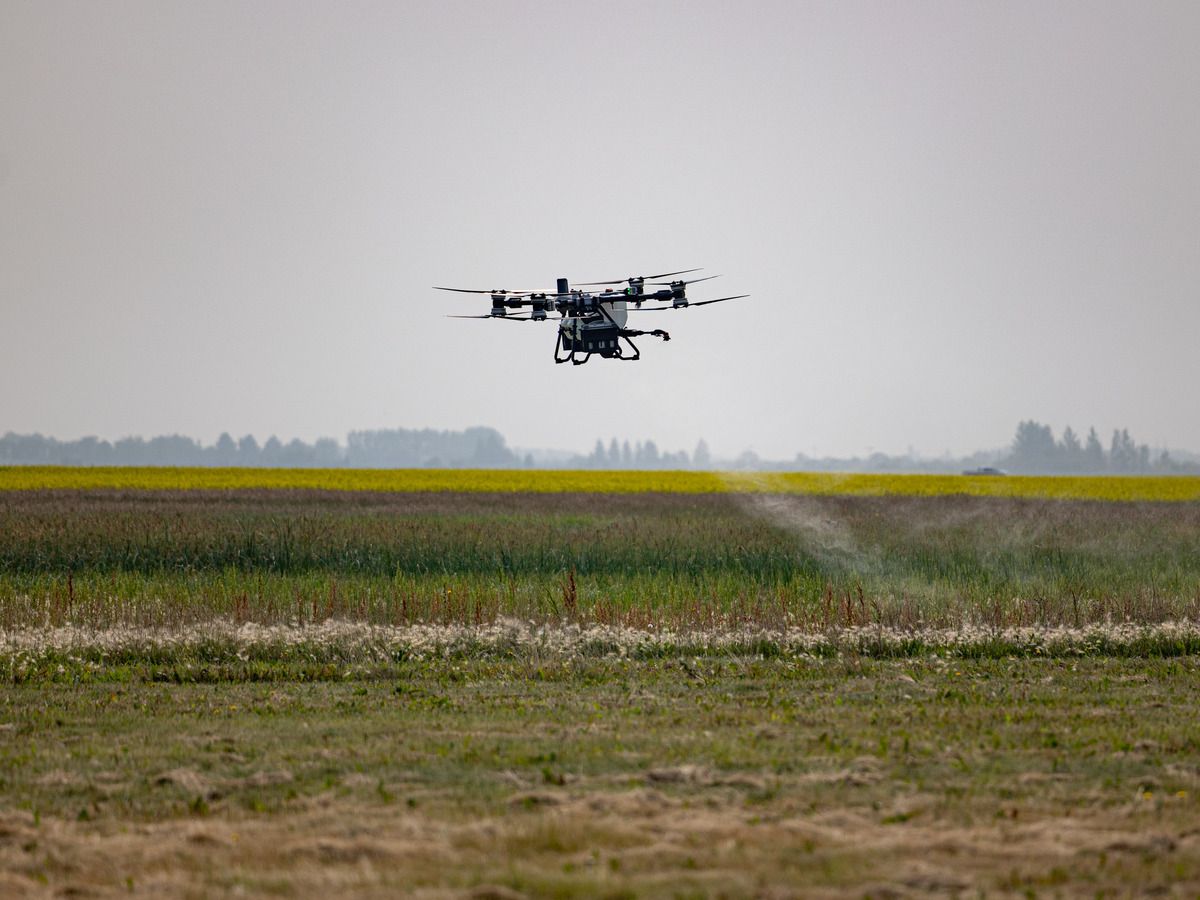
Drones have remade the face of warfare, creating an investment opportunity as the West looks to build out an industry to supply the critical minerals necessary for the weapons’ operation, BMO Capital Markets analysts said in a report on Tuesday.
Sign In or Create an Account
or View more offersArticle content
“It is safe to say that the world has entered the era of mass drone warfare,” George Heppel and Helen Amos, analysts at BMO Global Commodities Research, said in their report. They cited as an example the Ukraine-Russia war where 15 million drones are expected to be deployed this year in the conflict that is well into its fourth year.
Article contentWe apologize, but this video has failed to load.Try refreshing your browser, or
tap here to see other videos from our team.We apologize, but this video has failed to load.Try refreshing your browser, or
tap here to see other videos from our team.Article content
Story continues below
This advertisement has not loaded yet, but your article continues below.
Article content
“Drones themselves are relatively simple machines but they have several complex components (that) are effectively irreplaceable,” Heppel said in an interview. He added that if a country doesn’t have the raw materials to produce rare-earth magnets, gallium-based semiconductors or high-purity germanium for thermal imaging, “they will be entirely reliant on China for those components and China could switch off the taps whenever they want.”
Article contentArticle content
Drone warfare is on governments’ radars. Since 2025, they have earmarked US$150 billion for drone and counterdrone capabilities, with half going toward the former and a third to the latter, Heppel and Amos said. However, that represents a fraction of the global military spending by governments estimated at close to US$3 trillion last year, according to the Stockholm International Peace Research Institute.
Article content
While the share of military spending on drones is “relatively small,” Heppel said in an interview, “it’s accelerating very quickly.”
Article content
In the critical mineral sphere, gallium, germanium and NdFeB magnets — made from neodymium, iron and boron — are key to drone warfare, the report said. The analysts estimated the amounts of gallium and NdFeB magnets used in drones has had a negligible impact on the global supply, whereas four per cent of world germanium supply is being consumed by the Ukraine-Russia war.
Article content
Story continues below
This advertisement has not loaded yet, but your article continues below.
Article content
“Drones are a major headache for governments,” Heppel and Amos said in the report, given that one drone worth a few hundred dollars can destroy infrastructure worth billions.
Article contentRead More
- Canadian companies eye speed, quick contracts from Ottawa’s new drone marketplace
- Canada is already building wildfire detection systems — we just call it defence technology
- Story continues belowThis advertisement has not loaded yet, but your article continues below.
Article content
Heppel said in the interview he expects governments will increasingly focus their attention on counterdrone systems as they try to figure out how to rebuff attacks from drone swarms.
Article content
In those defence systems, gallium and germanium are “linchpins,” with rare earths gadolinium, yttrium, ytterbium and samarium “also playing vital roles.”
Article content
Here is a look at the some of the companies BMO covers that offer or have the potential to offer exposure to the drone sector through critical minerals.
Article content
- MP Materials Corp. (MP:NYSE): Las Vegas-based MP Materials, with the backing of the U.S. government, has the stated goal to produce rare earth magnets. BMO has a 12-month price target on MP Materials of US$75. Shares traded Wednesday morning at US$54.42. The stock has a price target of US$75.87 based on the calls of 15 analysts, according to Bloomberg.
- Neo Performance Materials Inc. (NEO:TSX): Toronto-based Neo produces magnets, processes rare earths and refines gallium products. BMO has a price target on Neo of $60. Shares traded Wednesday morning at $31.81. The stock has a price target of US$56.10 based on the calls of five analysts, according to Bloomberg.
- Energy Fuels Inc. (UUUU:NYSE): Colorado-based Energy Fuels offers exposure to efforts to rebuild a U.S. rare-earth supply chain. BMO has a price target of US$18 on Energy Fuels. Shares traded Wednesday morning at US$14.50. The stock has a price target of US$25.71 based on the calls of nine analysts, according to Bloomberg.
- Rio Tinto PLC (RIO:LSE): London-based Rio Tinto is emerging as a possible Western supplier of gallium. BMO has a price target on Rio Tinto of 8,500 pence. Shares traded Wednesday morning at 7,627 pence. The stock has a price target of 7,674.78 pence based on the calls of 23 analysts, according to Bloomberg.
- Alcoa Corp. (AA:NYSE): Pittsburgh-based Alcoa is another prospective gallium supplier. BMO has a price target on Alcoa of US$55. Shares traded Wednesday morning at US$51.15. The stock has a price target of US$62.90 based on the calls of 13 analysts, according to Bloomberg.
- Teck Resources Ltd. (TECK/B:TSX): Vancouver-based Teck “remains a key non-Chinese producer of germanium and is evaluating capacity expansion,” the report said. No BMO price target was available as the stock is currently restricted. Shares traded Wednesday morning at $94.66. The stock has a price target of $92.30 based on the calls of 18 analysts, according to Bloomberg.
- Ivanhoe Mines Ltd. (IVN:TSX): Vancouver-based Invanhoe has some germanium and gallium exposure through its majority-owned Kipushi mine in the Democratic Republic of Congo and has a “potential role in future U.S. critical mineral supply chains,” the BMO report said. BMO has a price target on Ivanhnoe of $16. Shares traded Wednesday morning at $11.73. The stock has a price target of $14.55 based on the calls of 15 analysts, according to Bloomberg.
Article content
“We expect gallium, germanium and rare earth supply security to continue to be a major priority in the West in the face of this growing (drone) threat,” the duo said.
Article content
• Email: [email protected]
Article content