
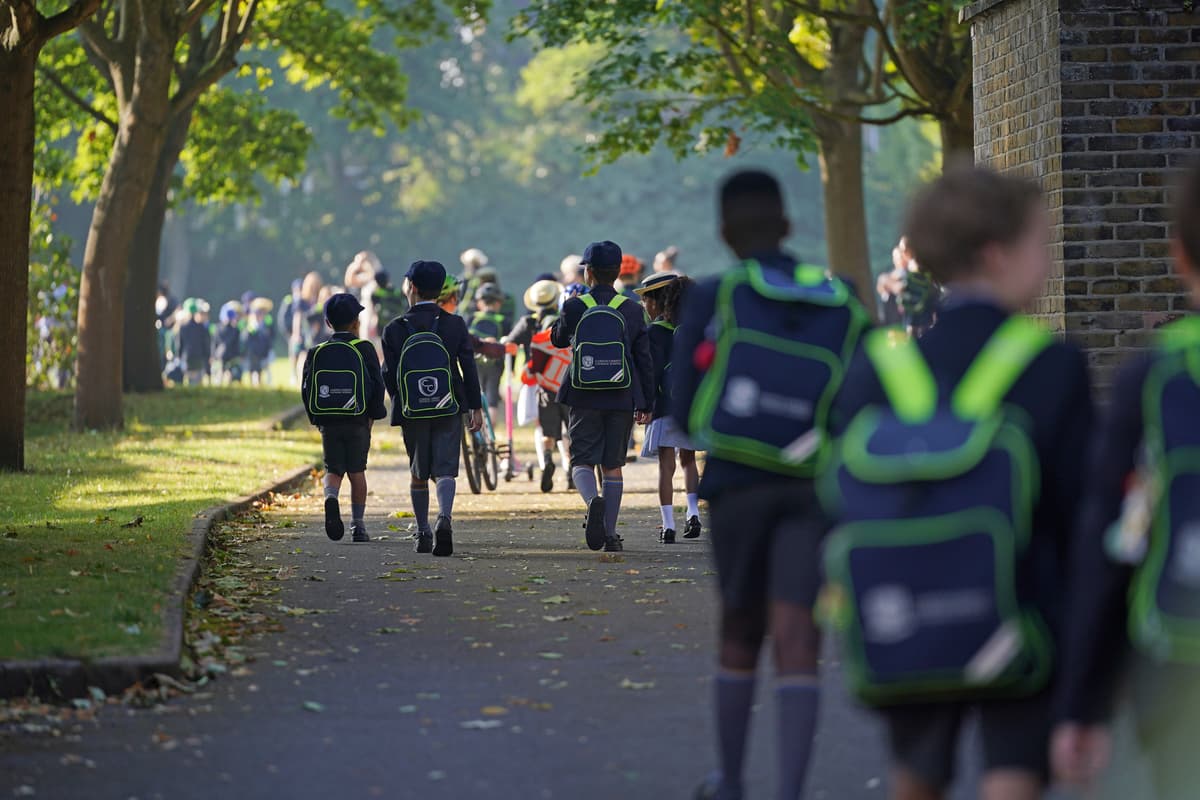
London schools crisis: Ministers told to fix ‘traumatic’ closures for pupilsLondon Councils call for fresh powers to handle closures after around 90 schools shut or merge across London in past five years
Allow Exco Player content
This content is provided by Exco Player and may use cookies or similar technologies. Please click ‘Allow and Continue’ below to load the content.
Kumail Jaffer, LDRS Reporter2 minutes ago
COMMENTS
London children are facing stressful and “traumatic” school closure processes that can be “hugely disruptive” for everyone involved, ministers have been told.
Around 90 schools have closed or merged across London over the past five years, with pupil numbers forecast to continue declining.
Lengthy closure consultations can leave families in limbo for months, unsure of whether to look for new school places, while staff don’t know whether to look for new jobs, according to a new report from London Councils.
The organisation, which represents the capital’s boroughs, called on the Department for Education to standardise closure procedures and ensure boroughs have the powers to make use of former school buildings as soon as possible.
Inner London has been particularly affected by closures, with eight of the 10 local authorities that have experienced the largest decreases in primary school numbers across the country coming in inner boroughs.
Earlier this year the London Assembly Economy, Culture and Skills Committee warned that serious financial and practical barriers, including the cost of childcare and housing, have played a major role in families moving out of London.
Between 2013 and 2023, London’s population of 0 to 9-year-olds fell by 99,100 as the city’s overall population grew by 506,000, prompting concerns that London, particularly the inner city, was no longer child-friendly.
Councillor Una O’Halloran, the Leader of Islington Council and London Councils Executive Member for Children and Education, told the Local Democracy Reporting Service (LDRS) that while we are unlikely to see the falling pupil numbers trend reverse anytime soon, dealing with the consequences is vital.
“Birth rate is falling – numbers are especially low in inner London,” she said. “It’s a mix of issues – the housing crisis, people’s choice not to have children and the cost of living. Brexit has also had an impact, as has the impact of remote working.
“The numbers are looking pretty bleak. We’re never going to be able to reverse that trend.
“Once you have closed a school, you are still left with a building. But we have the bureaucracy of having to go the Secretary of State and asking what the asset can be used for.
“We need to make it easier to make decisions on what we can do with closed school buildings. When we close a school, we want the powers to make sure it doesn’t remain empty for too long. If we have to do it, can we make people feel like they are a part of it?”
Closures have a significant impact on local communities, according to the report, with headteachers using “terms such as ‘traumatic’, ‘shame’, and ‘horrendous’ to describe their experiences, reflecting the considerable emotional toll”.
“While changes to school organisation are often discussed in terms of pupil numbers and finances, their human impact is equally important. Change can create uncertainty and anxiety for children, families and staff,” the foreword says.
“School closures, in particular, can bring a genuine sense of loss, reflecting the deep connections between schools and the communities they serve.”
The report does cite good practice from some boroughs about taking advantage of the empty buildings.
Hammersmith and Fulham Council has leased spare space to private and community organisations, generating over £100,000 a year for one host school.
In Bexley, meanwhile, surplus space has been used to create 122 new places for children with special educational needs and disabilities (SEND) across nine local schools, saving an estimated £8 million by reducing reliance on costly out-of-area placements.
In Croydon, spare capacity now supports a unit helping asylum-seeking children settle into mainstream education.
Read More
Ex-London council leader Dan Thomas quits as Reform leader in Wales after arrest
Tony Christie says doctors told him being a singer would ease dementia impact
Lockerbie bombing aimed ‘to inflict pain and horror’, US court told
Rediscover your adventurous side on an exotic getaway
However, London Councils says Department for Education (DfE) approval for such changes of use can be slow, leaving buildings standing empty in the meantime.
The DfE was contacted for comment.
MORE ABOUT