
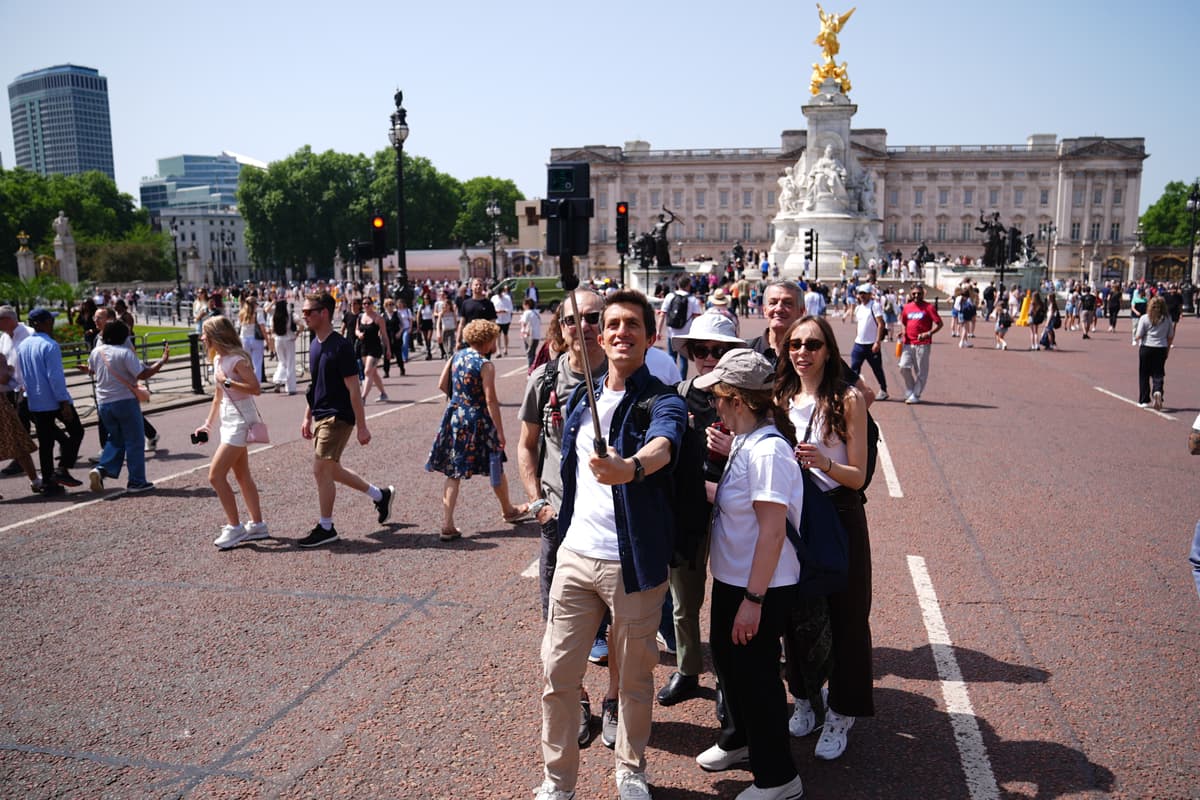
Holidaymakers face tourism tax with new powers for mayors across EnglandLocal leaders will set the fee as a percentage of the cost of accommodation, and then use the cash raised to invest in services.The so-called tourist tax would apply to foreign visitors and Britons on staycations (PA)Nina Lloyd6 minutes ago
Holidaymakers across England face a new tax on overnight stays under Government plans to give mayors greater economic power in their regions.
Local leaders will set the fee as a percentage of the cost of accommodation, rather than a flat rate, which ministers argue will protect budget trips.
The levy will have no upper limit, though Government sources said mayors are unlikely to make it too expensive, with most indicating it would be a few per cent.
Hotel and tourism firms have warned the uncapped proposals will be “hugely damaging” and hit British holidaymakers hard, but ministers say the policy will help local leaders boost investment in their areas.
Mayor of the West Midlands Richard Parker, left, and Greater Manchester Mayor Bev Craig depart No 10 North in Manchester after a meeting of regional mayors from across England (Gary Oakley/PA)PA Wire
Mayors will decide how to spend the revenue raised from the fee, which will apply to both overseas tourists and Britons on so-called “staycations”, rather than money being funnelled back into the Treasury.
Plans for the tax were first announced under Sir Keir Starmer following similar schemes introduced by the devolved administrations in Scotland and Wales.
Prime Minister Andy Burnham reiterated his commitment to the scheme, framing it as part of his wider devolution agenda aimed at pushing power out of Whitehall.
Regional mayors met in No 10 North on Thursday to discuss the plans with Local Government Secretary Angela Rayner, who is understood to have attended virtually due to other diary commitments in the capital.
Downing Street defended the plans on Thursday amid questions over its impact on cash-strapped households struggling to afford a holiday and businesses.
No 10 insisted the “overwhelming majority” of hospitality firms would not be “directly affected” by the policy because the charge only applies to overnight stays and would be at the discretion of mayors and strategic authorities.
Officials pointed to similar schemes that already exist in Europe, the US and Canada to help fund local services and attractions, and said they expected the fees to be used in a “proportionate” way.
Read More
‘Very long way to go’ before drought is over, officials warn despite rain
Sadiq Khan ‘tourist tax’ of up to 5% sparks row as bosses condemn it as London blow
Latest NHS hospital figures for England: Key numbers and trends
Discover a hidden island paradise in the Indian Ocean
Announcing the plans, Ms Rayner said: “Our amazing towns and cities and our picturesque rural and coastal communities welcome millions of visitors every year – local leaders should have the power to make the most of that popularity.
“This measure will give mayors the choice to raise and reinvest funding where it’s needed most.
“It’ll help support the local services, public spaces and attractions that both residents and visitors rely on, with decisions taken by people who know their area best.”
In London, officials are yet to make a decision on how the scheme will work, but it is understood the charge will be no higher than 5%.
But industry chiefs said they believe the plans could cost the UK hospitality and tourism sector as a whole as much as £1.6 billion.
Andy Burnham has framed the scheme as part of his wider devolution agenda (PA)PA Wire
Allen Simpson, chief executive of UK Hospitality, also warned a similar levy introduced in Edinburgh in July was “already having damaging effects”, and said jobs could be at risk in communities that rely on tourism and hospitality.
“I would say to those people in these communities that their jobs are now at risk,” Mr Simpson told BBC Radio 4’s Today programme.
“It will be the case that you’ll have holiday parks which can’t open in the shoulder seasons and of course people who go on holiday will just have that little bit less money in their pocket.”
Luke Petherbridge, director of public affairs at travel association ABTA, said the levies would “further damage the competitiveness” of the tourism sector.
“As such, we are disappointed the Government has chosen to proceed with this policy,” he said.
“The decision to pursue a percentage-based model, which has already been recognised to be problematic in Scotland, is especially concerning and should be reviewed. It is critical that mayors now engage with the sector before they take decisions on the local level.
“While we don’t agree with this new tax, should mayors choose to introduce these levies, the money raised from visitors must be put back into improving the services they use and enhancing local tourism offerings.”
Jon Hendry Pickup, chief executive of Butlin’s, said: “Big cities may welcome these mayoral powers, but treating every destination and hospitality business the same will leave resorts like ours to shoulder the burden.
“Giving mayors the power to impose a levy without a national upper limit takes those concerns to another level and risks making family holidays less affordable, damaging demand and making it harder for businesses to hire young people.”
Andrew Griffith, the shadow chancellor, said: “An unlimited tourist tax would be hugely limiting for the chances of the young people who might otherwise be employed in tourism and hospitality.
“Propping up dodgy town hall finances on the back of even higher youth unemployment would be utterly wrong.”
MORE ABOUT