
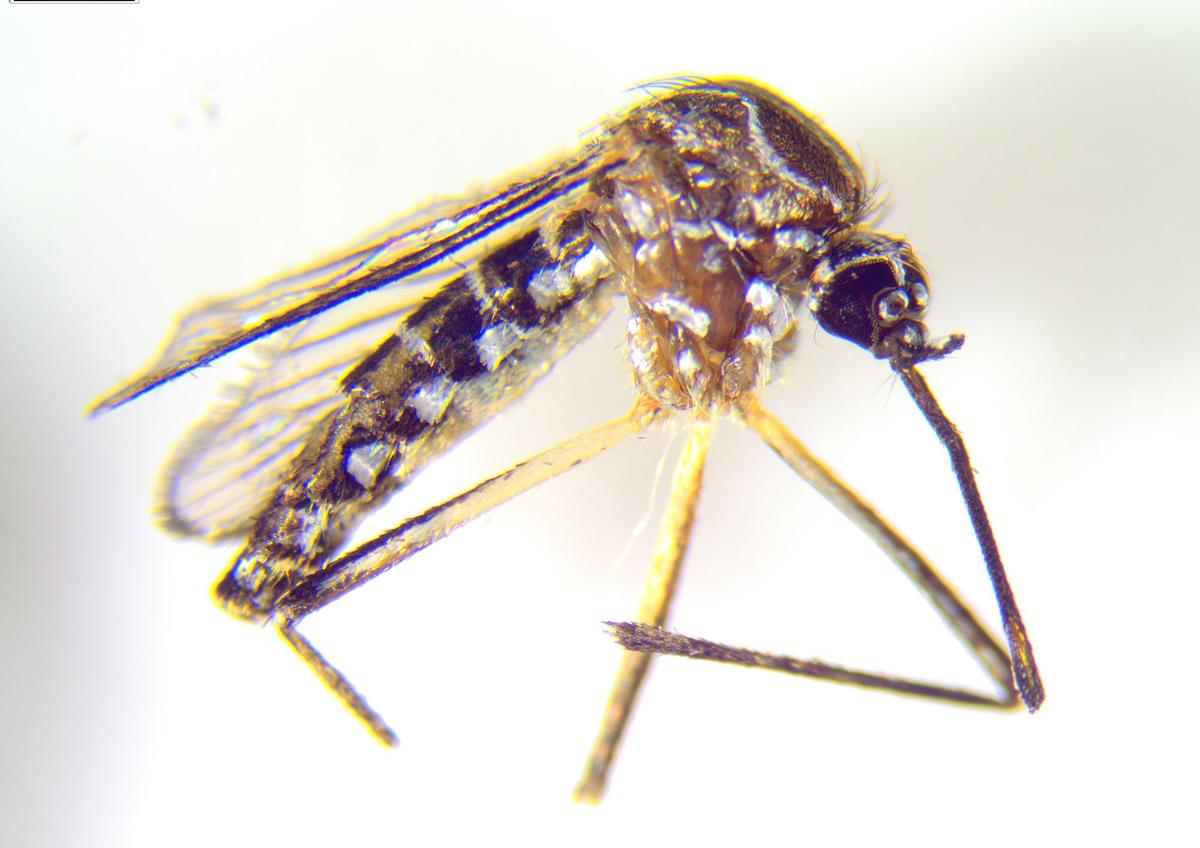
Shock moment ‘yellow fever’ mosquitoes which can carry killer viruses found in London gardens‘It was quite clear that it was an invasive mosquito,’ leading UKHSA scientist Dr Jolyon Medlock told The Standard
Allow Exco Player content
This content is provided by Exco Player and may use cookies or similar technologies. Please click ‘Allow and Continue’ below to load the content.
Nicholas Cecil, Chief Reporter @nicholascecil|Luke Reevey2 minutes ago
COMMENTS
A top scientist has told of the moment that invasive tropical mosquitoes which can carry deadly viruses were discovered breeding in London gardens.
Health chiefs immediately implemented contingency plans after “yellow fever” mosquitoes were identified in the east of the capital during the unprecedented heatwaves this year.
It is the first time that this species, the Aedes aegypti mosquito, has been found breeding in Britain.
The ‘yellow fever’ mosquito found in LondonUKHSA
The alarm was raised after a member of the public sent in an image on August 11 of an insect through the UK Health Security Agency’s Mosquito Watch surveillance scheme.
“On this occasion, it was quite clear that it was an invasive mosquito,” Dr Jolyon Medlock, Head of Medical Entomology and Zoonoses Ecology at the UKHSA told The Standard.
“We would normally expect to detect the tiger mosquito, but this was the Aedes aegypti, the ‘yellow fever’ mosquito.
“It was surprising to find the Aedes aegypti mosquito but we were well rehearsed and we have a contingency plan.”
A health team checking for mosquitoes in east LondonUKHSA
The “yellow fever” mosquito can carry the named disease which can be fatal, as well as dengue fever virus which is also potentially deadly, and chikungunya and Zika viruses.
Surveillance was swiftly carried out in an area within a 300-metre radius of the mosquito sites, with buckets, puddles, tyres and drains being checked.
A “network of traps” was set up to identify where the mosquitoes were breeding.
Control measures were put in place to destroy the insects and their larvae.
Local residents and businesses were contacted by health officials as part of moves to reduce standing water and deprive the mosquitoes of breeding areas.
‘Yellow fever’ mosquitoes were found in a small number of gardens in east LondonUKHSA
The “yellow fever” mosquito is not established anywhere in northern Europe, with its nearest breeding grounds being in the eastern Mediterranean or the island of Madeira.
But the unprecedented heatwaves this summer mean that such tropical insects were able to survive in London.
“It’s likely that this is an incursion, accidental incursion, possibly through travel or through plants,” explained Dr Medlock, who works at the high security Porton Down virus centre in Wiltshire.
Read More
Invasive mosquitoes which can carry deadly virus found breeding in London homes
London weather: Thunderstorms tipped to sweep capital at end of week
Met Office predicts ‘very warm spells’ for London in September
Winter escapes and activities to end the year in style
“It’s just managed to find its way into London at a time when we’re getting above 30 degree temperatures and it’s able to lay some eggs and and breed.
“It’s an unusual find.”
The risk to the public is assessed by health chiefs as “very low” as to pass on a deadly virus the mosquitoes would first have to bite someone else with such a disease.
Transmission also only tends to happen in sweltering temperatures.
Dr Medlock added: “So we’ve only detected it in a small number of gardens and actually we haven’t collected large numbers of mosquitoes, during the time we’ve been surveying.”
This type of mosquito has been previously found in the UK but it is the first time it is known to have bred here.
A mosquito trap deployed by health chiefsUKHSA
The mosquitoes may survive a few more weeks but they like tropical weather above 20C to 22C all year round and they and their larvae will start to die when temperatures hit 10C to 15C.
“It’s not expected that this mosquito will survive over winter in London,” explained Dr Medlock.
“Historically they wouldn’t have been able to survive but as climate warms in future decades we might see these mosquitoes able to establish in the UK.”
People in the capital can make it more difficult for these species to breed by covering water butts and empty plant trays where water builds up.
MORE ABOUT