
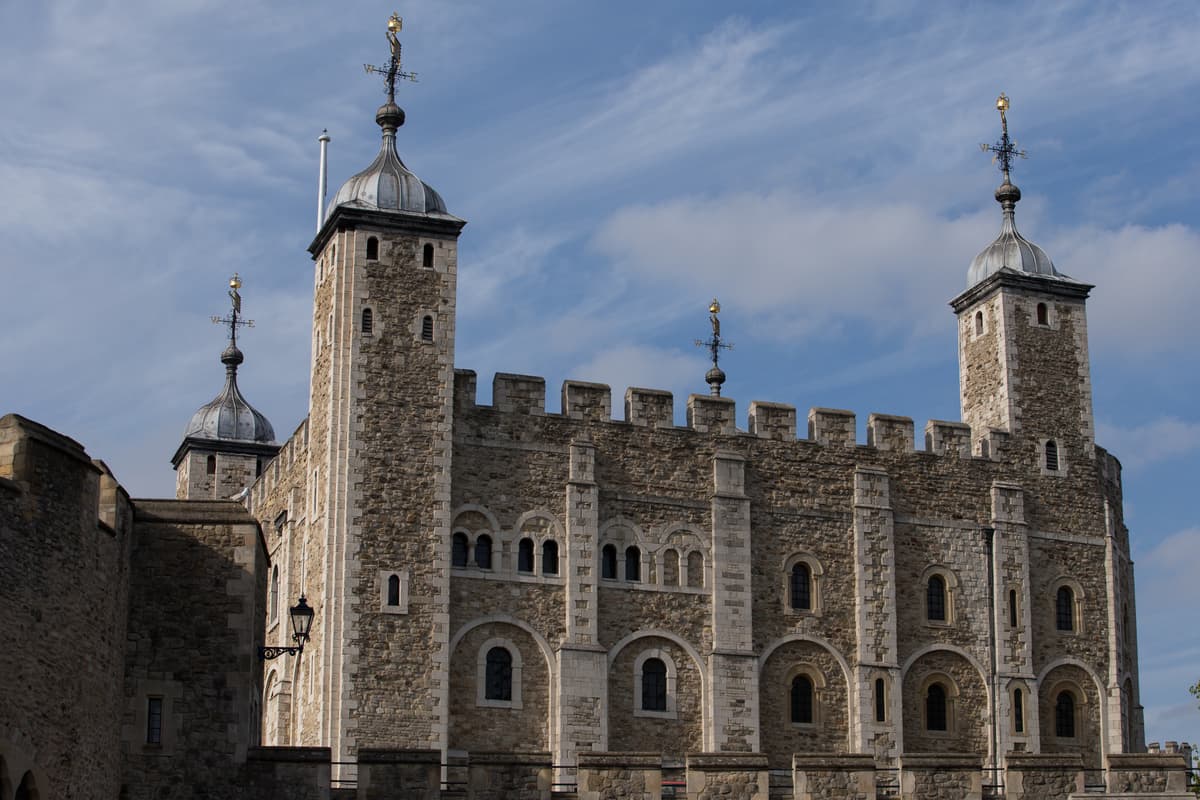
Tower of London ‘at risk’ of being added to UNESCO danger list ‘unless skyscraper plans changed’Historic England says there is ‘serious concern’ about the famous landmark due to the size of potential future skyscrapers
Allow Exco Player content
This content is provided by Exco Player and may use cookies or similar technologies. Please click ‘Allow and Continue’ below to load the content.
Megan Howe, News Reporter|Ben Lynch, LDRS Reporter2 minutes ago
COMMENTS
The Tower of London is “at risk” of being added to UNESCO’s List of World Heritage in Danger unless amendments are made to the City of London Corporation’s draft local plan, experts have warned.
Historic England, a government advisory body, said there is “serious concern” about the famous citadel due to the size of potential future skyscrapers in the east of the Square Mile.
It is seeking changes to the Corporation’s draft City Plan 2040 to mitigate the perceived risks, specifically amendments to proposed contours outlining where new developments may be permitted by the Tower.
The Corporation has said the difference between its own contours and those suggested by Historic England, which allow for more space between the Tower and the so-called City Cluster, would have a minimal impact while affecting economic growth.
The draft City Plan 2040 has been years in the making, with a series of hearings, led by Inspectors Alastair Phillips and Jameson Bridgwater, concluding last summer.
The adoption of the Plan was delayed in June when the Housing Minister Matthew Pennycook wrote to Mr Phillips and Mr Bridgwater directing them to consider the alternative contours.
The Corporation has consistently argued the delivery of more office space is needed to meet demand, setting a minimum target of 1.2 million additional square feet by 2040.
Following the conclusion of last year’s hearings the Inspectors issued a list of modifications to the draft Plan, with the expectation it could be adopted this summer.
In his letter Mr Pennycook wrote he had had advance sight of the Inspectors’ report and praised the “commendable efforts” made to assess the heritage impacts.
He however directed the Inspectors to halt the report’s publication to consider Historic England’s alternative contours and to arrange further hearings to scrutinise the impacts on the Tower of London, which is just over the border in neighbouring Tower Hamlets.
Read More
Researchers reconstruct face of man who lived through Norman Conquest
Influencers urged to leave mushrooms in Epping Forest alone
‘No option off table’: Minister signals Thames Water still faces Government takeover
Winter escapes and activities to end the year in style
In a written statement submitted ahead of today’s (September 2) additional hearing, Historic England drew attention to a recent decision published by UNESCO’s World Heritage Committee expressing concern about the risks posed to the Tower.
The Committee has requested a report from the UK Government by February 2027 and warned the site could be added to the List of World Heritage in Danger.
“Historic England [sic] position is that its proposals better support the continued conservation of the Tower of London as a WHS [World Heritage Site],” the statement reads.
“Our proposal would not prevent the City from achieving its office floorspace requirement. Given the impacts on OUV [Outstanding Universal Value], our alternative proposal is justified and is the minimum response necessary within the context of this World Heritage Site.
“This supports the UK Government’s commitment to its international obligations under the World Heritage Convention.”
The Corporation claimed in its own written statement that Historic England’s proposed contours would make little difference to heritage protection while limiting potential new office space and jobs.
The Corporation wrote: “The heritage impacts of the two approaches on the WHS are not materially different, and the contours proposed by HE would not materially improve the protection of the Tower of London’s WHS.
“They would, however, unduly restrict economic growth, as they would lead to significant financial and economic consequences for activity, output and financial receipts within the Square Mile (and beyond).
“In turn this could undermine the Plan’s ability to meet the identified development requirements for economic growth in the period to 2040.”
Deputy Chris Hayward, the Corporation’s Policy Chairman and political head, told the Inspectors the Minister’s direction had already led to stalled schemes and affected investor confidence.
“We made no secret of our frustration at the delay,” he said. “Uncertainty in the planning system is a drag on economic growth, investment and infrastructure delivery. In the City, where schemes are complex, constrained and require significant upfront investment, that doubt is especially damaging.”
Deputy Hayward added the Corporation fears “that further changes to the plan could mean further consultation, further delay and further uncertainty”.
Ben Du Feu, a barrister representing Historic England, said the body remains concerned about the risks posed by the proposed contours, noting it would be “hard to resist” any future developments which come forward located within its rings.
Mr Du Feu also touched on the recent UNESCO publication. “We say that the decision is therefore clear that the Tower of London is at risk of being listed on the List of World Heritage in Danger,” he said, adding there is “serious concern” over the potential designation.
Instead, Mr Du Feu said Historic England’s proposed contours would result in “a more deferential relationship between the [Tower and the City Cluster]” without preventing the Corporation meeting its target of 1.2m sqm of additional office space.
The refusal of an application for a 43-storey block at Bury House In December 2024 was also noted, with Mr Du Feu saying the Corporation’s decision featured many of the same concerns raised by Historic England.
The feared hit to jobs and economic growth were discussed by the City Property Association (CPA) and consultancy DP9, the latter on behalf of BNPP Asset Management, which is behind a scheme at 63 St Mary Axe.
Representatives from Tower Hamlets Council said that, while Historic England’s contours would reduce potential harm to the World Heritage Site, they believe the Corporation’s proposal is sufficient when considering other safeguards in the draft Plan.
Melissa Hamnett, Palaces and Collections Director at Historic Royal Palaces, backed the heritage body’s position, telling the Inspectors the revised contours would be “a clear and credible demonstration to UNESCO that those concerns are being seriously and reflected in the Plan”.
On the adequacy of the draft Plan when considering its protections for the Tower, Dr Helen Woodhouse, Historic England, said: “[UNESCO] clearly said, most recently in the Committee decision from this summer, that it is not enough as currently proposed.”
The Inspectors will now prepare a letter to the Corporation, to be signed by Housing Minister, which will trigger the next stage of proceedings.
MORE ABOUT
City Of London CorporationMatthew PennycookHistoric EnglandTower Of LondonTower Hamlets Council