
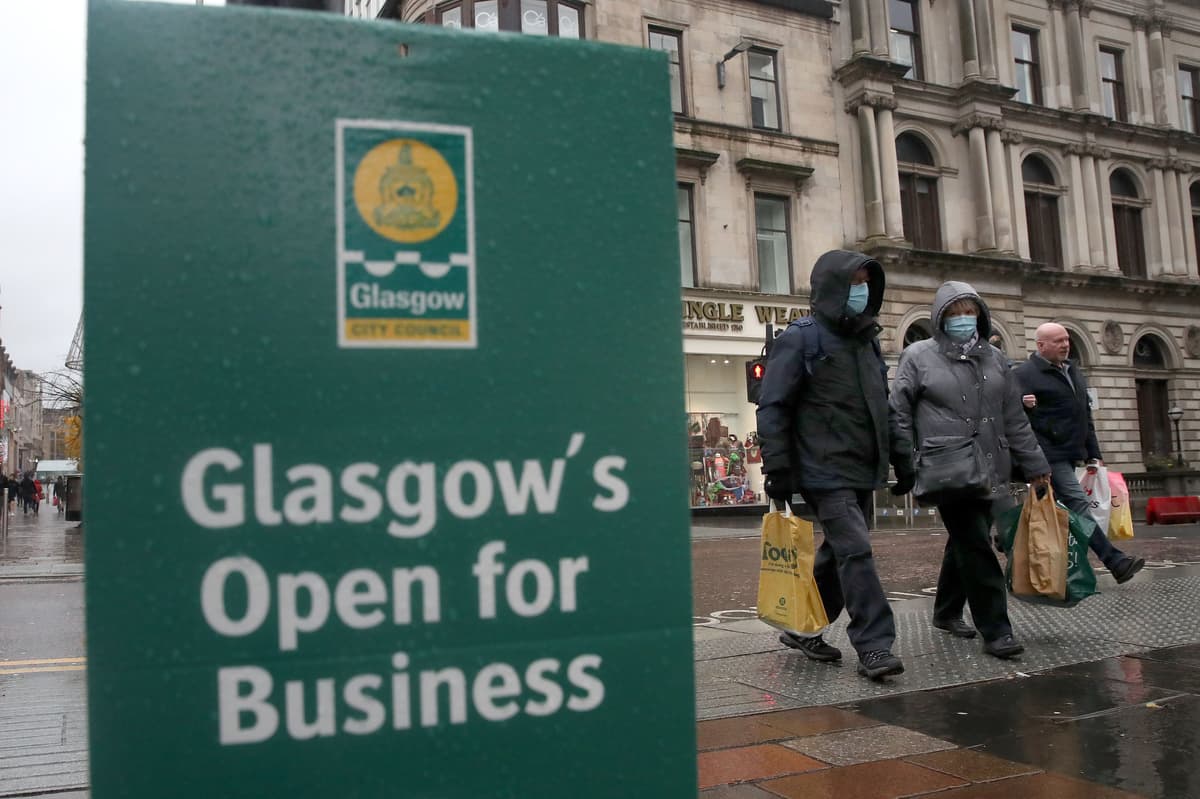
Pandemic experience of Scottish workers detailed in new inquiry publicationVoices from Businesses and Individuals draws on the experience of thousands of employees, key workers and those made redundant during the pandemic.Voices from Businesses and Individuals draws on the experience of more than 12,500 people (Andrew Milligan/PA)PA ArchiveNick Forbes3 minutes ago
The pandemic experience of thousands of Scottish workers has been documented in a new publication by the Scottish Covid-19 Inquiry, which reveals stark differences in how workers say they were treated and protected.
Voices from Businesses and Individuals draws on the experience of more than 12,500 people – including thousands of employees, key workers and those made redundant during the pandemic.
It contains accounts by workers of being asked to operate in unsafe environments, struggling to balance remote work with caring responsibilities, and living with poorly understood long Covid symptoms.
Many workers who shifted to remote working described mounting pressure as they tried to combine their jobs with childcare and home-schooling once schools closed.
Read More
Palestinian lawyer’s diary saved from risk of destruction by Scottish university
Gordonstoun pupils discover ‘1,000-year-old Viking church’ on uninhabited island
Tackling cost-of-living pressures a ‘principle issue’ for John Swinney
Boy, 10, walking round all Scottish pro football grounds in honour of late mother
One health and social care key worker, who was also an unpaid carer, said: “The challenges were having to work from home and support my then 4th year pupil son who has ADD (attention deficit disorder).
“This increased stress as a working mother trying to juggle work and support.”
Not everyone found the shift to home working difficult, with some respondents noting savings on commuting, fuel and everyday spending, and a small number described the change positively.
Workers unable to work remotely often described being placed in what they considered dangerous situations.
One office manager reported: “(My manager) did not believe the virus existed, bullied staff to work under threat of losing their jobs.
“Our workplace should have been closed but he ‘forged’ papers… to say we were critical workers.”
The publication also highlights feelings of inequity between the experiences of those who continued working and those who were furloughed.
Many respondents described the difficulty of combining their jobs with childcare and homeschooling once schools closed (Peter Byrne/PA)PA Archive
One health and social care key worker said: “Compared to the working from home and the furloughed workers we did our jobs as usual but risking our health every day and with minimal support from other partner agencies.
“What I want is the recognition, value and respect that social workers in the community deserve.”
One woman said she felt furloughed colleagues “had time with their families to just deal with what was happening within their own four walls, whereas (those required to continue working) had to deal with that plus the responsibility (of work)”.
Respondents across sectors also described confusion arising from unclear or changing guidance, with one local authority manager saying: “It was fair to say life was chaotic. None of us knew what was to happen.”
This included confusion over who did and did not qualify as a key worker, with decisions varying between employers, local authorities and across the UK.
One business owner in the renewable energy sector said: “We had to shut down apart from three employees who worked as key workers.
“Was very clear to us that we would officially have been recognised as key workers by police or Scottish Government but sector suggested we were (not).”
This confusion extended to the one-off £500 thank you payment for frontline workers.
One respondent said: “Even though my workmates and I were classed as ‘essential workers’ we didn’t receive the £500 payment other frontline workers and home workers received.”
Another described the payment after deductions as insufficient: “The government announced a £500 thank you, but in reality no staff got £500 in hand pro rata… even full-time staff getting £257 after tax etc. Part time we saw £149.”
Many respondents said long Covid was poorly understood and inadequately supported by both employers and the health system, with some describing pressure to return to work before they were ready.
Respondents called for a system that was easier and quicker to access for those needing financial support because of long Covid, alongside calls for adequate sick pay so that workers who contracted Covid-19 were not forced to choose between their health and their income.
Voices from Businesses and Individuals is the first of four thematic volumes of evidence from the inquiry’s Let’s Be Heard project, which provided the main way for people to engage with the inquiry and share their experiences of the pandemic in their own words.
MORE ABOUT