
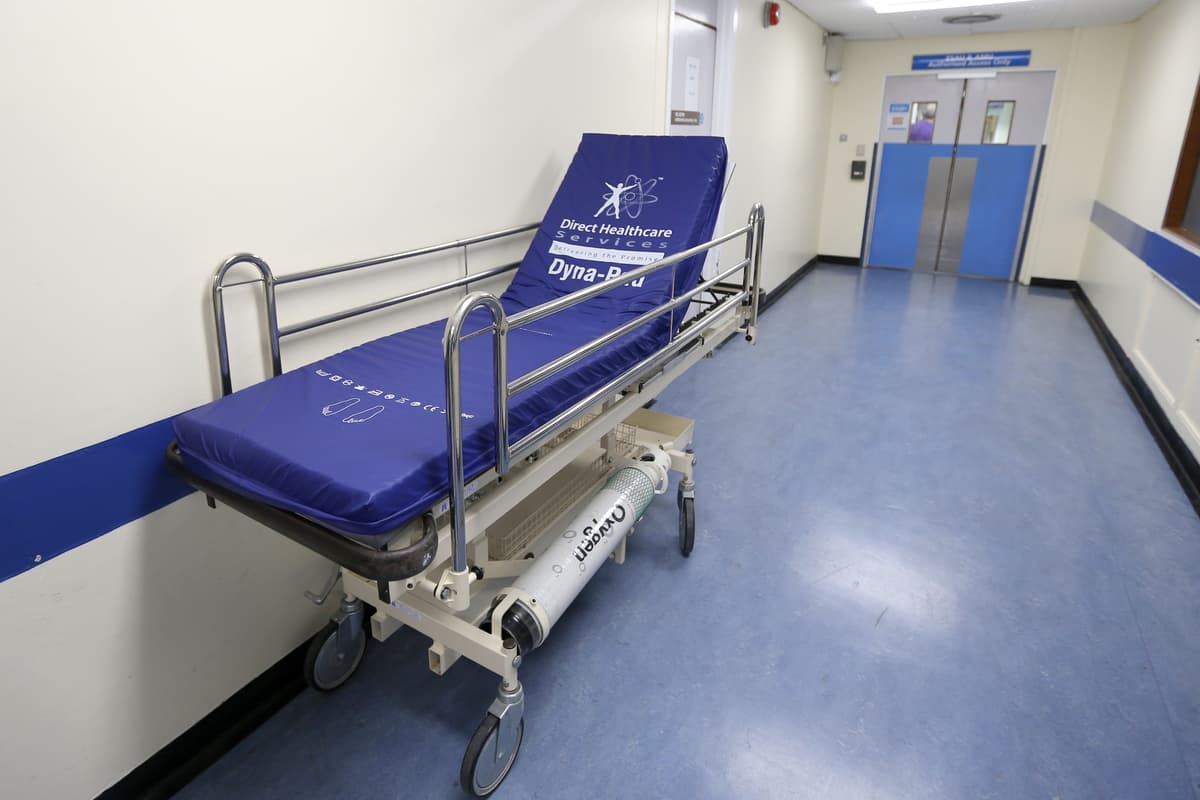
Nurses giving end-of-life care in corridors amid staffing issues, poll findsTime pressures and issues with staffing levels were also cited as a barrier to providing care to terminal patients.More than half of the nurses and healthcare professionals surveyed said they had treated patients in corridors or non-clinical areas (PA)PA ArchiveStorm Newton3 minutes ago
More than half of nurses have treated patients receiving end-of-life care in corridors or other makeshift spaces, a survey has found.
Time pressures and issues with staffing levels were also cited as a barrier to providing care to terminal patients.
Nurses also spoke of widespread problems in care planning, leading to uncertainty and in some cases CPR being performed on patients against their wishes.
The joint Marie Curie and Nursing Standard poll of 1,153 nurses and healthcare professionals across the UK found 55% had treated patients in corridors or non-clinical areas.
The research suggests corridor care is a serious problem in the NHS (Alamy/PA)
More than seven in 10 (%) said people being treated in areas not designed for end-of-life care compromised dignity and left families and loved ones distressed.
In terms of barriers to providing care, some 72.2% said staffing levels are a constraint, while 56.2% said a lack of time is an issue.
Elsewhere, Marie Curie found there were problems with care planning, which led to uncertainty around patient wishes at the end of their life.
More than a third of nurses said they had witnessed CPR being performed when they felt it was inappropriate.
One nurse told of a CPR being performed on a terminal cancer patient who ended up dying on the bathroom floor.
They said: “We were never going to get her back.
“She died on the floor in the bathroom, undignified, family hysterical, staff all left traumatised.”
Another nurse said an older man carried a paper care plan in his pocket to ensure he was not subject to intervention against his wishes.
(Alamy/PA)
Sarah Williamson, director of nursing and quality at Marie Curie, said: “These harrowing stories are incredibly difficult to read, but it’s so important that we are aware of the stark reality facing nurses, clinical teams, families and patients every day.
Read More
Tottenham confirm Deadline Day signing in rare transfer move
Musetti knocks British No1 Fery out of US Open in first round
Burnham to face first PMQs and test of authority after setting out ambitions
Make 2026 the year of working smarter
“When someone has taken the time to think about how they want to die, that decision should follow them, wherever they are and to whoever is caring for them.
“Corridor care is a symptom of a system under strain and A&E has become a default for some people at the end of life in moments of crisis, when there’s nowhere else to turn.
“The UK Government has promised to publish a modern services framework to overhaul end-of-life care in England.
“This needs to be a fully funded plan to deliver access to 24/7 palliative care, medication and co-ordinated support closer to home to reduce the numbers being forced to turn to A&E. The Prime Minister has publicly stated palliative care needs fixing; here is his chance.”
Marie Curie is calling on the Government to use the Health Bill to address gaps in the system.
The charity said the single patient record should be available to all palliative patients and end-of-life care providers to ensure people’s wishes are respected.
Ms Williamson said: “The Health Bill is a chance to fix the systems behind these decisions, so that a person’s wishes are recorded once and available to everyone involved in their care.
“We’re also looking at how we can help. Marie Curie is trialling new ways of working with the NHS in hospital emergency departments and GP practices to identify people approaching the end of life earlier and put the right support in place, including advance care plans.”
Professor Lynn Woolsey, chief nursing officer at the Royal College of Nursing, said: “No one deserves to receive care in a hospital corridor, let alone someone at the end of their life.
“These non-clinical areas are fundamentally unsafe, denying nursing staff access to basic equipment such as oxygen and suction for the people in their care.
“They’re also totally undignified, leaving some of the most vulnerable to receive treatment, use the toilet and sometimes die in full glare of the public. It’s totally unacceptable.
“To prevent those with terminal illnesses from enduring such shocking care, we need the Government to deliver on its commitment to keep people comfortable closer to home. District nurses are key here, but their numbers have plummeted over the last decade leaving vulnerable people with nowhere else to turn.
“This sadly means that those approaching the end of their life are being hospitalised, which is why we also need action to boost hospital bed numbers and ensure there are enough nursing staff to provide safe and dignified care”
Jane Turner, chief nursing officer at palliative care and bereavement charity Sue Ryder, said: “No one should spend their final moments in a crowded hospital corridor, without privacy, comfort or dignity.
“And no family should have to say goodbye to someone they love in such distressing circumstances.
“Behind every story of corridor care is a real person at one of the most vulnerable times in their life, with their loved ones desperately trying to make the most of their final moments together.
“The right care, in the right place and at the right time should be the norm, not a luxury. This is why at Sue Ryder we believe that death and grief deserve better.”