
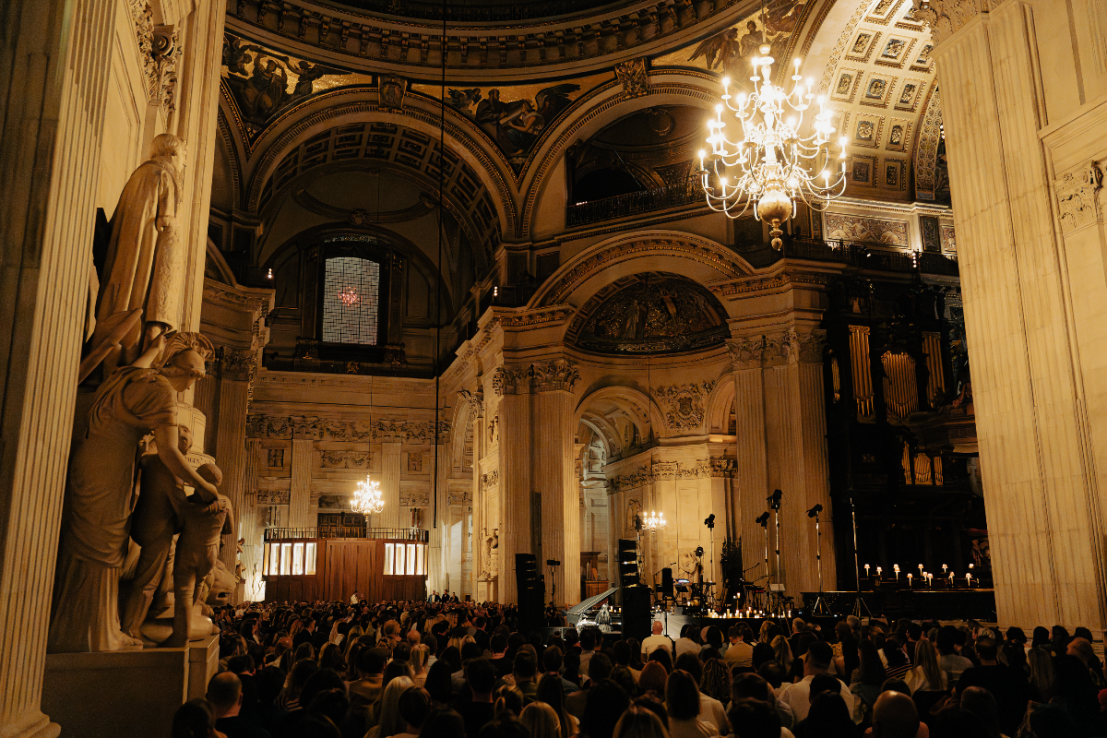
St Paul’s Cathedral has announced a four-year collaboration with Fabric nightclub that will see DJs being brought into the capital’s most lauded pews, designed by Sir Christopher Wren.
The four-year project has provoked outrage among groups including traditionalist Christians and historic preservation societies. Descendants of Lord Nelson called it “an insult” to his memory, “deeply depressing” and “an act of self-harm,” while Queen Elizabeth II’s former chaplain called it “a betrayal of all the faithful Christian people who said their prayers there.”
But wasn’t St Paul’s always for music? Wren’s domed ceiling was designed specifically for its resonant qualities, and what is so different about electronic music than the church organ? Isn’t it all music?
St Paul’s Cathedral is the perfect setting
The backlash against a collaboration with a brand associated with London’s nightclub shows the stigma and snobbery that still surrounds electronic music and club culture. DJs are composers like any other. They make and play music. There is no reasonable argument that dance music is any less valid than classical.
Club culture has been unfairly branded a pursuit of hedonists who create a mess that must be tidied up later. This is reductive and unfair. Actually, club music’s origins are about connection and bringing people together, in much the same way church music. Despite the images perpetuated by the tabloids, if you ask anyone who goes to raves or even club nights, they will tell you that crowds are inclusive and friendly. You’re far more likely to get into a fight in All Bar One than you are at an event focused on electronic music.
The St Pauls events are also seated: no standing up or dancing. What could be more organised and respectful of the building’s history than that? Shock, horror: people who like club nights and electronic music are cultured enough to be able to sit down and enjoy a gig (seated DJ shows are actually pretty common). It’s not even accurate to label electronic music a ‘youthful’ pursuit: collectives like Kraftwerk, who pioneered the genre in the late 1970s, are now senior citizens.
Destigmatising clubbing
The tirade against the Cathedral’s events further stigmatises clubs, which contribute greatly to the UK economy (one report called London’s nightlife a £46bn asset).
Insiders at one of London’s biggest and most commercially successful clubs told me they were banned from calling their club a club when trying to find investment because of how stigmatised the word has become. Instead, they had to call it a ‘cultural venue’ so snobs wouldn’t judge them. In the music industry, this type of narrative has become all too common.
Some of the capital’s most famous ‘traditional’ culture venues are throwing similar events, to great critical success. The Barbican has introduced club nights and so has the National Portrait Gallery. So has Abbey Road Studios. These aren’t religious venues, granted, but they are heritage cultural spaces associated with more traditional arts. DJs help bring in the money, and the clout.
St Paul’s has long been progressive
The real question is whether or not these events curate a line-up that feels thoughtful rather than tokenistic. The Barbican’s recent South Asian clubnight series was a properly curated series of events, whereas the National Portrait Gallery’s one-off night with drag queen and DJ Bimini felt a bit like plonking a grassroots artist in an establishment art gallery for clout and hoping for the best.
In an interview with City AM last year, the dean of St Paul’s told me how they are proudly adapting to modern audiences – and how dividing opinion is inevitable. Good on the City’s proudest cultural venue (the winner of our Best Arts or Culture Award), for sticking to its guns. It allowed girls in the choir recently after hundreds of years of being male-only. “Better late than never,” the dean told me.
We can’t wait to dance in the venue, if only with our toes.