
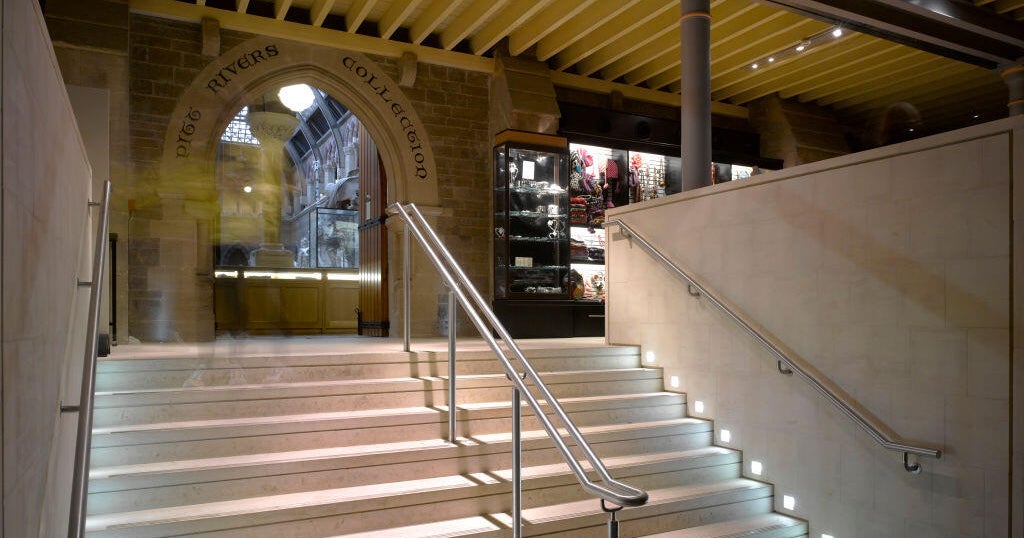
An Oxford University museum has agreed to return the remains of 39 people who were taken during Britain’s colonial rule in India.
The university’s Pitt Rivers Museum told Agence France-Presse on Monday that it is preparing to repatriate the remains of 39 people taken from the Naga community in northeast India. The decision came after the university approved a restitution request by the Forum for Naga Reconciliation (FNR) and other groups.
The remains “have been away from their homeland for far too long,” museum director Laura Van Broekhoven told AFP in a statement.
CBS News reached out to the university for further comment.
“Repatriation, for the Nagas, is not simply about bones and ancestral remains finding their way back to the land but importantly about memory returning to where it belongs,” the FNR and other Naga organizations said in a statement sent to AFP.
According to the museum, the group’s request covered 40 sets of human remains; however, the university approved the return of 39 of them in July because one “does not have a clear provenance as Naga.”
The museum said it was “working closely” with the Naga community to agree on a date for a handover ceremony, which has not yet been set.
The Pitt Rivers Museum, one of the world’s leading institutions for anthropology, ethnology and archaeology, holds over 6,000 Naga artifacts.
Dr. Ellen Konyak Jamir, an FNR member and coordinator for Recover Restore and Decolonise, a research initiative led by two Naga academics, told MorungExpress that recovering the artifacts involves a complex process and is not their current focus.
In the past, the museum has faced charges of racism and cultural insensitivity because it displayed its famous collection of shrunken heads and other human remains. In 2020, it removed the collection as part of a broader effort to “decolonize” its collections.
“Our audience research has shown that visitors often saw the museum’s displays of human remains as a testament to other cultures being ‘savage’, ‘primitive’ or ‘gruesome’,” Van Broekhoven said in a statement at the time. “Rather than enabling our visitors to reach a deeper understanding of each other’s ways of being, the displays reinforced racist and stereotypical thinking that goes against the museum’s values today.”
The museum ultimately decided to remove 120 human remains, including the tsantsas, Naga trophy heads and an Egyptian mummy of a child.
The agreement between the university and the FNR forms part of a wider international movement to repatriate artifacts and human remains acquired by Western institutions during the colonial era.
Earlier this year, the University of Edinburgh returned the skulls of six people from the Muscogee Nation in the United States. The Muscogee (Creek) Nation, now based in Oklahoma, were the people of the Southeastern territory on the Mississippi River. The nation has about 103,000 people and is the fourth largest federally recognized tribal nation in the U.S.
In 2022, London’s Horniman Museum returned 72 artifacts to Nigeria, including 12 Benin bronze artifacts. Meanwhile, Greece has for decades demanded the return from Britain of the Parthenon Marbles, saying they were looted in the early 19th century by Lord Elgin, British ambassador to the Ottoman Empire.
London insists they were legally acquired and successive British governments have noted that the decision rests with the British Museum, where they are kept.
In: