
analysis
Whyalla furnace closure shows fruits of government’s billions in steelworks funding still years awayBy state political reporter Thomas Kelsall
Posted Wed 16 Sep 2026 at 6:05amWed 16 Sep 2026 at 6:05amWed 16 Sep 2026 at 6:05am
Whyalla locals have become accustomed to press packs descending on their city, entering their small businesses and asking how they feel about the latest crisis to befall their city.
Whether during the closure of the shipyards in the late 1970s, or the steelworks going into administration in 2016, the responses over the years have been similar.
The community has “gone through a lot” but it will “band together” because it is a “resilient town” looking forward to better days.
Stoicism and optimism aside, when the South Australian government revealed on Monday that the steelworks’ ailing blast furnace would be permanently shut at a cost of more than 600 jobs, a new response emerged.
“All this money they’ve put into the plant, what for?” asked local cafe worker June Worsnop.
It’s an uncomfortable question given that nearly $3 billion in public funds have been committed to the Whyalla steelworks since February 2025.
And yet the plant is now going to be employing hundreds fewer workers and not producing its own steel, likely for years to come.
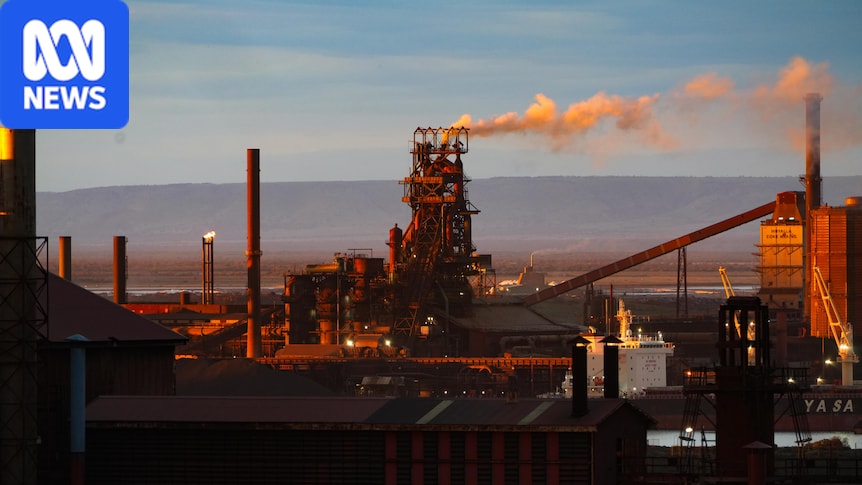
The shuttering of the 1960s-built blast furnace is a stark reminder that, 18 months on from the steelworks being tipped into administration, the fruits of the state and federal governments’ billions for Whyalla are still a long way away from being realised.
The bulk of those funds — $1.9 billion — are on the table for a new owner to take over the plant and co-invest in a green future, including a new electric arc furnace.
The new steelworks owner will be chosen before the end of the year in what Premier Peter Malinauskas says will be a “significant moment”.
Two bidders — Jindal Steel and M Resources — are in the running, while BlueScope Steel retains its right of last offer.
“But I won’t breathe a sigh of relief, I won’t take comfort nor will anyone else in my team until we start seeing that capital being invested in new equipment on the ground,” the premier said on Monday.
“Because that’s when we’ll know that steelmaking in Whyalla in this country has genuinely got a future.”
Until then, that familiar uncertainty remains.
“For the first time since steelmaking began in Whyalla,” SA Opposition Leader Ashton Hurn said on Monday, “it will be without its primary steelmaking capability”.
“And there is now no certainty around when steelmaking will return to the city into the future,”
she said.
‘You can see the helplessness’
The loss of more than 600 jobs in Whyalla will be felt across the whole town, according to local gym owner Justin Fennell, who said he spent an hour on Monday night talking to one of the workers affected.
“A lot of them are only in their 30s, so they’ve got another 35 years of work ahead of them,” he said.
“So, it makes it hard, it really does make it hard for those who have young families, mortgages, you can see the helplessness in them.”
For others, like steelworker Steven Sharp, there was both shock and a sense of inevitability.
“We all tried our hardest, we all worked so hard to try and get it [the blast furnace] back, but just unfortunately we couldn’t get it done,” Mr Sharp, who is taking a redundancy, said.
“Every time something would come up, we’d feel like we were getting a step ahead and then two steps backwards.
“We knew it was a matter of time before it just couldn’t go anymore.“
The state government announced on Monday that it would fund between $60 to $80 million in redundancy payments in a split with the Commonwealth.
A further $10.2 million will be made available to help workers transition, including funding for counselling, re-skilling and re-accreditation.
The impact of the job losses is significant, but it was not an unspinnable crisis for the government.
While the blast furnace closure came quicker than the government wanted, the coal-fired oven has been offline since April — giving the government ample time to prepare the public for the pain ahead.
“I think most people who work on the blast furnace, who work at the steelworks, knew that this was coming,” Energy and Mining Minister Tom Koutsantonis told 891 ABC Adelaide on Tuesday.
On the question of what all the money has been for so far, Mr Koutsantonis said: “We haven’t spent $1 billion on the blast furnace. We’ve spent a billion dollars keeping 1,800 people employed while we attempt to recapitalise the steelworks”.
The government is also adamant that the blast furnace closure had been factored in by both companies bidding for the steelworks, meaning the sale process was not going to be impacted.
“Nothing that occurs today disrupts or undermines our ability to deliver the long-term vision of Whyalla,” the premier said on Monday, “which is to have a new steelmaker with new equipment and new technology making steel that sets Whyalla up for the long term”.
But if that were to change, the question about what all the money was for will get a whole lot more uncomfortable.