
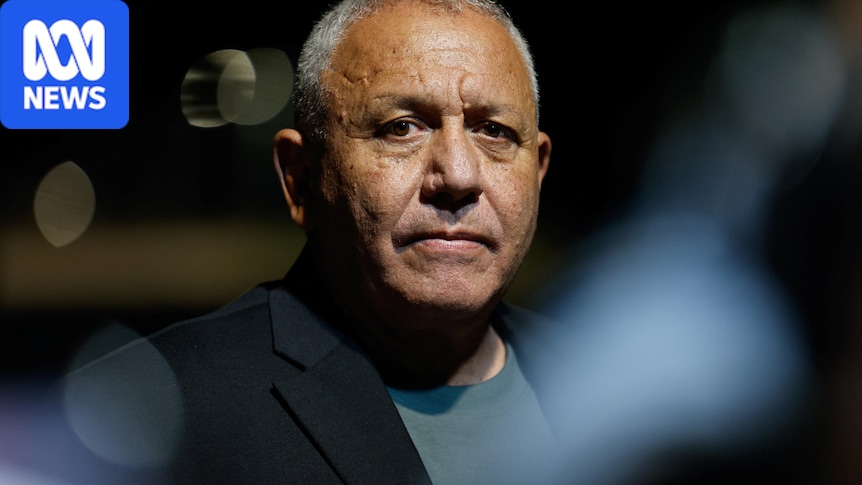
Benjamin Netanyahu’s rule is at a crossroads. Former war cabinet member Gadi Eisenkot could unseat himBy Middle East correspondent Matthew Doran and Sami Sockol
Posted Mon 14 Sep 2026 at 4:55pmMon 14 Sep 2026 at 4:55pmMon 14 Sep 2026 at 4:55pm
Benjamin Netanyahu is facing the battle of his political life, with the man he once tapped to be the nation’s defence chief firming as the favourite to topple him as prime minister when Israelis head to the polls on October 27.
The election could be one of the most consequential in Israel’s almost eight-decade history, following years of wars on multiple fronts and intense social upheaval which has threatened to tear at the fabric of the country and put immense pressure on its international standing.
But any shift in government is unlikely to prompt a major change in key policies on the war in Gaza or the occupied West Bank.
If current polling is to be believed, the right-wing coalition led by Mr Netanyahu and his Likud party will be challenged by an opposition bloc, led by former IDF lieutenant-general Gadi Eisenkot and his newly established Yashar party.
The name of the political movement translates from Hebrew as “straight” or “honest”, reflecting what its leader has argued is a need to be up-front with the electorate after four years of alleged obstruction and deceit from the incumbent.
“You have to understand that Eisenkot is everything that Netanyahu is not,” Gideon Rahat, professor of political science at Jerusalem’s Hebrew University, told the ABC.
“Eisenkot has lost his son and nephew in the [Gaza] war, one of the Netanyahu kids at least spent most of the war in Miami.
“Netanyahu is a player, he knows how to talk very good English — Eisenkot, his English is not so good, he’s quite, I would say, a popular person … a regular person.”
That sentiment was shared by one of Mr Eisenkot’s candidates, former senior finance ministry bureaucrat Shaul Meridor.
“When he says things, he means them — and he’s a mensch,” Mr Meridor quipped.
“With a lot of interactions we had, I saw a man that really got into the things, to the essence of them, and tried to solve them.”
‘A religious Sparta’?
Mr Netanyahu has only held on to power during this term due to a complicated coalition agreement, involving at least five different parties.
His government has been described as the most right-wing in Israel’s history, particularly given the influence of ultra nationalist parties led by controversial ministers Bezalel Smotrich and Itamar Ben-Gvir — two men subject to international sanctions, including from Australia, for their policies and rhetoric against Palestinians.
For months, the polling data from multiple Israeli media outlets has suggested surging support for Mr Eisenkot.
The most recent gauge of public sentiment from Israeli television network Channel 13 showed his Yashar party could become the largest in the Knesset, securing 22 out of 120 seats, narrowly edging out Likud on 21.
It suggested Mr Eisenkot could secure 53 seats if he were to band together with other leading opposition parties, while Mr Netanyahu’s current coalition would also secure 53 seats.
Neither man would have enough seats to control an outright majority, leaving them to either govern in minority or court parties led by Palestinian citizens of Israel, for support.
Other polls from outlets such as Channel 14 — often described as the most conservative broadcaster in Israel and a mouthpiece for the government — put the prime minister and Likud in a much more comfortable position — securing a majority alongside the parties in the current right-wing coalition government.
“Every election is significant, but I believe that these elections are really significant for many people,” Professor Rahat told 7.30.
“These are elections that will show, will indicate where Israel goes — to become an extreme right, religious Sparta, like Netanyahu mentioned, or a liberal democracy among liberal democracies in the world,” he said.
What Netanyahu’s government ‘forgot’
Yashar is banking on simmering anger directed at Mr Netanyahu and his coalition to secure votes from the centre of the Israeli political spectrum.
At a small community rally in a comfortable suburb of Motza Illit, on the outskirts of Jerusalem, Mr Meridor asked those gathered what they feared most.
Israel is often ranked as one of the most expensive places to live among OECD countries, so cost-of-living was mentioned, but issues such as civil war, conflicts and international isolation were also shouted out from the crowd.
“I think in the last few years, we see our leadership as a leadership that does not talk to the world,”
Mr Meridor said.
“Other than the Trump administration, which is very important, we have a lot of other friends in the world — whether it’s in the United States and all around in Europe, Australia, New Zealand — and I think we need leaders to start talking back.
“Yes, there is a lot of things that we might not agree on, but we have to talk to our friends, and I think that’s something that this government really forgot.”
Mr Meridor says that Mr Netanyahu is no longer in touch with modern Israel.
“Bibi is the prime minister in Israel; he was elected,” he said.
“But I think in many ways, the majority of Israelis do not feel that he shares their values.
“What you’ll find in Gadi Eisenkot, I think myself and others that we are running with, is a different Israel.”
Top general to political opponent
The prime minister and his challenger have a history that stretches back a decade.
In 2015, Mr Netanyahu appointed Mr Eisenkot to the top job of IDF Chief of the General Staff.
After almost 40 years in the military, Mr Eisenkot served his full four-year term before retiring.
In 2022, he entered the Knesset and was appointed as a member of Mr Netanyahu’s emergency cabinet, following Hamas’ deadly attacks on Israel and the outbreak of the Gaza war.
By mid-2023, he quit the war cabinet, accusing Mr Netanyahu of making decisions to prolong the war, influenced by increasingly loud right-wing voices in his governing coalition, at the expense of Israelis still being held captive by Hamas.
This dispute has formed the basis for political attacks on Mr Eisenkot, with Mr Netanyahu and his Likud party accusing him of wanting to capitulate to the terror organisation which killed 1,200 people and took 251 hostages on October 7, 2023.
That messaging has expanded to Hezbollah in Lebanon and the Iranian regime, with Mr Eisenkot accused by his political opponents of wanting to surrender to Israel’s arch enemies.
Mr Eisenkot quit the Knesset in July last year, and announced the creation of his own party in September of that same year.
While Yashar is promising to be more open with the international community, the status quo could largely prevail in regard to some of the issues which spark the most global condemnation and criticism of Israel.
Mr Eisenkot is flagging greater engagement with mediators but is shying away from any suggestions of major change in the approach towards the Gaza Strip.
“I’m not sure you’ll see a big change in the aspect of security, in that we will not withdraw from Gaza until Hamas is really demilitarised,” Mr Meridor said.
Mr Eisenkot has insisted there will be no Palestinian state under his prime ministership.
The former general is also the author of the so-called “Dahiyeh doctrine”.
The policy was developed while he was in charge of the IDF’s northern command, and advocated for disproportionate force and widespread destruction of civilian infrastructure, in a bid to pressure enemies like Hezbollah to surrender.
“I know for Western ears, what you guys want to hear is, ‘We can live side-by-side with these terrorist organisations,”’ Mr Meridor said.
“Our answer is no, with a capital N, and the Dahiyeh doctrine, I think, was a very essential thing.
“We don’t want to hurt civilians in any way, but if Dahiyeh is the headquarters of Hezbollah, it will be hit if we need to, because that’s the way they work.“
October 7 inquiry?
Central to Mr Eisenkot’s pitch to voters are two issues that have torn Israeli politics apart over the past four years.
The headline pitch is the establishment of a fully independent commission of inquiry into the failures that led to Hamas’s October 7 attacks.
Mr Netanyahu has resisted calls for such a probe, suggesting it would be a political witch hunt against him and his right-wing government.
The former general also insists that the country’s ultra-Orthodox Jewish community should have to serve in the military, with a few small carve-outs.
In 2024, a Supreme Court ruled that the sweeping exemptions for the Haredi, as they are known in Israel, were unlawful. Previously, they had been able to avoid conscription if they were studying at Yeshivas, or Jewish religious schools.
It is an issue the conservative elements of the Netanyahu Government have insisted needed to be restored, and has prompted massive protests across Israel in recent months.
Watch 7.30, Mondays to Thursdays 7:30pm on ABC iview and ABC TV