
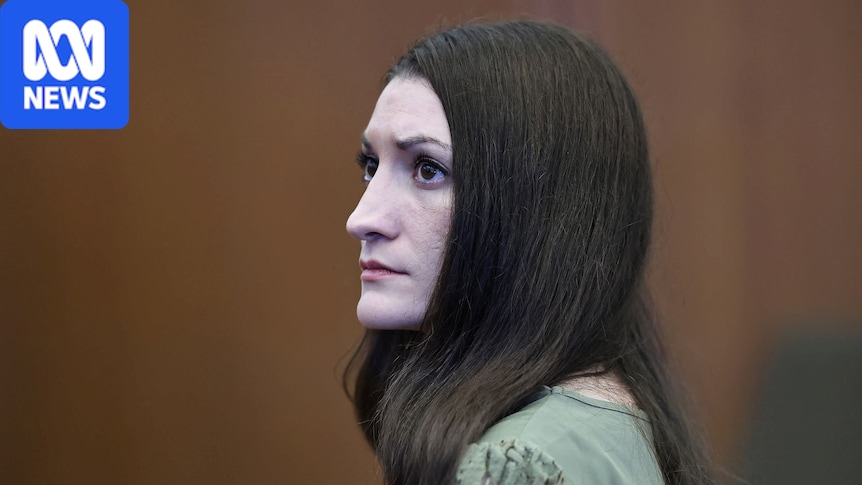
Lindsay Clancy jury member ‘had reasonable doubt’ but would not acquit, fellow juror says
Posted Wed 9 Sep 2026 at 8:26pmWed 9 Sep 2026 at 8:26pmWed 9 Sep 2026 at 8:26pm
In short:
Three members of the Lindsay Clancy jury have detailed how the group could not reach a consensus, leading to a mistrial.
Eleven members of the jury were persuaded to find her not guilty by reason of insanity, but one member would not acquit.
What’s next?
Although the trial ended without a verdict, prosecutors are free to start a new trial with a new jury.
Three members of the Lindsay Clancy jury have spoken about failing to reach a consensus in an interview with US media.
Warning: This story contains details of a crime that may be distressing for some readers.
Foreperson Roni Carlson said all but one member of the jury were persuaded to find the defendant not guilty by reason of insanity, in an interview with NBC10 Boston.
After deliberating, Ms Carlson described being “excited” the jury had reached a consensus.
She began filling out the paperwork, but was interrupted by the lone juror.
“He had reasonable doubt, he admitted he had reasonable doubt,”
she said.
“But he said ‘I’m still not gonna say she’s not guilty by reason of insanity’.”
Lindsay Clancy was charged with three counts of first-degree murder over the deaths of her three children at their Boston home on January 24, 2023.
The Massachusetts mother’s attorney said she had lost control of her mind due to postpartum psychosis, while prosecutors argued she knew what she was doing and acted deliberately.
After six-weeks of testimony, the judge ultimately declared a mistrial when the jury could not come to an agreement.
Loading Instagram content
Proof beyond a reasonable doubt?
The three jurors interviewed, Roni Carlson, Kellie Farina and Paula Devlin, raised concerns the lone juror’s doubt did not match his verdict.
In the United States, the Due Process Clause in the constitution “requires proof beyond a reasonable doubt before a person may be convicted of a crime”.
Ms Devlin described the lone juror as “very arrogant”.
“He really did not take on anything that anybody said,”
she said.
She continued to describe an interaction where he asked jury members who are nurses about Ms Clancy’s medication and the toxicology report.
But then, Ms Devlin said, “he just completely disregarded the information that they gave”.
‘Did she know right from wrong?’
Ms Carlson explained that the majority found Ms Clancy not guilty by reason of insanity due to the evidence presented regarding her character and mental health.
“We weren’t trying to figure out if she murdered the children, she did and she’s admitting that,” she said.
“We’re trying to figure out did she know right from wrong at that time.
“Everything proved she loved her children — from her journals to her mother-in-law — everything proved that she loved her children so she had to have snapped and not know what she was doing.”
The three women left the six-week trial as life-long friends, according to NBC10 Boston, saying they supported each other through the traumatic testimony.
Ms Farina described hearing Patrick Clancy’s, Lindsay’s husband, 911 call.
“It’s something I will never not hear,”
Ms Farina said.
“When we heard it again in the jury room we were crying again, we were just like ‘my god, the desperation, the despair in his voice’.
“I felt that it was genuine.”
Although the trial ended without a verdict, the case is not closed and prosecutors are free to start a new trial with a new jury.
Plymouth County District Attorney Tim Cruz told reporters that no decision had been made on whether prosecutors would retry the case, but that his goal was always “getting justice for those three little babies”.