
Health concerns grow as volcanic ash spreads across Indonesia after eruptionBy Tri Ardhya
Posted Wed 9 Sep 2026 at 3:42pmWed 9 Sep 2026 at 3:42pmWed 9 Sep 2026 at 3:42pm
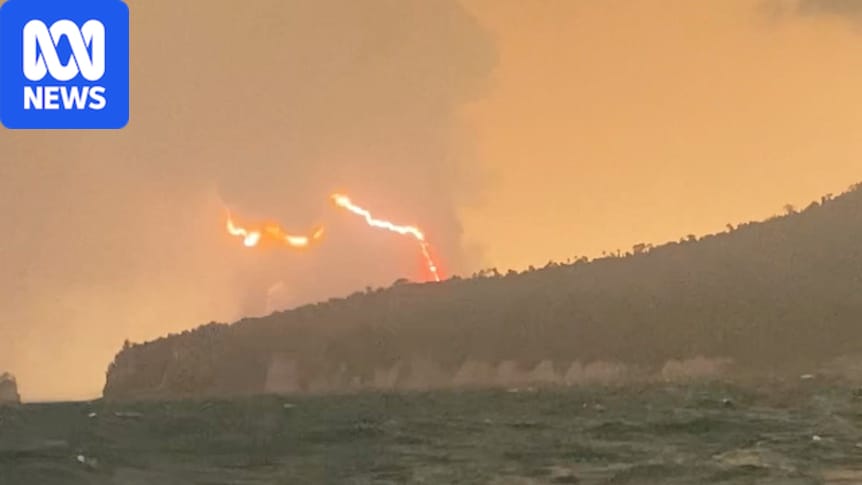
Indonesia’s Mount Anak Krakatau has sent volcanic ash across parts of Java and Sumatra islands, disrupting thousands of flights, hundreds of thousands of travellers and impacting local communities.
Indonesia’s Geological Agency said a 25-hour continuous eruption ended on Sunday, but smaller intermittent eruptions had continued and the likelihood of further eruptions “remains high”.
A three-kilometre exclusion zone around the volcano remains in place.
Jakarta’s main Soekarno-Hatta International Airport and four other airports reopened on Tuesday after winds cleared ash from surrounding areas.
More than 340,000 travellers, including Australians, and nearly 3,000 flights were affected by cancellations and delays, according to InJourney Airports that manages commercial airports across Indonesia.
Ash ‘truly intense’
Ash has disrupted communities living nearby, such as in Lampung province, about 75 kilometres north-east of the volcano.
Elizabeth Amelia, who lives in the city of Bandar Lampung, said she was concerned about the health of her two-year-old child and her 63-year-old mother.
“I’m worried it could affect their breathing. If it’s inhaled too much, it could cause a respiratory infection,” Mrs Amelia said.
She said her daughter and mother had not gone outside since the ash fall began, while she and her husband were wearing masks to go to work.
She said she noticed what first looked like “rain” on Saturday night, before realising it was volcanic ash.
“The ash was truly intense. You could really see the car windows, they were completely covered in ash, absolutely caked in it, not just a light dusting,”
she said.
She said the ash fall felt worse than in 2018 because it had lasted for several days.
In 2018, volcanic activity at Mount Anak Krakatau triggered an undersea landslide and tsunami in the Sunda Strait.
Loading…
The disaster killed at least 430 people, injured 1,485 and displaced about 20,000.
Living less than 1 kilometre from the coast also made her anxious about the risk of a tsunami.
“I am scared. If I were to stay in a hotel, for how long? We don’t know how long this situation will last,” she said.
She said the uncertainty had made her consider permanently moving inland.
The Meteorology, Climatology, and Geophysics Agency (BMKG) has advised residents in ash-affected areas to reduce outdoor activity and use masks and protective glasses.
It also warned volcanic ash could “irritate the eyes and respiratory system, particularly among vulnerable groups such as children, older people and those with respiratory conditions”.
Fears grow as ash reaches Bogor
In Bogor, more than 100 kilometres from Mount Anak Krakatau, Rosyidah Khairiyyah lives with two of her children while her husband teaches at a boarding school in neighbouring Banten province, where their eldest child studies.
Mrs Khairiyyah said her husband and eldest child usually returned home only once every two months.
She was concerned that a sudden emergency could split the family.
“I might not be able to reach the children or the emergency bag, or I could leave my phone behind and not be able to contact my husband or children,” she said.
She said their emergency plan was for her husband to stay with their eldest child, while she would take the two children at home to a safer area.
But she said she was not aware of government plans about where residents should go if they needed to leave.
As ash continued to fall, Mrs Khairiyyah said she was mopping her terrace about five times a day and placing wet towels along gaps under the doors to stop ash from entering the house.
One of her children studied from home this week, but returned to school on Wednesday.
Her children also developed what she described as a “weird cough”.
Tourists treat eruption as a ‘spectacle’
Ade Ervin, the chairman of Balawista Indonesia, a national water-tourism safety and rescue organisation, said he was at the organisation’s base in Carita, on Java’s west coast, when the volcano mount began erupting.
“The roof tiles [were] shaking, the buildings were trembling, and at the same time leaves were falling from the trees because of the shock waves,”
Mr Ervin said.
He said there had been “remarkable progress” in conditions since Tuesday morning, although light ash was still falling in some areas.
He said about 120 of his team members were deployed across coastal areas in western Java and southern Lampung.
He said tourists treating the eruption as a “spectacle” was a problem, with some visitors gathering to watch instead of moving away from potentially dangerous areas.
“This lack of awareness becomes a psychological challenge in situations like this, because it makes the job harder for responders and volunteers,” he said.
Despite the disruption, Indonesia’s Geological Agency said communities along the Banten and Lampung coastlines could continue normal activities while following official advice.
Teuku Faisal Fathani, the head of the Meteorology, Climatology, and Geophysics Agency (BMKG), urged the public to remain calm and avoid panic.
He said BMKG and other government agencies were continuing to monitor volcanic ash movement and potential hazards.
However he urged people in areas exposed to volcanic ash to remain vigilant.
“Let’s take care of vulnerable groups around us … BMKG continues to update weather, aviation, and geophysical data regularly, so that the public can carry out their activities with peace of mind by referring to official information,” Mr Faisal said.