
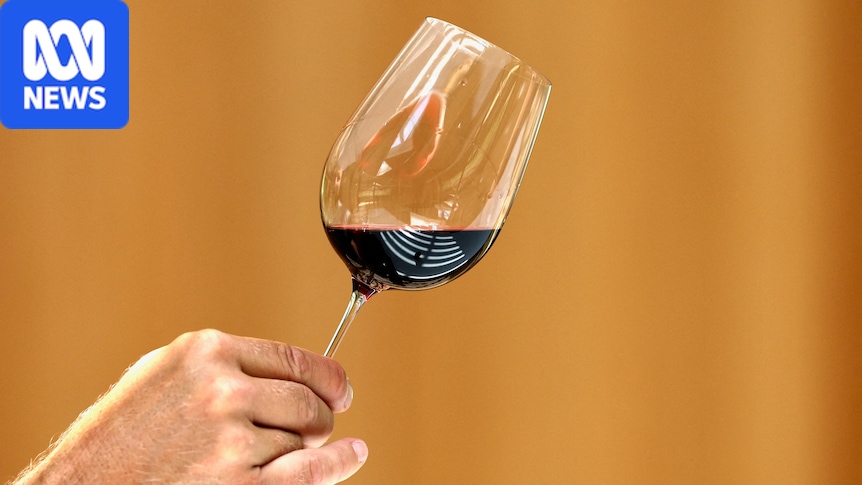
French wine output predicted to be lowest in 30 years after heatwaves and drought
Posted Tue 8 Sep 2026 at 7:10amTue 8 Sep 2026 at 7:10amTue 8 Sep 2026 at 7:10am
In short:
France is expected to produce one of its lowest amounts of wine in decades after soaring temperatures and dry conditions over summer.
It is forecast to produce less than 34 million hectolitres this year, equivalent to 4.5 billion bottles.
What’s next?
France has announced an emergency aid package for farmers of more than €1 billion ($1.6 billion).
French wine output is likely to be at one of its lowest levels in three decades, with champagne output set to halve this year after severe heat and drought damaged vines and grapes.
The world’s second-largest wine producer recorded its hottest summer in 2026 amid increasingly frequent extreme weather events in Europe, which scientists say is experiencing the fastest climate change-driven warming of any continent.
Following on from low output in 2024 and 2025, France was projected to produce 33.9 million hectolitres of wine — equivalent to about 4.5 billion standard bottles — in 2026.
That would be 6 per cent below last year and 17 per cent down on the 2021–2025 average.
The farm ministry said conditions early in the year had been favourable, but then the summer drought and heatwaves damaged vines and reduced yields.
Most wine producers in France tarted harvesting grapes unusually early this year, the ministry said.
France is traditionally the world’s second-largest wine producer, behind Italy, and the largest exporter in value.
In addition to the challenge from the weather the industry was also hit by US tariffs last year and consumption is at its lowest in more than 60 years as economic pressures, changing tastes and health concerns deter drinkers.
French agriculture hit hard
Wine output in Champagne is expected to be 49 per cent down on 2025, and 47 per cent below the five-year average.
Bourgogne-Beaujolais is forecast to be down by a third and Val de Loire and Charentes by 12 per cent and 6 per cent, respectively.
Production in Languedoc-Roussillon, which makes the most wine in France, should rise 5 per cent from last year’s weak harvest due to improved yields, though output has remained below average.
Bordeaux is expected to rebound 10 per cent from 2025 after late-August rain helped offset drought stress, but production remains well below its five-year average.
The production area was 2.5 per cent smaller this year compared with last as oversupply in the face of falling consumption has led winemakers to uproot a portion of their vineyards.
More broadly, French agriculture has been hit by this summer’s record heatwaves and lack of rain.
France on Friday announced an emergency aid package for farmers of more than €1 billion ($1.6 billion).
Reuters