
Startup Harrison.ai lays off Australian staff, pivots to US after $32m government investmentBy national AI reporter Cam Wilson
Posted Tue 8 Sep 2026 at 4:42amTue 8 Sep 2026 at 4:42amTue 8 Sep 2026 at 4:42am
In short:
A federal government-backed health AI startup has laid off Australian staff while launching a US venture hiring American clinicians who will be paid money to use its tools.
The company, Harrison.ai, received $32 million from the government last year so it could “continue to base its operations in Australia”.
These changes have prompted staff to leave and raised concerns about how the company will manage what experts flagged as a potential conflict-of-interest that could affect patient care.
An AI health startup is laying off staff and pivoting to a new US business model, a year after receiving a $32 million investment from the federal government to keep the company in Australia, the ABC can reveal.
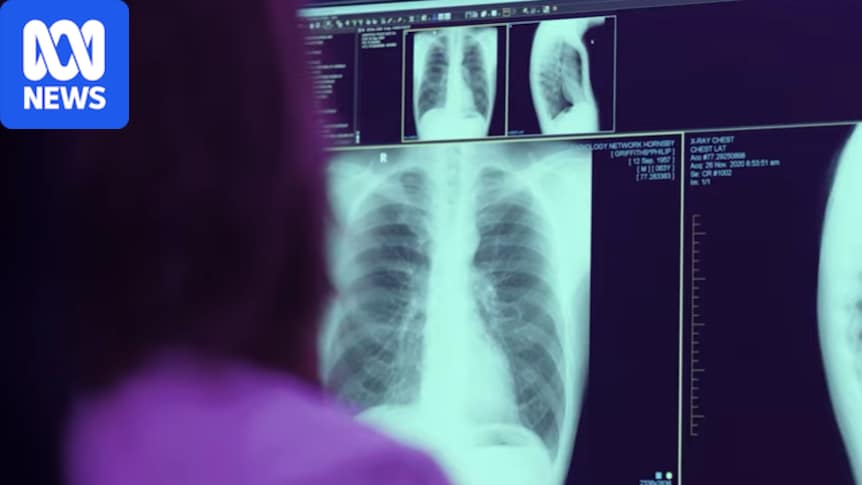
Harrison.ai, which previously courted controversy for training its AI on millions of medical scans belonging to Australians’ without their knowledge, makes technology used by doctors to help interpret radiology scans.
It is now launching an American-based teleradiology service, Frontier Radiology, that hires doctors to use its technology.
On top of the redundancies, a company leader said its plans to double-down on AI prompted staff to leave, as it carried out a restructure aimed to turn every employee into a “player-coach” of AI agents.
Harrison.ai was founded by brothers Aengus and Dimitry Tran in 2018.
The company sells AI tools it claims are used by 3,500 clinicians across more than 1,000 sites to help read chest and brain scans.
It is backed by some of the biggest names in Australia’s medical and startup community.
Investors include Australia’s largest radiology clinic I-MED and Sonic Healthcare, as well as Blackbird, the country’s biggest venture capital fund.
The company was valued at close to $400 million in a 2025 fundraising round. This included $32 million tipped in by the federal government’s National Reconstruction Fund (NRFC).
“The NRFC’s investment in Harrison.ai will ensure that the company continues to base its operations in Australia,” NRFC chair Martijn Wilder said at the time.
Earlier this year, the company told Australian staff it was making some of them redundant.
In an internal company document, seen by the ABC, affected employees were told in April the company would consult for a week before deciding which staff to lay off.
At least two employees separately posted on LinkedIn in May their roles had been made redundant.
The company also told staff it was shifting to a business structure that would make every employee responsible for a “fleet of AI agents”, referring to a new generation of AI able to carry out more work autonomously.
“Every manager a player-coach. Every team members (sic) an agent orchestrator,” an internal document said.
Public investment backed Australian jobs
The NRFC confirmed to the ABC it was aware of Harrison.ai’s layoffs, saying the company was shifting from product development to commercialising and embedding its technology around the world.
“As a result, the mix of skills and roles needed for this phase are evolving,” it said in a statement.
“The NRFC remains confident about the long-term future of Harrison.ai, its commitment to scaling globally while remaining based in Australia, and its ability to deliver better health outcomes for millions of people across the globe.”
Harrison.ai director of AI operations and enablement Matt Geleta separately said in a June interview the company expected its workforce to join its own AI transformation, while acknowledging it would not be for everyone.
“Some people have chosen to opt out because they are looking for more traditional work environments,” he said.
Harrison.ai’s international business shift comes as the company appears to be eyeing going public.
A finance role advertisement, posted in June, said the group was working towards “IPO readiness” and putting in place controls required for listing on the ASX.
Conflict-of-interest concerns
There are also concerns about how the company will manage a potential conflict-of-interest stemming from its new business model.
Around the same time as its restructuring, Harrison.ai was posting job ads for Frontier Radiology, its new venture hiring clinicians in the US to use its tools on scans.
Company job advertisements described Frontier as Harrison.ai’s “AI-enabled teleradiology service”, a core part of its 2026 growth plans and its first major move into delivering clinical services in the US.
Frontier’s website described itself as an independent medical practice but “affiliated” and “partnered” with Harrison.ai, which provided its administrative, operational and technology support.
Frontier is registered in Delaware, a state that has become home to many of the US’ biggest businesses because of its opaque corporate structures and low tax rates.
Its corporate regulator does not disclose who owns the company.
Its website advertises to radiologists using an online pay calculator showing how much the company would pay them per shift.
The calculator shows how a radiologist’s pay will vary per “work relative value units”.
The pay calculator assumes that doctors using Harrison.ai’s technology will be 30 per cent more productive, and offers them an individual 25 per cent bonus for the extra work attributed to that AI assistance.
Separately, Harrison.ai research in 2023 said use of its AI assistance tool led to an 8.5 per cent reduction in reporting time across 18,550 CT brain studies at one Australian teleradiology service.
Michelle Lazarus, a healthcare educator and researcher at Monash University, said the arrangement raised questions about the independence of the doctors.
She said Harrison.ai’s tools and Frontier Radiology could help a health system struggling to meet demand if the company was transparent about its data, training, workflow and responsibility for decisions.
But Professor Lazarus raised the risk of automation bias, and whether Frontier Radiology staff would feel obliged to use Harrison.ai’s tools and follow its suggestions.
She explained this risk using the analogy of using a GPS to drive, saying someone might choose to follow its suggested directions even if they suspect it is taking them the wrong way.
“That’s a benign situation, but in a healthcare situation, if you’re just following the AI recommendation and not challenging it, you can put health at risk,” Professor Lazarus said, raising the possibility that it could lead to doctors missing critical results.
“How can you have a healthy scepticism if you are paid by the company that the thing you’re supposed to be sceptical of is produced by?“
Wendy Rogers, a distinguished professor of clinical ethics at Macquarie University, said she had concerns the arrangement could make it harder for radiologists to disagree or challenge the results produced by the AI tools.
“The doctors would be tied to using that equipment. And if a time came when they felt that wasn’t in the patient’s best interests, then they would need to take some professional responsibility and act,” she said.
Harrison.ai Services’ website said its system supported radiologists rather than replacing them, and Frontier’s doctors exercised independent clinical judgement.
The ABC contacted Harrison.ai and Frontier Radiology for comment over several weeks, including personally calling its two co-founders to ask how often doctors override the AI, how its output is audited or what patient data passes between the two entities.
Aengus Tran told the ABC he did not answer unsolicited phone calls and hung up.
Dimitry Tran and the company did not respond.
Privacy probe
Harrison.ai previously faced scrutiny for training its AI on tens of millions of patient studies supplied by imaging provider and investor, I-MED.
I-MED said it had de-identified the scans before transferring them, but its patients were not notified, nor were they asked for consent.
An investigation by the Office of the Australian Information Commissioner, the government agency responsible for national data protection, accepted the material had been sufficiently de-identified and closed its inquiries.
Documents obtained under Freedom of Information laws in August showed the Department of Health and Aged Care also briefed Health Minister Mark Butler’s office in November 2024, following reporting about the use of the scans.
The briefing said law did not govern how medical-device training data was sourced, shared or otherwise used.
It said those issues instead fell under clinical practice, health practice and privacy laws, and promised updated guidance and work with the privacy regulator.