
Russia calls Leipzig drone attack accusations ‘start of real war’
Posted Sun 6 Sep 2026 at 11:11pmSun 6 Sep 2026 at 11:11pmSun 6 Sep 2026 at 11:11pm
In short:
Russia’s foreign minister has called accusations that Moscow was implicated in last month’s drone incident at Leipzig Airport in Germany “the start of a real war”.
The German government concluded last week that Russia was responsible for the alleged drone attack.
What’s next?
Germany has ordered a raft of security measures after the incident, including installing an anti-sabotage “cyberdome”.
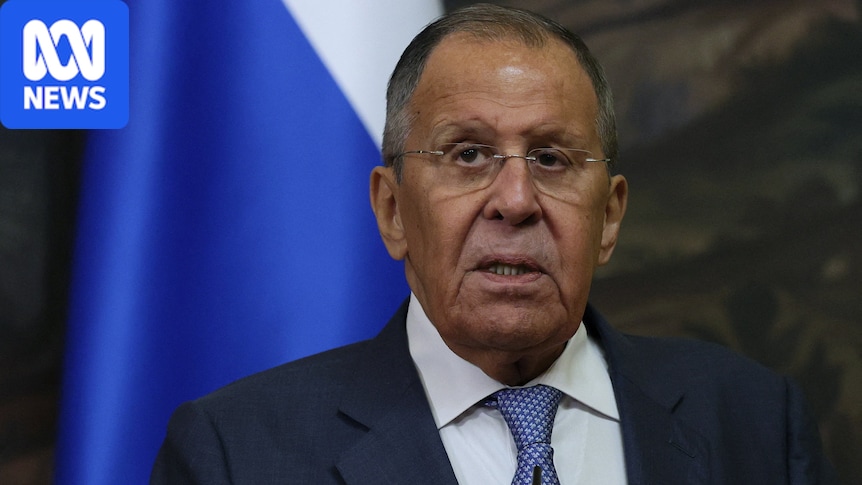
Russian Foreign Minister Sergei Lavrov says the accusations levelled at Moscow that Russia was involved in the drone incident at Germany’s Leipzig airport were “by and large, the start of a real war.”
“All these statements by [German Chancellor Friedrich] Merz about making Germany the leading military power in Europe once again — they are being put into practice,” Mr Lavrov said on Sunday, state news agency TASS reported.
“He is, in effect, declaring war on us.“
The German government said on September 1 it had concluded that Russia was responsible for an alleged drone attack at Leipzig Airport last month and ordered a series of measures in response, including the closure of a consulate and a Russian cultural centre in Berlin.
Russia has long rejected allegations it is carrying out operations in Western Europe and has denied involvement in the German airport attack, accusing Berlin of planting evidence to frame Russia for the attack.
German Chancellor Friedrich Merz said on Saturday, local time, that the incident shows Germany is facing a “profound rupture”, with far-reaching consequences that will only become clear in retrospect.
Speaking at a party event near Hanover, Mr Merz said the German government’s attribution of the attack to Russia was “clear and legally sound” and sent a clear warning to Russia not to continue this type of hybrid warfare.
Germany to install anti-sabotage ‘cyberdome’
German Interior Minister Alexander Dobrindt told the Bild am Sonntag newspaper that one of the measures the country would take in response to incident involved an anti-sabotage shield called a “cyberdome”.
Mr Dobrindt added that Russia’s hybrid attacks had become a part of daily reality.
“These attacks will increase, but we can defend and protect ourselves,”
Mr Dobrindt said.
Police mobile drone defence capabilities would be expanded under the plan, a military spokesperson said, with rapidly deployable counter-drone units stationed in cities to protect the airspace above critical transport hubs and government districts.
Companies operating critical infrastructure, such as power utilities and defence manufacturers, would be granted the legal authority to not merely detect drones but also actively fend them off.
A national protective shield — or “cyberdome” — would be established, involving a network of digital sensors designed to detect and intercept attempted hacking attacks.
The government also intends to expand the use of AI-supported technologies, biometric facial recognition and video surveillance to identify suspected attackers preparing acts of sabotage.
NATO should not tolerate ‘hybrid’ war
Also on Saturday, US ambassador to NATO Matthew Whitaker said members should not tolerate deliberate actions of hybrid war.
Mr Whitaker said the incident last month was more worrying than other recent incidents NATO members have faced due to Russian drones targeting Ukraine that strayed off course.
“Then you have what I would call the more concerning hybrid actions like we saw in Leipzig, like we have seen in Poland,” Mr Whitaker said speaking on the sidelines of a business conference in Italy.
“If we can identify who’s doing it — which Germany did — we make sure we express strongly that is unacceptable and we will not tolerate it.“
Critical infrastructure, including energy assets, could be targeted and should be monitored by national authorities, he added.
The response to these challenges is primarily national, but the United States supports countries when they are dealing with these acts, he said.
Reuters