
analysis
Bathla’s collapse exposes many issues in Australia’s housing industry By Alan Kohler
Posted Mon 7 Sep 2026 at 4:30amMon 7 Sep 2026 at 4:30amMon 7 Sep 2026 at 4:30am
Maybe housing developers should be required to live in what they build.
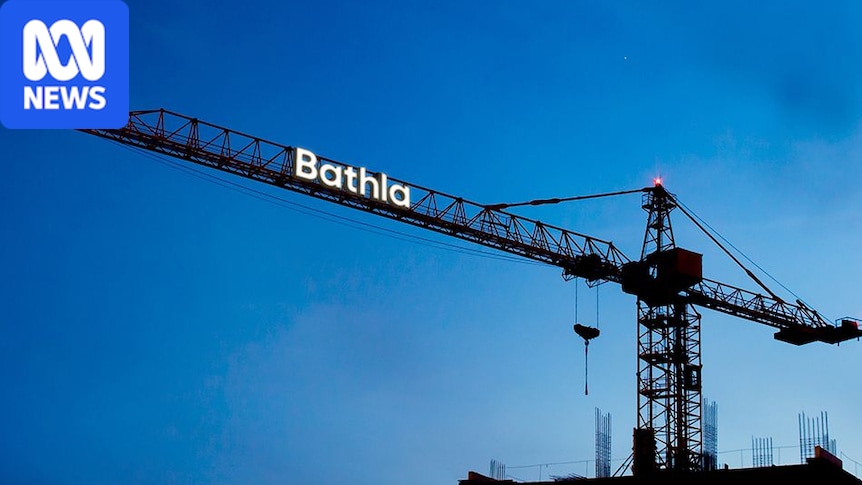
In the lead-up to the $3.4 billion collapse of developer Bathla Group a fortnight ago, the NSW Building Commission conducted more than 40 inspections of its sites over concerns about the quality of the building.
And then a few days later, The Financial Review carried a story headed: “The Bathla family mansion has to be seen to be believed. French cobblestones and a wrought iron gate. Multiple pools alongside a basketball court and a tennis court.”
So, no housing quality problems for the Mohan family behind Bathla, it seems.
The collapse of Bathla is a disaster for the national housing supply and affordability project: its now-stalled pipeline of 14,000 apartments represents about 18.5 per cent of new housing stock to be built in the state this year, and NSW is already running well behind its target.
But it also highlights three other issues:
- A three-way collision between the rise in construction costs, tighter controls on construction quality and the need for more, not less, affordable (that is, cheap) housing.
- The mess that is Australian construction regulation, with each state doing its own thing.
- The fact that banks prefer to lend against existing houses and have largely abandoned the building of new ones, leaving it to more expensive private credit, further raising the cost of new housing.
Bathla’s collapse hurts affordable housing targets
Bathla was one Australia’s biggest providers of affordable housing and was caught by all three of those things.
NSW launched a crackdown on the quality of apartment construction following structural failures in the Opal Tower in 2018 and Mascot Towers in 2019, with the creation of the Building Commission NSW in 2023 and the Building (Approvals and Practitioners) Act 2026.
Which raises an obvious question: how come the 2000+ page National Construction Code (NCC) didn’t already prevent the quality issues that Bathla is now being pinged for?
The answer most likely lies in the system of private inspections and approvals that allow developers to shop around for lenient certifiers.
For example, the Environmental Protection Authority has alleged that a private certifier falsified approval documents on four Bathla development sites.
NSW now has a hybrid system where day-to-day, mandatory construction checks are still done by private building certifiers, either contracted by the developer or the local council, and the Building Commission then acts as the auditor, investigator, and disciplinary force randomly inspecting the work of both builders and certifiers to make sure no one is cheating.
Also, despite its many pages, and apart from not being properly policed, the NCC doesn’t cover a lot of the issues that Bathla buyers have been complaining about, such as missing doors and poor finishes.
New insurance requirements ramps up pressure
Bhart Bhushan, Bathla’s managing director and co-founder with his brother Rajinder Mohan, blames the company’s collapse largely on the federal budget in May, when the changes to capital gains tax and negative gearing led to a drop in demand for apartments from investors.
That wouldn’t have helped, but a more important factor would have been the introduction in NSW of mandatory Decennial (10-year) Liability Insurance (DLI) on August 14, 11 days before Bathla went under.
Ten-year insurance is expensive and hard to get, especially for a developer with a reputation for poor quality.
To qualify for a 10-year DLI policy in NSW, a developer must undergo rigorous, data-based risk assessments, often tied to independent ratings like the iCIRT (Independent Construction Industry Rating Tool).
Bathla is not one of the 219 companies on the iCIRT registry, so insurance was likely either expensive or impossible
Without access to DLI, Bathla was forced back to the statutory alternative – a 2 per cent bond, locked up for 10 years.
Because DLI requires the insurers to do rigorous, multi-stage construction audits while the building is going up, lenders to Bathla knew that the Building Commission NSW might refuse to issue final completion approvals.
If that happened the apartments couldn’t be sold and the lenders would be stuck with a stranded asset and default.
Financiers could see that either expensive insurance or 2 per cent bond would drain the company’s liquidity so they started refusing to roll over Bathla’s debts, which triggered the voluntary administration.
Loading
What could possibly go wrong?
And who are the lenders? Not banks, and they don’t actually lend to Bathla.
The outfits that are in a $3 billion Bathla-shaped hole are private credit firms, which are really asset managers that raise money from investors by offering interest rates of 7 per cent and more and lend it for a margin on top of that to businesses that can’t get a loan from a bank.
Bathla operates through hundreds of special purpose vehicles (SPVs) that do the projects, and it’s to these that the private credit firms have their exposure, not Bathla, which means there is a complex maze of different projects at different stages of life, each with its own lender.
Some of the lenders are trying to finish projects themselves, while some have just got a vacant block of land with a set of plans, and none of them wants to fund Bathla’s head office, with 165 staff.
Why aren’t the banks involved in this industry? Because after the GFC, the banking regulator, APRA, changed the capital rules to favour real estate security over the future cash flows of businesses like property developers.
This also part of the reason pre-fab housing manufactured in factories and assembled onsite has never gained a foothold in Australia despite the obvious cost benefits of it – it’s hard to get finance.
Meanwhile, NSW has become an outlier in a messy tapestry of national construction regulation and policing.
While NSW has empowered a new well-funded government agency in response to the Opal and Mascot Towers scandals, Victoria, Queensland, WA and SA are sticking with private certifiers to sign off on residential construction work.
No state government wants to ban private certifiers and return fully to local council inspections because it would result in housing construction grinding to a halt — councils across the country have wound down their building departments and don’t have the capacity to do it anymore.
But since they’re all working off a National Construction Code, you’d think it would make sense for the policing of it to be national as well.
Private construction of affordable housing, with private credit, subject to private inspections of quality and safety.
What could possibly go wrong?
Alan Kohler is a finance presenter and columnist on ABC News. He hosts the podcast That’s Business with Alan Kohler in the ABC Business Daily feed on Friday. He also writes for Intelligent Investor.