
Meat industry faces worker shortage after visa policy changesBy Jess Baker and Kate Forrester
Posted Thu 3 Sep 2026 at 11:53amThu 3 Sep 2026 at 11:53amThu 3 Sep 2026 at 11:53am
In short:
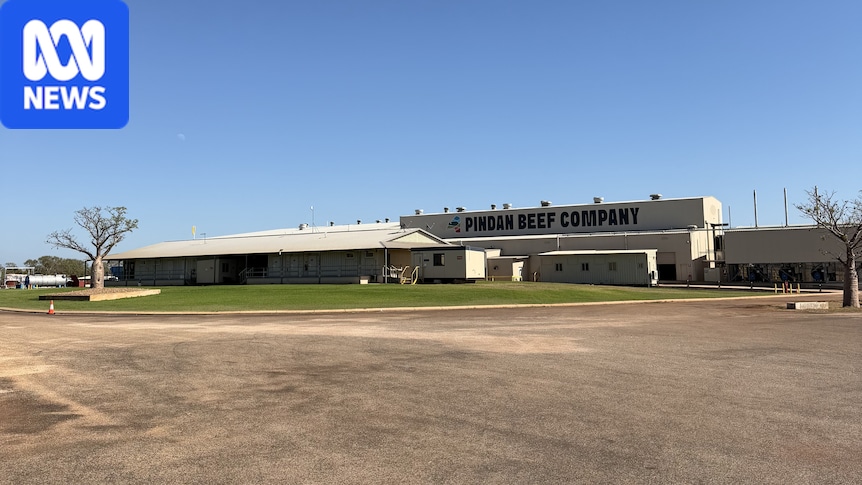
The long-awaited reopening of northern Western Australia’s only major abattoir will be pushed to next year after changes to visa processing priorities.
The changes are also set to impact a mixed farm enterprise in the south where a piggery expansion is underway.
What’s next?
Employers affected by recent visa processing changes say it is unclear when their overseas employees will be able to start work.
West Australian abattoirs and pork producers say recent visa changes and the near impossibility of attracting local employees to fill vacancies are leaving them facing severe worker shortages.
Just one Australian resident responded when an abattoir took out advertisements seeking 60 skilled workers for its facility near Broome in WA’s far north Kimberley, according to Yougawalla Pastoral Company general manager Haydn Sale.
Mr Sale’s company is helping reopen the abattoir after years of dormancy, but he said the opening date had been pushed back months due to staffing issues.
Meanwhile, the expansion of a piggery in the state’s south will go ahead with a significantly reduced workforce for the same reasons.
New visa rules
Home Affairs Minister Tony Burke issued a ministerial direction in July outlining a new five-tier visa processing hierarchy that strongly favoured applicants already located inside Australia.
The lowest priority was given to applicants based overseas seeking employment in industries unrelated to law enforcement, defence, construction, healthcare, and teaching.
Mr Sale said nearly 30 skilled workers from the Philippines had been identified to work at Pindan Beef Co, formerly the Kimberley Meat Company, located about 2,300 kilometres north of Perth, as had 13 of the workers’ partners.
But he said the skilled worker visa changes had made a 2026 opening date impossible.
“We’ve had to move [that date] back … because the skilled meatworker visas that we’ve applied for are basically held up in the system,” he said.
“We paid $390,000 in visa fees to get those people in, and now we’re just in a holding pattern on that.“
Mr Sale said hiring locally was not an option due to a shortage of skilled Australian workers and the remoteness of the plant, with just a single Australian applicant for the 60 advertised positions.
“Upon investigation, they weren’t even actually skilled,” he said.
The soft opening of the facility is now slated for February, with the full commercial opening delayed until April.
Mr Sale said thousands of cattle were in limbo waiting to be processed.
“We’ve got a whole supply chain that was lined up on the stations,” he said.
“We had about 6,500 cattle ready to process through late in the year that we’re now having to find homes for.“
Piggery staff challenges
In the south of the state, near Narrogin, pork producer Dawson Bradford is facing similar challenges while trying to expand his piggery from 1,500 to 2,500 sows.
Mr Bradford said overseas workers were crucial to his 5,000-hectare mixed farming enterprise, forming 90 per cent of his piggery workforce and more than half of his total staff.
“We bring them in because they want to live in the bush and they want to work in the industry,” he said.
“We just cannot get Australians who want to work through the piggery, and other industries are exactly the same, whether it’s chickens, processing, abattoirs.
“We’re all in the same boat. We’re just relying on that migrant labour to come in, and they’re skilled, they are good workers.”
Workers under pressure
Mr Bradford said many of those he recruited in January were from the Philippines, and some had already left their previous employment, believing they would soon be in Australia.
“We don’t know when they’re going to get here,” he said.
“We need them now.“
Regardless of when the workers’ visas would be processed, Mr Bradford said the piggery expansion would proceed as plans were set in motion last year.
“That’s when we got the ball rolling with getting stock and breeding them out to mate, so the piglets are due in six months,” he said.
“They’re coming and we won’t have staff, so it’s going to load up the rest of the staff … just because these visas are being held up.”
He said his attempts to gain clarity on when the visas he applied for might be processed had so far been futile.
“You cannot talk to anyone, you cannot get hold of anyone in that department to give you an update,” he said.
“You just have no idea when your applications are going to be processed.”
Government responds
A Department of Home Affairs spokesperson said the skilled migrant program had been designed to put Australian workers first.
“Where Australian businesses have been unable to find local workers, the skilled migration system supports Australian businesses to access migrant workers with these skills, making a positive contribution to the economy,” the spokesperson said.
“The department is continuing to process applications under Meat Industry Labour Agreements in accordance with program requirements and established processing arrangements.”