
Federal government to inject $145m into crisis and transitional housing in Victoria
Posted Fri 4 Sep 2026 at 5:15amFri 4 Sep 2026 at 5:15amFri 4 Sep 2026 at 5:15am
In short:
The Albanese government will inject $145 million to deliver safe, stable housing for young people experiencing homelessness and women escaping domestic violence.
More than 200 homes for crisis and transitional accommodation will be built across the state.
The announcement has been welcomed by service providers and people with lived experience.
The federal government will today unveil a $145 million investment in crisis and transitional housing across Victoria.
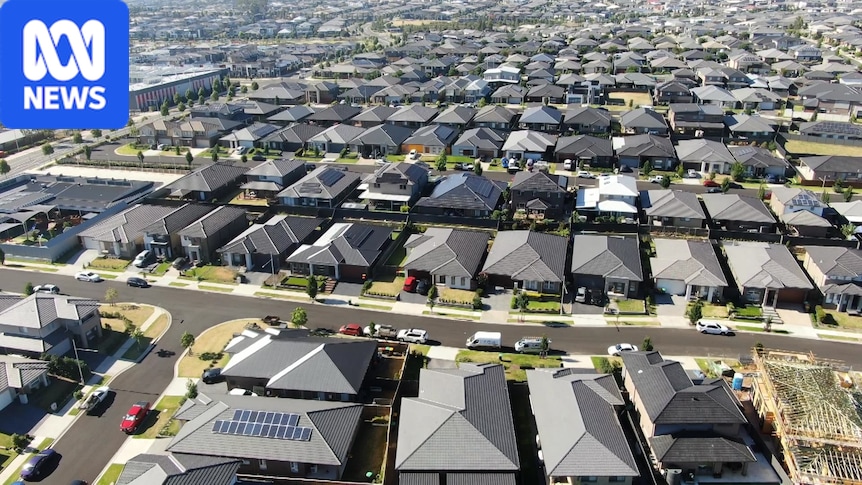
The funding boost will see 234 additional homes built across the state to support women escaping family violence and young people at risk of homelessness.
They will be built from funding from the Housing Australia Future Fund under the direction of the Victorian government, community housing providers and First Nations organisations.
The homes will be built across Melbourne and regional Victoria, including in Greater Geelong and in the Mildura and Swan Hill areas.
The pledge has been welcomed by people with lived experience like Gia*, who said stable housing helped her flee domestic abuse.
“The first night in emergency accommodation was so surreal. It was something I would truly never forget in my life,” she said.
“After months of fear, it was the first time I felt like a true inch of happiness.“
Gia, whose name has been changed to protect her identity, was 24 when she moved to Australia from India following an arranged marriage.
While she said there were some “red flags” early on in the relationship, nothing could prepare her for what followed.
Gia said she suffered multiple forms of abuse, was provided with little or no food and was threatened with deportation if she refused demands like handing over her earnings.
“My phone, my social media, all of my movements, my daily routine were controlled,” she said.
As the abuse escalated, she reached out to a support service and spent a number of weeks developing a safe exit plan in secret.
Then one day, she grabbed some documents and fled.
“We often tell women or children going through violence or unsafe situations to leave, but we don’t always give them somewhere to go,”
she said.
“Just me being courageous and deciding to leave is not enough in my story even. I needed a place to go.”
Accommodation supporting youth homelessness
Young people experiencing homelessness will also benefit from the announcement.
Sienna Sedgmen was about to turn 16 when she first experienced homelessness as a result of family violence and other complexities.
“Because of my age, the child protection workers felt that they didn’t need to house me,” she said.
As a result, she couch-surfed for a period of time while still attending school before accessing crisis accommodation.
“For me, when I was constantly thinking about where I was going to sleep, there wasn’t really any room to think about who I was going to become,” she said.
Then she found Youth Foyer — a not-for-profit that provides young people with a safe, stable home for up to two years among other supports.
“I’d experienced so much instability up until that point that just that consistency was I guess at the forefront,” she said.
According to Melbourne City Mission (MCM), a charitable organisation that supports young people experiencing homelessness, more than 11,000 people aged between 15 and 24 access specialist homelessness services without the support of an adult every year.
“That’s only the people who are registering to be supported by those agencies,” chief executive Paul Wappett said.
“If you look at census data, there’s about 7,600 young people every night in Victoria alone don’t have a safe or secure place to sleep.
“We’re only touching the very surface of the issue that we’ve got.”
He said young people experiencing homelessness represent 10 per cent of the entire homelessness population, but they have only 3 per cent of the beds that are available for the homelessness population.
Additional support services
Mr Wappett said the funding for the transition into independent living and the private rental market was also vital.
“For those people who are lucky enough to find a bed, there are really limited pathways out of homelessness into stable, safe and secure housing,” he said.
“They’re literally trapped in this homelessness cycle.”
He said at least 5,000 dedicated youth tenancies were needed across the state to address the shortage but the announcement was a step in the right direction.
“We think that youth homelessness in Victoria and across Australia is something we can actually end,”
he said.
Ms Sedgmen said it goes beyond housing.
“I don’t think there is a homeless young person out there that doesn’t require long-term support,” she said.
It is something Gia agreed with, praising the support workers she encountered.
“These people have just been nothing short of guardian angels in my life, showing up when I had no-one,” she said.
“They didn’t just help me escape abuse, they really helped me reclaim my future.”
After the 2021 Royal Commission into Victoria’s Mental Health System, the state government accepted a recommendation to create 500 additional accommodation places specifically for young people at risk of experiencing homelessness.
But a recent update suggested only a quarter of the promised homes were being built, prompting pressure from the sector to explain its plans for that recommendation.