
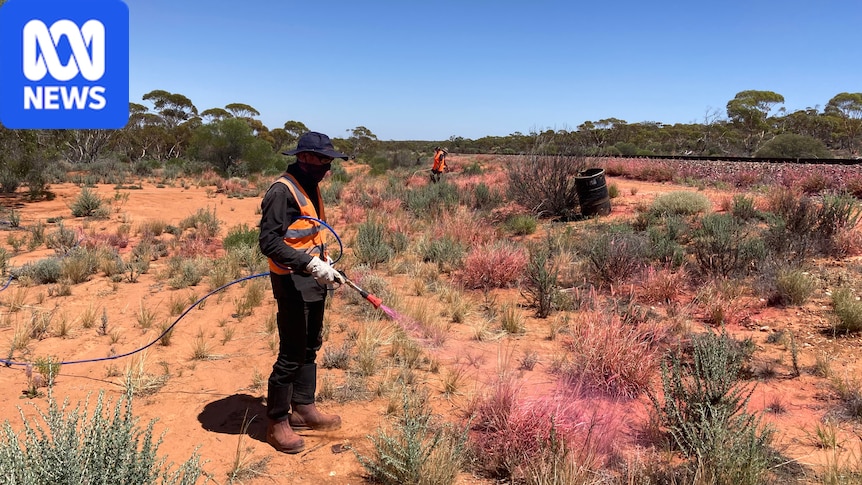
Buffel grass raises SA’s fire risk but not everyone wants it eradicated
Posted Thu 3 Sep 2026 at 6:59amThu 3 Sep 2026 at 6:59amThu 3 Sep 2026 at 6:59am
In short:
Authorities have flagged a heightened fire risk in parts of SA this spring where buffel grass is thriving after good rain.
Buffel grass is highly flammable and outcompetes native vegetation, but it is also used for livestock feed.
What’s next?
A parliamentary inquiry is examining current and possible future management of buffel grass in SA to halt its spread.
Parts of South Australia are facing a heightened bushfire risk this spring after the boom of one of the nation’s most invasive and flammable weeds.
But there is division about what to do about it.
SA has begun a parliamentary inquiry into the management of buffel grass, which has exploded in growth this year due to significant rain in the state’s remote north-west.
It comes as the Australian and New Zealand Council for Fire and Emergency Services’ national bushfire outlook for spring predicts a heightened risk of fire in that district.
The Country Fire Service says high fuel loads fed by an explosion of buffel grass growth are a “particular concern” heading into warmer months.
CFS director of community risk, resilience and planning Alison May said vegetation would continue growing into spring, but was already drying out.
“Buffel grass … has been on the agenda amongst fire response agencies for quite some time now and continues to be … and we’ll be working together to see what the way forward is on that,” Ms May said.
Inquiry underway
Native to parts of Africa and Asia, buffel grass was brought to Australia in the 19th century to improve pasture and soil, but its spread can overcome native species and fuel bushfires.
MP Erin Thompson is chairing a parliamentary inquiry into the spread and management of buffel grass in SA — the first state to officially declare it a weed.
“We know it is doing significant damage across our state and … with the recent rainfall we’ve had over 2026, it’s becoming more of an issue for SA,”
Ms Thompson said.
“We’re keen to have a look at how it’s already being managed and for opportunities to improve that, so that we can reduce the spread of buffel grass across South Australia.”
Fire risk grows
Invasive Species Council senior advocate James Johnston said it was imperative to halt the spread of buffel grass further south.
“We need to know [what] resources we need to deal with this at scale and essentially prioritise where those resources need to go, so we can best protect our communities,” Mr Johnston said.
“Buffel grass burns at 300 degrees, a significant amount more than our native grasses, so we’re just not adapted in our local environment to deal with such pressures in an already bushfire prone region.
“Earlier this year we had a shocker season, where it’s gone to seed early because of the rainfall patterns that we’ve been receiving.
“We’re now going into spring where there’s going to be a lot more growth of buffel grass, and the real risk is that, going into summer, bushfire risk will escalate.“
But not everyone views buffel grass as a negative.
Feed for livestock
Livestock SA chair Gillian Fennell said buffel grass had been a “very valuable feed source” for pastoralists running livestock in arid areas.
“It does provide significant environmental benefits in the sense that it does hold creek beds together, it does hold soil together in areas where there’s been erosion and degradation,” Ms Fennell said.
“Buffel grass is always the first thing to re-sprout after a drought, which means it’s also the first thing to be eaten, giving native grasses the opportunity to grow and set seed because there’s another fodder source available.
“It is quite easy to control buffel grass with livestock. You just eat it.
“I can also appreciate that moving further south into higher rainfall areas, into mixed farming and cropping systems, it has the potential to become quite costly to manage and control.”
She said SA already had a “generally good framework” for addressing buffel grass, supported by good land management by producers.
“I think anything to do with the buffel discussion needs to be approached with a bit of common sense,” Ms Fennell said.
“It does have its upsides, but it also has its downsides. There’s definitely a way to balance it.”