
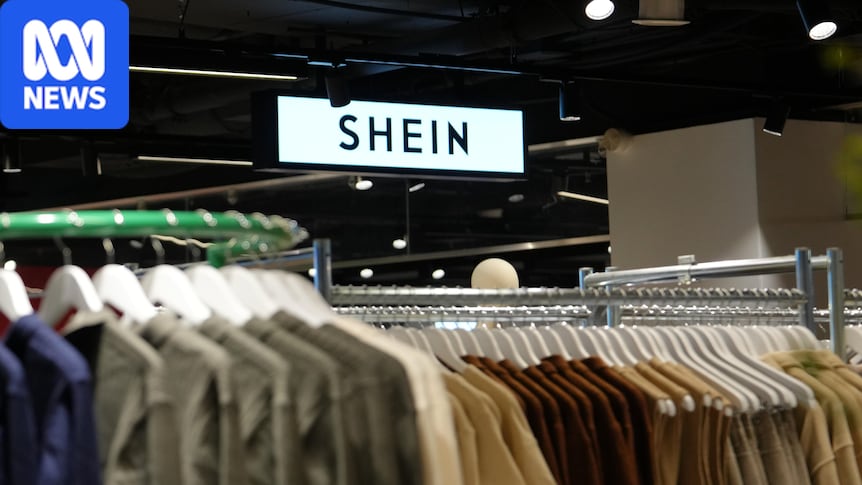
France cracks down on Shein and Temu brands as it taxes fast fashion
Posted Thu 3 Sep 2026 at 2:52pmThu 3 Sep 2026 at 2:52pmThu 3 Sep 2026 at 2:52pm
Items from “ultra-fast fashion” brands like Temu and Shein are subject to new fees under France’s world-first efforts to curb the overconsumption of cheap clothing.
The fees are part of a law imposed in June which aimed to address environmental concerns from overproduction of garments and its impact on the environment.
They are the toughest laws a country has imposed on fast fashion e-commerce brands responsible or manufacturing and selling millions of garments each year.
French shoppers spent $3.2 billion on textile products in 2025, an average of 43 items per person, according to French eco-organisation ReFashion.
In comparison, the Australia Institute estimates Australians purchased about 56 items per person over the same period.
But there are no such penalties for wastage by fast fashion brands or a governing body for the disposal of garments in Australia.
So why is France so strict and what do the laws entail?
What are the laws?
The main aim of the fast fashion legislation is to address surging sales of cheap clothing sold by brands like Shein, Temu and AliExpress.
But it also bans “ultra-fast fashion” advertising in France, including on social media and through paid partnerships with influencers.
“These platforms are false champions of consumer purchasing power,” Commerce Minister Serge Papin told local newspaper Ouest France.
“They sell at low prices, yet their products often fail to meet standards and lack durability.”
Neither Shein nor Temu responded to Reuters’ requests for comment on the fees.
How do they work?
The French fees are calculated using a formula that takes into account the number of products available under a brand, their prices and how easily they can be repaired.
It makes France the first EU member to penalise retailers based on the number of items they offer on their website.
Shein, for example, had a product selection of more than 2 million items as of March 31 this year, with 4,700 new apparel items each day.
The new fees range from €0.25 (24 AUD cents) for a pair of boxer shorts or socks to €12 ($22.57) for a coat, with the amount capped at 50 per cent of the product’s pre-tax sales price.
They will be higher by 2030.
What about other European laws?
The European Union has implemented other measures to crack down on the environmental impact of fast fashion in the past five years.
In July, the EU began prohibiting large companies from destroying unsold clothing, known as the “eco-design for sustainable products” regulation.
Previously, in September 2025, the European Parliament introduced a set of rules that guide how member states should establish schemes that recover the cost of collecting, sorting and recycling excess products and wastage from garment and textile producers.
The laws were a response to an EU report that found textile consumption had climbed to an average of 19 kilograms per person in 2022.
About the same time, “extended producers’ responsibility” (EPR) schemes were being set up in individual EU member states, including France, Sweden and the Netherlands.
The Dutch EPR body, Stitching UPV Textiel, will collect fees from retailers based on the volume of clothing they sell in the Netherlands, not the size of their range.
What has the response been like?
The fees came into effect after Shein, which was founded in China and is headquartered in Singapore, was valued at US$26.2 billion on its first day of public trading on the Hong Kong stock market this week.
The company was once estimated to be worth up to $100 billion, but the value appears to have fallen due to competition, trade restrictions and questions of its ethics.
Shein and Temu have not recently responded publicly to the implementation of the laws.
Shein’s spokesperson in France, Quentin Ruffat, has previously said the fast fashion charges would hurt customers by pushing prices up.
European fast fashion brands like H&M and Zara are not expected to be impacted by the new laws due to the smaller range of items they carry.
This has drawn criticism from the French Green party and environmental groups.
What about Australia?
Australia is the highest consumer of textiles per person in the world, according to Clean Up Australia.
More than 200,000 tonnes of clothing ends up in Australian landfill each year.
Australia has no legal restrictions on the sale of fast fashion and the wastage of fast fashion.
Instead, it relies on a voluntary national stewardship scheme called Seamless.
Funded in part by an Australian government grant, Seamless aims to deliver a program to “support a coordinated national clothing collection, sorting, reuse and recycling system for Australia”.
The scheme is funded by a 4 cent garment levy paid by signatories to the scheme.
Only eight out of 30 Australian fashion brands signed on to the scheme: Big W, David Jones, The Iconic, RM Williams, Rip Curl, Lorna Jane, The Sussan Group and Cotton On.
ABC/Wires