
For 14 years, the key to solving one of this century’s most violent and inexplicable murders has lain two metres below the surface of Lake Annecy. Or so police hope.
Since September 5, 2012, detectives have tried to find the Luger pistol used to kill three members of a British-Iraqi family and a passing French cyclist at an Alpine beauty spot.
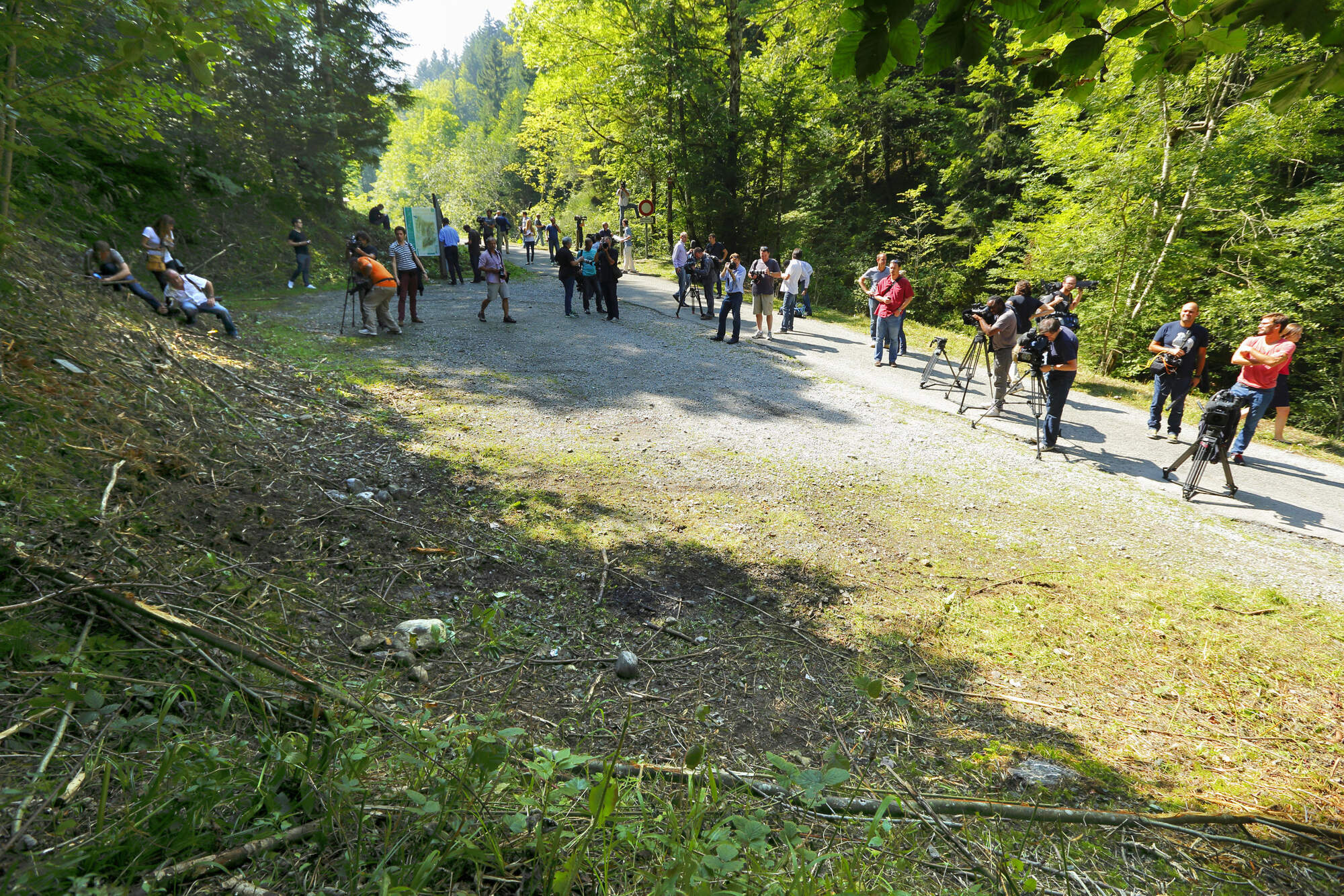
The bodies of Saad al-Hilli (50), his wife Iqbal (47), her mother Suhaila-al-Allaf (74) and Sylvain Mollier (45) were found near a bullet-ridden BMW parked in a forested lay-by near Chevaline village.
Despite testimony from 800 witnesses and thousands of hours of footage from roadside cameras, the murder weapon and its owner were never found.
However, two weeks ago, a group of British tourists swimming in Lake Annecy, 8km north of the murder scene, retrieved a pistol from the bed of the lake.
At first, they believed it was a water gun because of its age and corroded condition.
On closer examination, they realised it was a Luger P06, the same type of Swiss-issue semi-automatic pistol used to kill the four victims 14 years earlier.
Forensic officers had determined the model of the gun from the 21 pistol rounds unloaded into the car and its occupants.
The attacker had pistol-whipped the couple’s eldest daughter, Zainab, then aged seven, shattering the butt of the weapon in the process.
She survived along with her younger sister, four-year-old Zeena, who hid in the skirts of her dead mother.
The remnants of the pistol confirmed to police that it was a Swiss-issue Luger P06, firing 7.65mm Parabellum-calibre rounds.
Detectives at the cold-case unit in Nanterre in the western suburbs of Paris are attempting to match the Luger found in the lake to the one used in the murders.
Marie-Céline Lawrysz, the deputy prosecutor in the investigation, told The Telegraph that analysis of the weapon was a priority for the department.
She said: “I can confirm that a weapon, which appears to be a P06, was discovered on August 29 by British tourists in Lake Annecy.
“This weapon was handed over to the Chambery criminal investigation department, which is acting under a letter of request from the investigator appointed by the investigating magistrates of the unsolved serial crimes unit.
“Three investigating magistrates are handling the case, and analyses are currently under way to enable a forensic examination to be carried out; this examination will be launched to establish and determine whether there is a link between this weapon and the one used during the Chevaline killings.”
When asked how long the ballistic examination would take to conclude, she replied: “It will be carried out quickly. Whether we’ll get the results quickly is another matter, because it all depends on the condition of the weapon.
“It was submerged in the lake for some time. It may take a while before we get the results.”
Ms Lawrysz said she could not provide any more information on the identities of the tourists who found the weapon.
“From what I’ve gathered, they went on a dive in the lake and discovered this weapon. But where exactly, and how, I can’t tell you.”
Detectives have treated the murderer’s choice of weapon as evidence that they are not a professional assassin, as an older handgun is more likely to jam or misfire.
However, French army firearm instructors consulted by the prosecutors believe that the methodical and calm nature of the shootings suggests the culprit was a foreign special forces soldier who “went off the rails”.
The killer is believed by some sources to be a member of the elite Swiss counter-terror police force, the Detachement d’Action Rapide et de Dissuasion, because of how close-range the shots were.
No motive has been found by police despite exhaustive investigations in Britain, France and Iraq.
Numerous conspiracy theories have surrounded the case, some of which are connected to Al-Hilli’s former job as an engineer in Iraq.