
The EU Commissioner for the Mediterranean, Dubravka Šuica, has said the crisis of 70,000 migrants overwhelming the Spanish enclave of Ceuta in North Africa showed that “border management is not enough”.
She added that one of the “main triggers” of the crisis in July was social media with investigations from intelligence services in Spain, Morrocco and EU following.
“Border management is not enough. We need to do more. We need to invest in partnerships,” she said in Wicklow on Wednesday.
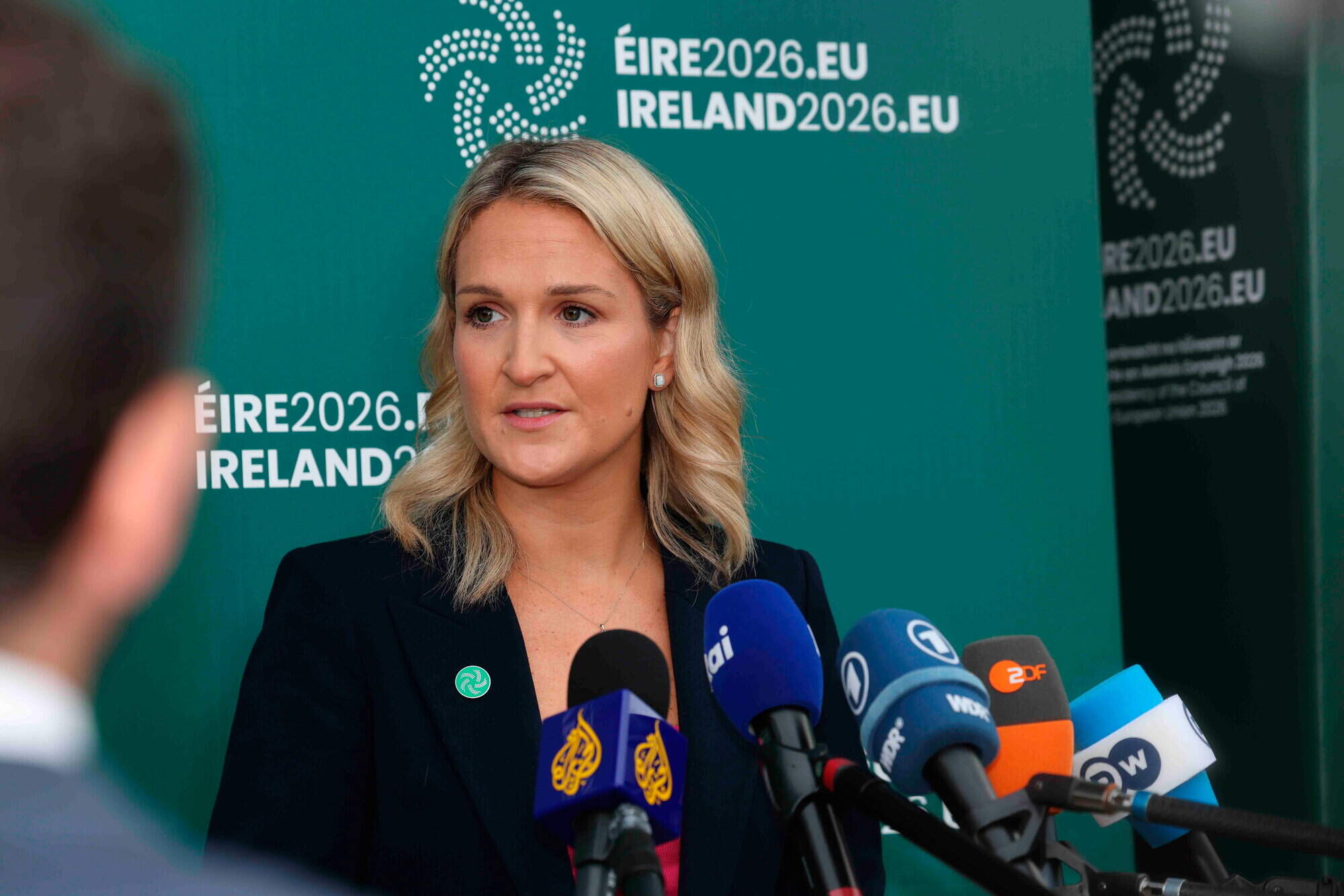
EU foreign ministers gathered for an informal meeting in Druid’s Glen resort in Wicklow for the Irish Presidency of the Council of the EU.
They were joined by representatives outside the bloc including British foreign minister Ed Miliband, and those from Ukraine, Norway, Canada and Iceland.
The EU diplomatic service revealed this week that it identified attempts by Russia to take advantage of the Ceuta migrant crisis through social media, but said there was no “conclusive evidence” of a disinformation campaign by “foreign state actors.”
Roughly 5,000 migrants, some seeking asylum, have remained in Ceuta since the border rush, triggering near-daily protests and sporadic attacks against a makeshift migrant camp, according to police reports.
Commissioner Šuica said there were “many lessons learned” from the crisis, and added that “thousands” of minors there will be returned to Morocco, who are “ready to receive them”.
“We need to invest in, of course, narratives, which is very important because this time social media, according to our assessment, social media, this was the one of the main triggers, if I may say so,” she added.
Earlier in the informal meeting, the Spanish Foreign Minister José Manuel Albares urged the bloc to treat the crisis in Ceuta and Melila with the “same solidarity” that Spain has provided to EU member states in crisis.
“That’s what Spain expects from its European partners when it comes to the land borders in the south. The land borders in the south of European Union are as important as the borders in the east, in the north, and in the west,” he added.
He said that Spain has pledged “political solidarity” to every member State who has faced a crisis “with troops and with funds, and taking refuges from Ukraine since the very beginning of the war”.
Mr Albares also said he was “very sorry to see that some EU government amplify that disinformation,” spread by outside actors.
The meeting also focused on Russia after the German government blamed Russia for an attempted attack at Leipzig/Halle Airport last month using a drone laden with explosives.
The Vice President of the EU Commission Kaja Kallas said it had “all the hallmarks of state-sponsored terrorism.”
Vice President Kallas, supported by Foreign Affairs Minister Helen McEntee and other ministers attending, pledged a crackdown on the use of EU tourist visas for Russians, and in particular ex-combatants.
The meeting was the largest gathering of EU Foreign Ministers in recent memory.
Minister McEntee said: “Russia continues to show no interest in peace.”
“There has been a clear escalation in attacks in recent weeks, setting new records for civilian deaths and targeting of energy infrastructure and indeed grain facilities, we utterly condemn these attacks,” she added.