
Advertisement
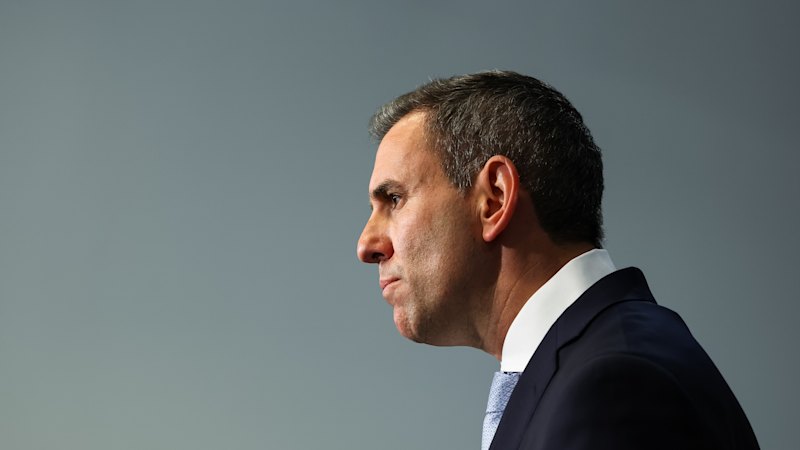
Albanese government MPs are voicing increasing unease over the prospect of more interest rate hikes and stalling living standards as Treasurer Jim Chalmers works to prepare backbenchers for a report next week that will lay bare Australia’s long-term economic problems.
As an ongoing war buffets economies, Chalmers held a private briefing ahead of Monday’s release of Treasury’s first intergenerational report in three years. He took a series of questions on Labor’s economic plans that have been criticised by employers and pro-growth Labor figures.
The prospect of one and maybe two rate hikes this year has put a spotlight on Labor’s economic management following criticism from Labor luminary Bill Kelty, who said flat wages were driving support for One Nation, while the Business Council of Australia sounds the alarm on what might be one of the nation’s worst decades of productivity.
In the closed-door talks with colleagues, Chalmers argued that unlike last century, modern productivity gains would be won through a series of smaller reforms, according to Labor sources who listened to the treasurer.
Advertisement
The intergenerational report, which sets out economic and social changes over the next 40 years, would be weaponised by the Coalition to paint a dark picture of the nation’s future prosperity, Chalmers told MPs, as he claimed Australia was better placed than peer democracies.
“From an economic point of view, the war in the Middle East, the end of it, can’t come soon enough,” Chalmers said in question time, noting Australia had a lower debt burden than “every major advanced economy”.
“The war on the other side of the world is weighing on growth. This is the point that the Reserve Bank’s assistant governor, Sarah Hunter, made yesterday.”
Chalmers’ comments get ahead of a likely rate rise to 4.6 per cent on September 29, just over a week after the intergenerational report is released.
The report, published by Labor each term after Peter Costello launched the five-yearly releases in 2002, will increase scrutiny of Labor’s economic and fiscal program.
Advertisement
Days after Kelty said it was insulting for Labor to welcome lower house prices as real wages were going backwards, Prime Minister Anthony Albanese told his caucus that voters appreciated the government’s property tax concession changes.
“People get that we are trying to make a difference,” Albanese said on Tuesday.
But the prime minister’s comments did little to bolster the confidence of a small but growing group of MPs, including some ministers but more backbenchers, who are increasingly frustrated with Labor’s handling of inflation and productivity.
One MP said Chalmers’ language comparing Australia to countries like the UK and Japan was a case of justifying or rationalising Australia’s economic decline. They referenced Kevin Rudd’s warning last week that Australia risked becoming a second-rate country.
Advertisement
The treasurer’s briefing took place not in Labor’s main caucus meeting, where MPs are reluctant to ask tough questions, but in a smaller economic policy group that rarely leaks and where MPs are more frank.
None of the MPs worried about Labor’s economic message were willing to speak publicly. Outspoken backbencher Ed Husic has said previously that those who speak out are punished, so a quieter, collaborative approach to policymaking is usually pursued by MPs seeking change behind the scenes.
Several MPs said they appreciated Chalmers’ willingness to engage in the conversation with MPs this week and hoped Labor’s housing plan would improve housing affordability in the long run.
A second MP said “a lot of what we have done is throw cost-of-living relief at voters, which has an inflationary impact” that ultimately made it harder to avoid blame for an upcoming rate rise that was viewed as unlikely earlier this year.
“The only way through this is serious tax reform, reducing regulation, restructuring corporate tax to improve investment, and making it easier for small businesses without filling out a million forms,” they said, expressing doubts that the cabinet appreciated how markets functioned.
Advertisement
A third MP said: “People are getting quite worried. Small business is doing it very tough and we aren’t doing enough for them. We’ve done an instant asset write-off but not much more, and we’re making enemies with the CGT changes.”
Shadow treasurer Tim Wilson said Kelty, a former union leader, had rightly questioned Labor’s economic agenda in an interview with this masthead on the weekend. “Finally,” Wilson said, “Labor’s backbenchers have woken up from Pyro Jim’s spell.”
UNSW professor Richard Holden said a key question in next week’s intergenerational report would be its assumptions on productivity. Treasury and the Reserve Bank have downgraded forecasts for this metric, which underpin long-term living standards and prosperity.
Holden said the argument from Chalmers and others that modern productivity gains were won through a large group of smaller reforms was understandable. He questioned if Labor’s set of modest reforms would add up to anything substantial.
“The government has thrown sand in the gears of the industrial relations system and made it harder and more expensive to create productivity growth. In its first term in particular, you’d say every major policy they enacted made it harder to get major productivity growth for business or at least didn’t help,” Holden said.
Advertisement
Chalmers announced a productivity package in the budget that he said would cut regulatory costs by $10 billion.
“I’m sure the intergenerational report will be picked up by the opposition and I’m sure Jim will paint it as his opponents bullshitting, and there will be a degree of truth in that. But we should have a real discussion about what it says,” Holden said.
Labor and Treasury’s great hope is that artificial intelligence helps achieve the government’s 30-year average productivity growth assumption of 1.2 per cent a year within five years.
The government is weighing up a critical decision on how to alter Australia’s strict copyright laws to lure AI investment that assistant minister Andrew Charlton said would underpin Australia’s future growth.
Advertisement
In one of her first policy forays, new ACTU boss Melissa Donnelly called on Labor to create a licensing regime that would decide whether new technologies were safe to roll out.
Cut through the noise of federal politics with news, views and expert analysis. Subscribers can sign up to our weekly Inside Politics newsletter.
You have reached your maximum number of saved items.
Remove items from your saved list to add more.
More:
Paul Sakkal is Chief Political Correspondent. He previously covered Victorian politics and won a Walkley award and the 2025 Press Gallery Journalist of the Year. Contact him securely on Signal @paulsakkal.14.Connect via X or email.AdvertisementAdvertisement