
This section is The content in this section is supplied by GlobeNewswire for the purposes of distributing press releases on behalf of its clients. Postmedia has not reviewed the content. by GlobeNewswire Article content
New software helps engineers isolate 128 GT/s signal problems earlier and validate the high-bandwidth connections required by AI and high-performance computing systems
Sign In or Create an Account
or View more offersArticle content
BEAVERTON, Ore, Sept. 02, 2026 (GLOBE NEWSWIRE) —
Article contentWe apologize, but this video has failed to load.Try refreshing your browser, or
tap here to see other videos from our team.Article content
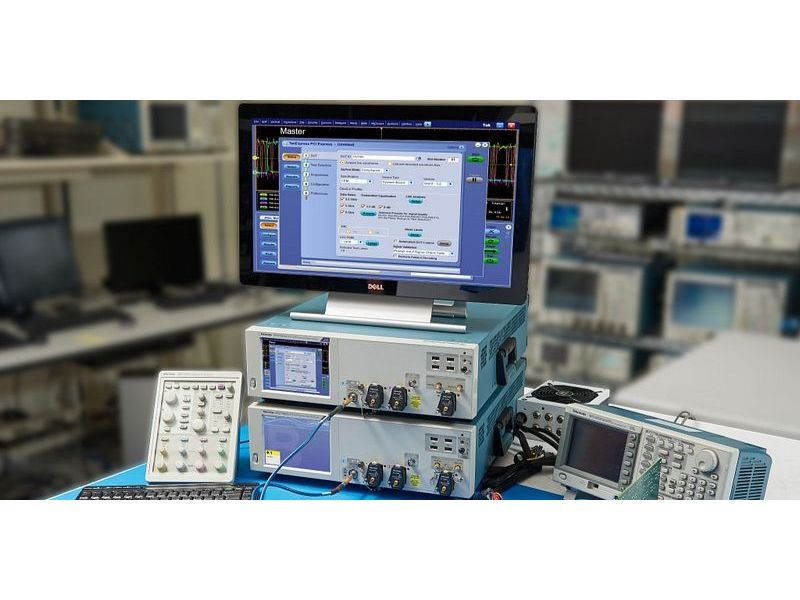
Tektronix today introduced new automated transmitter and receiver test software for PCI Express® (PCIe®) 7.0 Base designs operating at 128 GT/s. The new TekExpress™ PCIe 7.0 Transmitter Test Application and expanded PCIe 7.0 capabilities in TekRxTest, Tektronix’s receiver test software, help engineers automate transmitter measurements, calibrate precisely stressed receiver signals and validate designs against PCIe 7.0 Base Specification requirements.
Article content
Story continues below
This advertisement has not loaded yet, but your article continues below.
Article content
Tektronix also expanded its PAMJET Transmitter Analysis Software with advanced PCIe 7.0 capabilities. The software helps engineers identify sources of noise, jitter and other complex signal-integrity problems that standard measurements alone may not explain.
Article contentArticle content
As AI systems scale, moving data efficiently among processors, accelerators, memory, storage and networking becomes as important as adding compute capacity. PCIe provides the high-bandwidth connections among those components, making its continued advancement essential to AI, machine learning, high-performance computing and data center systems.
Article content
PCIe 7.0 doubles the PCIe 6.0 data rate to 128 GT/s and supports up to 512 GB/s of bidirectional bandwidth over 16 lanes. Those gains leave far less room for electrical error. At 128 GT/s, channel loss, crosstalk, power delivery noise and jitter become more difficult to isolate, while measurement-system effects can obscure a device’s true performance.
Article content
For semiconductor and system developers, these challenges can slow first-silicon bring-up, complicate correlation across engineering teams and allow problems to remain hidden until later development stages. Engineers need repeatable ways to evaluate transmitter behavior, create accurate receiver test conditions and move quickly from a failed measurement to its underlying cause.
Article content
Story continues below
This advertisement has not loaded yet, but your article continues below.
Article content
“Customers developing PCIe 7.0 designs need confidence that their measurements reflect the device, not the test environment,” said Daryl Ellis, Vice President and General Manager of Tektronix’s Signal Acquisition and Analysis Portfolio. “We combine precise measurement, guided software and direct application expertise to help them solve problems earlier and move PCIe 7.0 designs forward.”
Article content
Find problems earlier at 128 GT/s
Article content
The new capabilities address three critical stages in PCIe 7.0 electrical validation. By combining TekExpress, TekRxTest and PAMJET with 70 GHz DPO70000SX ATI performance oscilloscope and the Anritsu MP1900A Signal Quality Analyzer-R, engineering teams gain a coordinated PCIe 7.0 Base test solution for transmitter measurement, receiver stress calibration and validation, and root-cause PAM4 analysis.
Article content
- Automate transmitter testing: The TekExpress PCIe 7.0 Transmitter Test Application automates setup, waveform acquisition, analysis and reporting for transmitter measurements defined in the PCIe 7.0 Base specification, including signal-to-noise-and-distortion ratio, ratio of level mismatch, jitter and transmitter preset equalization. Engineers can evaluate first silicon, compare presets and design revisions, and identify electrical problems before system integration.
- Simplify receiver calibration and validation: TekRxTest controls the Tektronix oscilloscope and the Anritsu MP1900A through one guided workflow for TP3 and TP2 stressed-eye calibration, preset and continuous-time linear equalization (CTLE) optimization, and channel verification. The MP1900A provides the stressed signaling required for PCIe 7.0 receiver calibration and validation. Automated oscilloscope noise compensation supports accurate sinusoidal- and random-jitter calibration, helping engineering organizations create repeatable test conditions across teams and test environments.
- Move from failure to root cause: Expanded PAMJET capabilities provide noise-aware measurements, clock recovery, correlated and composite eye views, analysis of individual PAM4 transitions and direct navigation to symbol-error events. These capabilities help engineers distinguish device behavior from channel and measurement system effects and expose problems that averaged or aggregate measurements can conceal.