
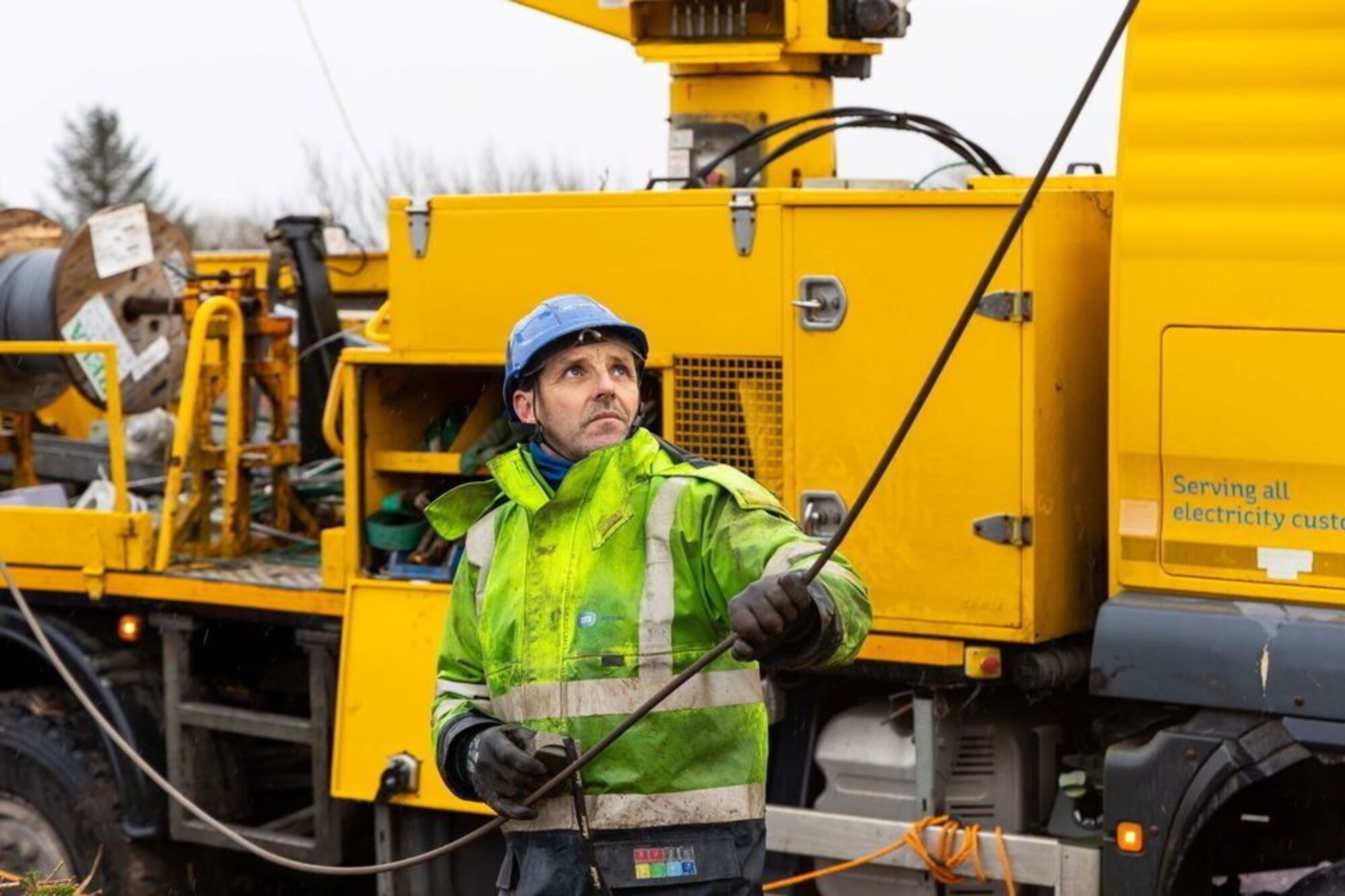
Semi-state company has cut down 8,000 trees to protect network
The ESB has insisted that its Electric Ireland unit will not raise electricity and gas prices for the remainder of the year, despite the major wholesale energy volatility caused by the US war against Iran.
Electric Ireland’s residential customers saw their electricity bills rise by 8pc from July 1 while gas bills rose 7.7pc. Electric Ireland unit said it hadn’t raised prices since autumn 2022.
Many rivals are now implementing price hikes as the winter approaches, deepening with cost-of-living crisis for many households. The Government has pledged to provide targeted support for energy costs in next month’s budget.
ESB chief financial officer Paul Stapleton said wholesale energy prices remain hugely volatile.
“Wholesale gas prices per therm were about 80p this time last year,” he said (therms are priced in sterling). “But they opened at 207p this morning.”
The ESB’s profits after tax rose more than 20pc to €377m in the first half of the year, as it was buoyed by higher profits from power generation.
“That’s needed for housing, for economic growth and for climate action,” said Mr Stapleton.
“We are conscious that at a time of affordability challenges and given the volatility, it might be challenging for readers to reading about ESB profits,” he conceded. “But those profits are essential to make the investments essential for us to ultimately address Ireland’s dependency on imported fossil fuels.”
Mr Stapleton has said that the semi-state power company has now cut down 8,000 diseased or damaged trees that were at risk of damaging the electricity network.
“I think it is more resilient than it might have been,” he said. “We’ve had huge focus on enhancing resilience following Storm Éowyn.”
Storm Éowyn caused significant and widespread damage in January 2025, leaving some communities without power up to two weeks. Damage repair cost the ESB almost €100m.
“We’ll never be fully resilient for an event like that,” added Mr Stapleton. “But there’s a lot we’ve been doing.”
The company has been refurbishing circuits in the most vulnerable areas, he said, as well as having a more formal mutual aid agreement in place with other power companies in the European Union. Following Storm Éowyn, repair crews from countries including the UK, France, Austria and Finland were sent to Ireland by their national power firms.
Mr Stapleton said the “most significant” way of reducing the damage risk to the electricity network as a result of storms has focused on timber cutting.
“Most of the damage is caused by trees falling on the power lines,” he said. “We’ve been clearing the network of trees as much as we could.
“We’ve completed over 17,000km of our regular timber-cutting cycle. We’ve also identified and removed 8,000 weakened or diseased trees from hedgerows in proximity to our network.”
He added that the ESB has now surveyed 337km of forestry and identified the priority areas for cutting.