
Article content
First Reading is a Canadian politics newsletter curated by the National Post’s own Tristin Hopper. To get an early version sent directly to your inbox, sign up here.
Sign In or Create an Account
or View more offersArticle content
TOP STORY
Article content
Recommended Videos
We apologize, but this video has failed to load.Try refreshing your browser, or
tap here to see other videos from our team.We apologize, but this video has failed to load.Try refreshing your browser, or
tap here to see other videos from our team.Article content
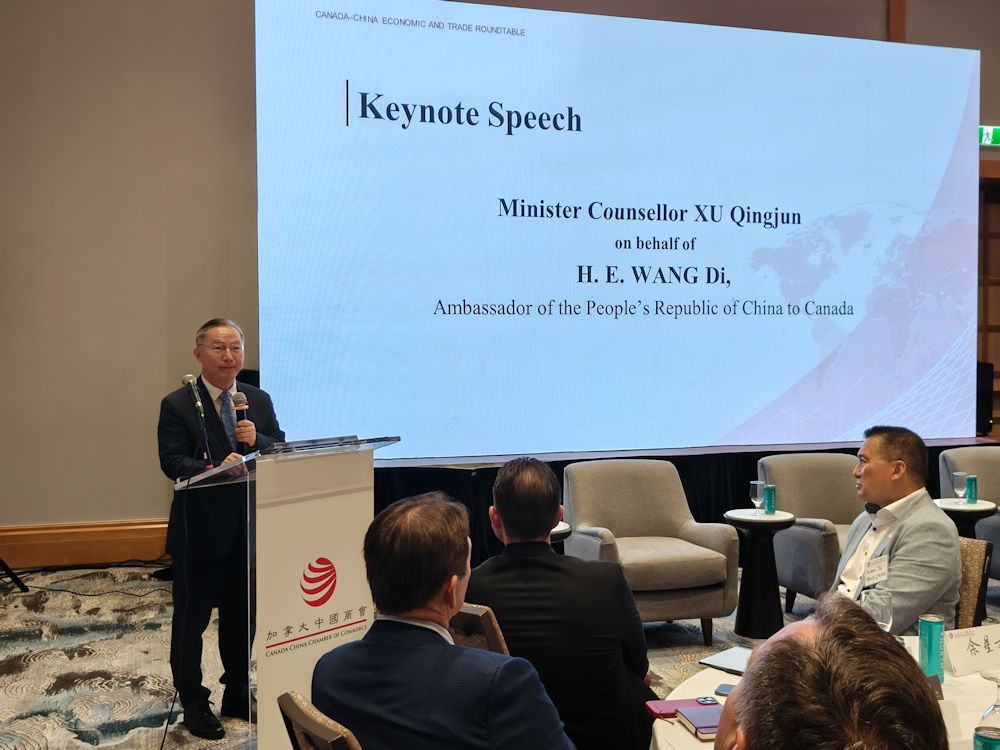
With B.C. still embroiled in controversy regarding the large-scale transfer of land and political control to First Nations, the Chinese embassy touted the completion of a summit to strengthen ties between Beijing and Indigenous groups.
Article content
Story continues below
This advertisement has not loaded yet, but your article continues below.
Article content
Convened on Sept. 3 in Vancouver, the “economic roundtable” included Ernie Daniels, president and CEO of the First Nations Finance Authority.
Article contentArticle content
In a statement, Chinese Ambassador to Canada Wang Di praised links with First Nations communities and expressed his hope that they would “lay an even more solid foundation for the China—Canada new strategic partnership.”
Article content
“The roundtable meeting discussed the future direction of China-Canada economic and trade cooperation, including cooperation on green transition, indigenous finance and community development,” read a summary by the embassy.
Article content
Also in attendance were former federal finance minister Bill Morneau and B.C. senator Yuen Pau Woo.
Article content
Summits between PRC officials and First Nations representatives have happened before. The Canada China Business Council, for one, has organized three all-Indigenous trade missions to Beijing, the most recent in 2024.
Article content
But the Sept. 3 roundtable is the Beijing-sanctioned event convened in the wake of a series of developments that have markedly increased Indigenous power, particularly in B.C.
Article content
Story continues below
This advertisement has not loaded yet, but your article continues below.
Article content
Just one year ago, in August 2025, the B.C. Supreme Court released the landmark Cowichan Tribes decision which effectively ceded 300 hectares of privately owned land in Richmond, B.C. to the control of the Cowichan Tribes First Nation.
Article contentRead More
- Judge rules ‘colonialism’ caused First Nations man to become deadly driver
- ‘Associate member’ or ‘unique alliance,’ Carney jets to EU in search of new and deeper ties
- Story continues belowThis advertisement has not loaded yet, but your article continues below.
Article content
Although the decision is being appealed, the uncertainty has since crashed real estate values in the affected area by as much as 70 per cent, according to a recent interview published by the Business Council of British Columbia.
Article content
Another landmark decision, issued by the B.C. Appeals Court in December 2025, argued that DRIPA – a piece of 2019 legislation which encoded the United Nations Declaration on the Rights of Indigenous People into B.C. – effectively superceded the province’s existing laws.
Article content
The decision specifically struck down the Mineral Tenure Act, one of the oldest laws in B.C., in part because it violated the declaration’s clause that Indigenous peoples “own, use, develop and control” any land that they’ve held traditionally.
Article content
Over the summer, an internal document published by the B.C. Ministry of Finance confirmed for the first time that more than 120,000 hectares of B.C. Crown land is in the queue for transfer to First Nations as “treaty lands.”