
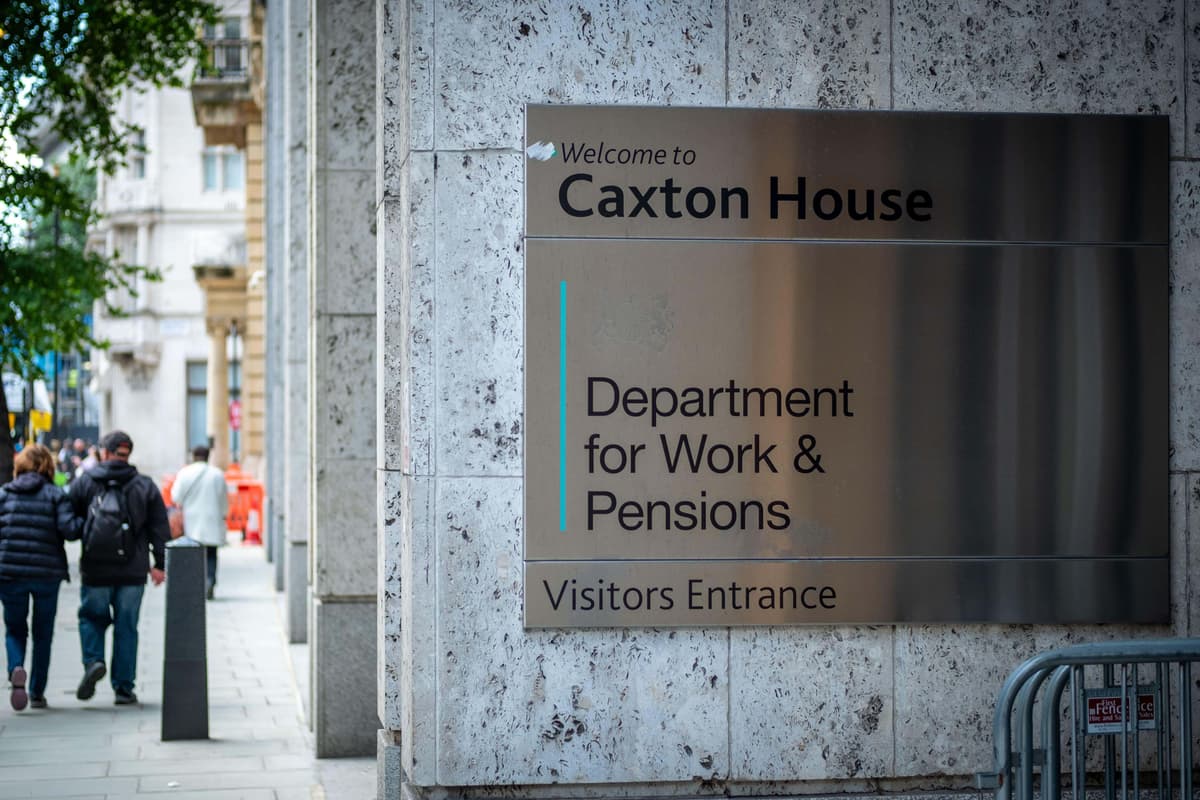
Number claiming main disability benefit hits new record highThe number of claimants has roughly doubled since comparable figures began in January 2019.Pip claimants jumped by more than half a million in the year to July 2026 (William Barton/Alamy)Ian Jones2 minutes ago
The number of people in England and Wales entitled to personal independence payments, known as Pip, has climbed to a record high.
Pip is the main benefit paid to someone who has a long-term physical or mental health condition or disability, and is intended to help with everyday tasks and extra living costs.
The figures come ahead of the publication later this autumn of a Government-commissioned review into the costs and operation of the disability benefits system.
The review, led by social security minister Sir Stephen Timms, branded the system “no longer fit for purpose” in its interim findings in July.
A total of 4.09 million people were entitled to claim Pip as of July 31 2026, according to data published on Tuesday by the Department for Work and Pensions (DWP).
This is up from 3.83 million a year earlier – a rise of 262,045, or 7%.
The number of claimants has roughly doubled since comparable figures began in January 2019, when the total stood at 2.05 million.
Of the 4.09 million claimants, 3.4 million (83%) are of working age and 690,000 (17%) are state pension age.
People aged 50 and over account for more than half of those entitled to claim Pip, at 55% of the total, while 30-49 year-olds make up nearly 29% and 16-29 year-olds almost 17%.
Last year saw ministers abandon plans to reform disability benefits, including for those with mental health conditions, in the face of backbench Labour opposition.
Instead of immediate reform, the Timms review was put in place to gather views on Pip and how it works.
Read More
Judi Dench and Sam Heughan name fledgling eagles in conservation project
State pensioners set to breach tax threshold under ‘triple lock’ boost
Meghan wishes Harry happy birthday as Sussexes move children to new school
Winter escapes and activities to end the year in style
Speaking in July on the publication of the review’s interim report, Sir Stephen said the benefits system, designed in 2013, needs “fundamental change” and that it must be made “financially sustainable”.
He said people would have to “wait and see” what his team’s final report says when asked whether it might include cuts to the numbers of people claiming the benefit.
He added the “vital support” provided by Pip to help cover the extra expense of being disabled could be under threat if the costs of the system keep rising.
Spending on Pip stood at £16.3 billion in 2019-20, when adjusted for inflation to today’s prices, and had increased to £27.3 billion by 2024-25, DWP figures show.
It is currently forecast to rise to £41.5 billion by 2030-31.
The DWP has said the Timms review will ensure Pip is “fit and fair for the future”.
Of the 4.09 million Pip claimants at the end of July, 1.60 million were listed as having psychiatric disorders, or 39% – the highest proportion for any type of disability.
Some 268,965 claimants were classed as having autistic spectrum disorders, more than three times the 79,395 in January 2019 when data began, according to Press Association analysis.
A further 442,666 claimants had mixed anxiety and depressive disorders, up from 171,833 in January 2019, while 106,087 had the hyperkinetic disorders ADHD or ADD, up from 23,741.
The second most common type of disability among claimants was general musculoskeletal diseases, which applied to 764,305 people in July this year, or 19% of the total.
Just over a third (35.8%) of new Pip claims in July were granted, while 61.4% were disallowed and 2.8% were withdrawn.
The grant rate for new claims has been on a downward trend for the past two years, having stood at 41.1% in July 2025 and 46.4% in July 2024.
The Prime Minister’s official spokesman said Andy Burnham believes “we have got to get serious as a country about welfare reform”.
But “that doesn’t mean crude cuts that simply push people into crisis and create bigger costs elsewhere”.
The spokesman added: “Our work on welfare across the board is about tackling the structural drivers and changing the nature of the support, and that we ultimately deliver a system that sets people up for success rather than pays for failure.”
Shadow work and pensions secretary Helen Whately said: “Our sickness benefits system is broken and Labour refuse to fix it.
“It’s too quick to write people off and too slow to help them into work – and it’s costing us a fortune.
“The Conservatives are doing a root and branch review of our sickness benefits system.
“We will stop claims for low-level mental health, rapidly re-assess hundreds of thousands of claims face-to-face the moment we enter government, and get Britain working again.”
MORE ABOUT
Department For Work And PensionsStephen TimmsStephenPeopleEngland