
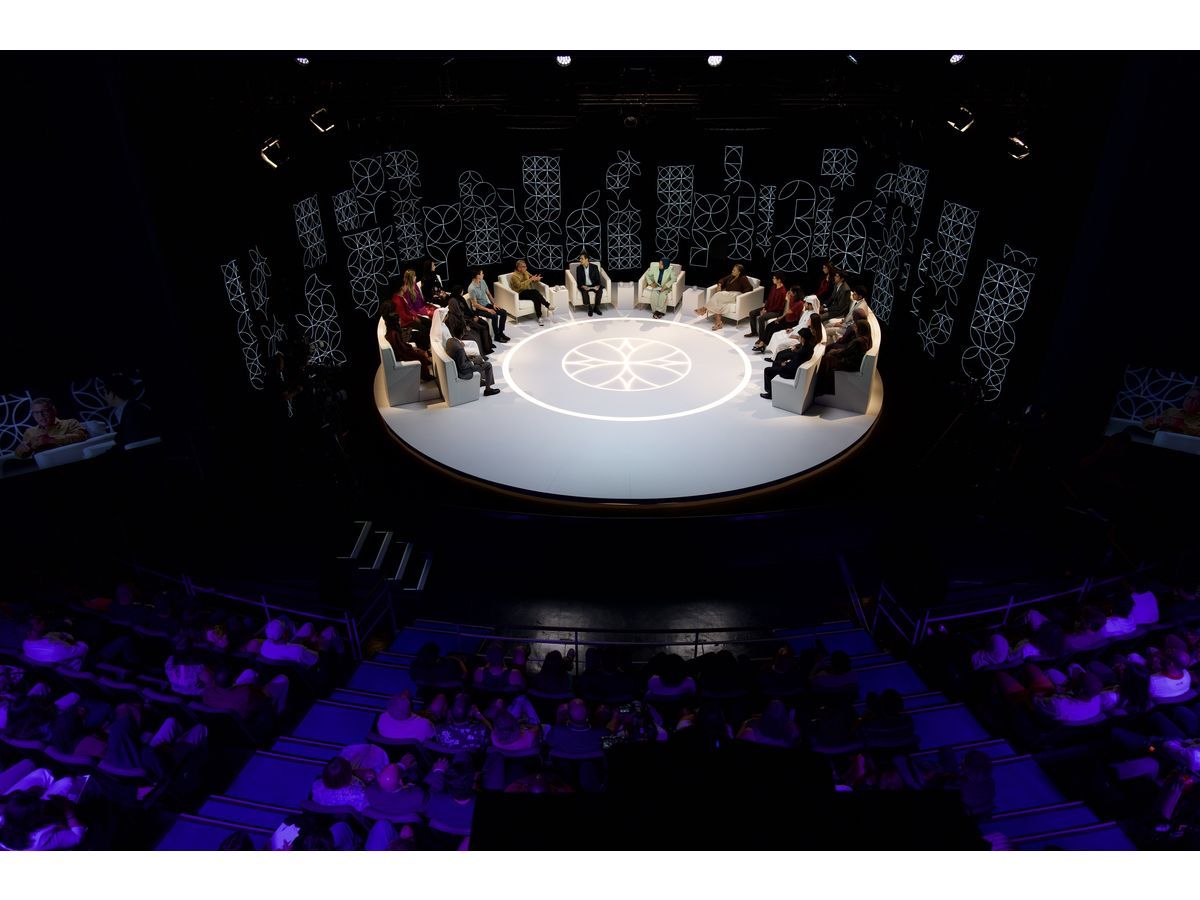
This section is The content in this section is supplied by Business Wire for the purposes of distributing press releases on behalf of its clients. Postmedia has not reviewed the content. by Business Wire Article contentA sports journalist, a historian and a filmmaker join students from Qatar, Canada and Mexico to debate the impact of wealthy club backing on football and its fans
Sign In or Create an Account
or View more offersArticle content
DOHA, Qatar — Football fans embody club loyalty that no boardroom can manufacture. But as global capital reshapes the world’s most-watched sport, who it belongs to is increasingly contested. This question is at the heart of Qatar Foundation’s latest Doha Debates town hall, “Football fandom: Community or commodity?”, now available on Doha Debates and Al Jazeera Digital platforms.
Article contentWe apologize, but this video has failed to load.Try refreshing your browser, or
tap here to see other videos from our team.Article content
Story continues below
This advertisement has not loaded yet, but your article continues below.
Article content
The episode was filmed at The Terminal Theatre in Toronto in partnership with the Qatar, Canada and Mexico 2026 Year of Culture, a national initiative that builds lasting relationships between countries by creating spaces where people can meet and learn from different perspectives. This Doha Debates collaboration brought that purpose to life through a conversation connecting young people across borders.
Article contentArticle content
Moderated by journalist Imran Garda, the Majlis-style debate brought together Shireen Ahmed, senior contributor at CBC Sports; David Goldblatt, a football historian and sociologist and Kely Nascimento, president of the Nascimento Foundation, to explore the sport’s evolution. Twenty students from Qatar, Canada, Mexico and beyond joined the discussion.
Article content
Goldblatt held firm that football—and its fans—cannot be bought or sold: “Football clubs should not be privately owned by anyone. They shouldn’t be owned by states, or by rich men or rich women. They are collective forms of cultural capital,” he said.
Article content
Nascimento, a documentary filmmaker and the daughter of football legend Pelé, challenged that position, questioning whether football was necessarily healthier before the influx of wealth. “I did some research into what it was like before the money. It didn’t seem like it was that great,” she said, going on to question whether Goldblatt’s stance was more of a utopian idea than reality.
Article content
Ahmed challenged her fellow debaters to more closely examine where the money is coming from and how it is used. “This discussion that money is bad in all cases—it’s nuanced, and it’s complicated. So I would rather have accountability for that money and transparency,” she said.
Article content
The students added other relevant dimensions to the debate. “I wonder why the working class have difficulties attending, and it’s not accessible for them to attend Premier League matches,” said Nawaf Al-Kuwari, a naval architecture and marine engineering graduate from the University of Strathclyde in Glasgow. It seems to me like it’s more of a luxury than it is accessible.”
Article contentRegina Aldrete, an international relations student at Tecnológico de Monterrey University, Article content
commented on the game’s political nature. “Football is inherently political. Therefore, it is like a mirror of society,” she said, pointing to tensions surrounding football matches between El Salvador and Honduras as an example of how the sport can reflect global conflict.
Article content
Story continues below
This advertisement has not loaded yet, but your article continues below.
Article content
For Amjad Atallah, managing director of Doha Debates, the conversation reflected Doha Debates’ commitment to in-depth examination of timely topics. “Very few things hold a billion people’s attention at once–fewer still spark this much passionate debate. In Toronto, our expert guests and students refused the easy answer, and that is what truth-seeking looks like.”
Article content
He added: “We’re proud to have built this debate with the Qatar, Canada and Mexico 2026 Year of Culture, an initiative that shares our belief in the value of cultural exchange. We invite audiences everywhere to watch it, and decide for themselves where they stand.”
Article content
“Football fandom: Community or commodity?” is part of Doha Debates’ global town hall series, which brings young people and experts together for Majlis-style, truth-seeking dialogue on complex global issues.
Article contentAbout:Article content
Doha Debates engages a vanguard of intellectually curious truth-seekers to constructively debate differences in order to build a better future. We emphasize unity over division, encouraging conversations that bring us together rather than drive us apart.
Article content
More at DohaDebates.com.
Article contentDoha DebatesArticle contentWebsite:Article contentDohaDebates.com Article content
Article contentX/Twitter:Article content@DohaDebates Article content
Article contentInstagram:Article content@DohaDebates Article content
Article contentTikTok:Article content@DohaDebates Article content
Article contentFacebook.com/DohaDebates Article content
Article contentYouTube.com/DohaDebates Article content
Article contentThreads.net/@dohadebatesArticle content*Source: Article contentAETOSWireArticle contentArticle contentArticle contentArticle contentView source version on businesswire.com: Article content
https://www.businesswire.com/news/home/20260902833406/en/
Article contentArticle content
Contacts
Article content