
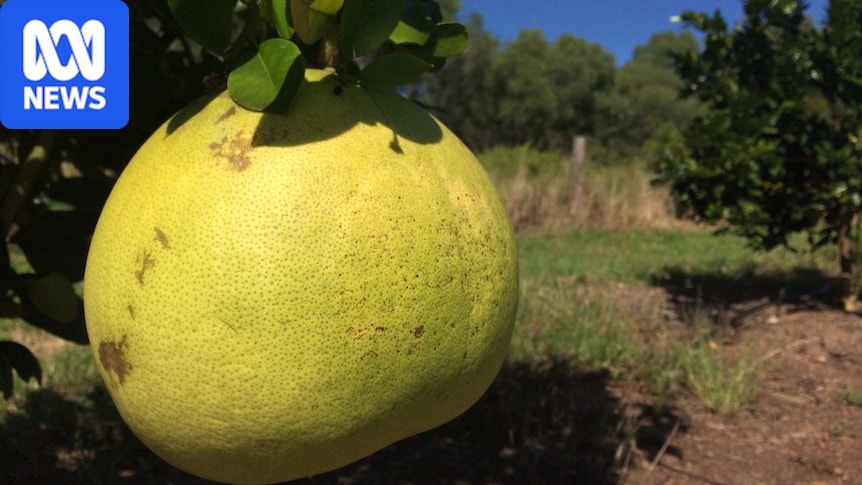
Vietnamese pomelo fruit imports suspended following biosecurity concerns
Posted Tue 15 Sep 2026 at 3:44pmTue 15 Sep 2026 at 3:44pmTue 15 Sep 2026 at 3:44pm, updated Tue 15 Sep 2026 at 4:23pmTue 15 Sep 2026 at 4:23pmTue 15 Sep 2026 at 4:23pm
In short:
The Australian government has suspended pomelo fruit imports from Vietnam following the detection of pest and disease symptoms on a consignment.
Australia growers say the imports were already controversial, and a biosecurity incursion could decimate the $1.2 billion Australian citrus industry.
What’s next?
The initial suspension will be in place for six months.
Australia has suspended imports of fresh pomelo fruit from Vietnam because of biosecurity concerns.
The six-month suspension comes just months after trade in the fruit began from Vietnam to Australia in April, following years of reported negotiations.
The large citrus fruit, similar to a grapefruit, is native to South-East Asia.
The Department of Agriculture, Fisheries and Forestry (DAFF) suspended imports following the identification of exotic pest and disease symptoms on some imported consignments.
The ABC understands that following the identification, the department conducted an in-country audit in August and found the systems and processes in place for Vietnamese exports were not in line with the trade agreement.
Industry body Citrus Australia has welcomed the decision and said it had been pushing for an in-country audit since imports began.
“We’re very thankful that the department has taken this step because biosecurity is important to all of us,” Citrus Australia chief executive Nathan Hancock said.
“We see this decision as an example of the system working as it should.”
The Australian citrus industry was worth $1.2 billion in 2025, the nation’s most valuable fruit production.
While pomelo fruit trees are grown in small numbers across the country, exotic pests and diseases brought in from overseas have the potential to affect the broader citrus industry.
Citrus Australia made several submissions to the department when the risk assessment for market access of the fruit was being conducted.
“We believe we supplied quite a strong submission outlining the risks and we have been disappointed by the approach to our submission and others,” Mr Hancock said.
“Once we learned the market access was going to be granted, we met with the department and asked that an audit be conducted as soon as possible after the first shipments passed through the process.”
Mr Hancock said the department had not disclosed exactly what pest and diseases were found.
“We have been reassured that there were no detections of Huanglongbing or HLB citrus greening disease or citrus canker, which are both serious concerns for the citrus industry,” he said.
“But the fact that they were able to detect other pests and diseases led them to believe the protocols and processes that were agreed upon in the work plan weren’t being met.”
Sunraysia orange grower Darren Minter said the decision to import pomelo fruit from Vietnam was controversial.
“The citrus industry didn’t really want this to happen because they have insects and diseases that we don’t,” Mr Minter said.
“If they bring a bug in, we’re the ones that have got to wear it.”
He said biosecurity was one of his biggest concerns as a grower.
“The rest of the world has a lot of insects that we don’t … and a lot of the stuff coming out of South Africa and Asia are chemical resistant, so it will hurt our industry a lot if we do have a biosecurity incursion,” Mr Minter said.
A DAFF spokesperson said the affected imported fruit was dealt with appropriately.
“All pomelo fruit found with biosecurity concerns have been managed at the border, either via export or destruction at the importers’ expense,” they said.
“During the 6-month suspension the department will undertake a full review of the Vietnam pomelo fruit import pathway and work with Vietnam to implement corrective actions.”