
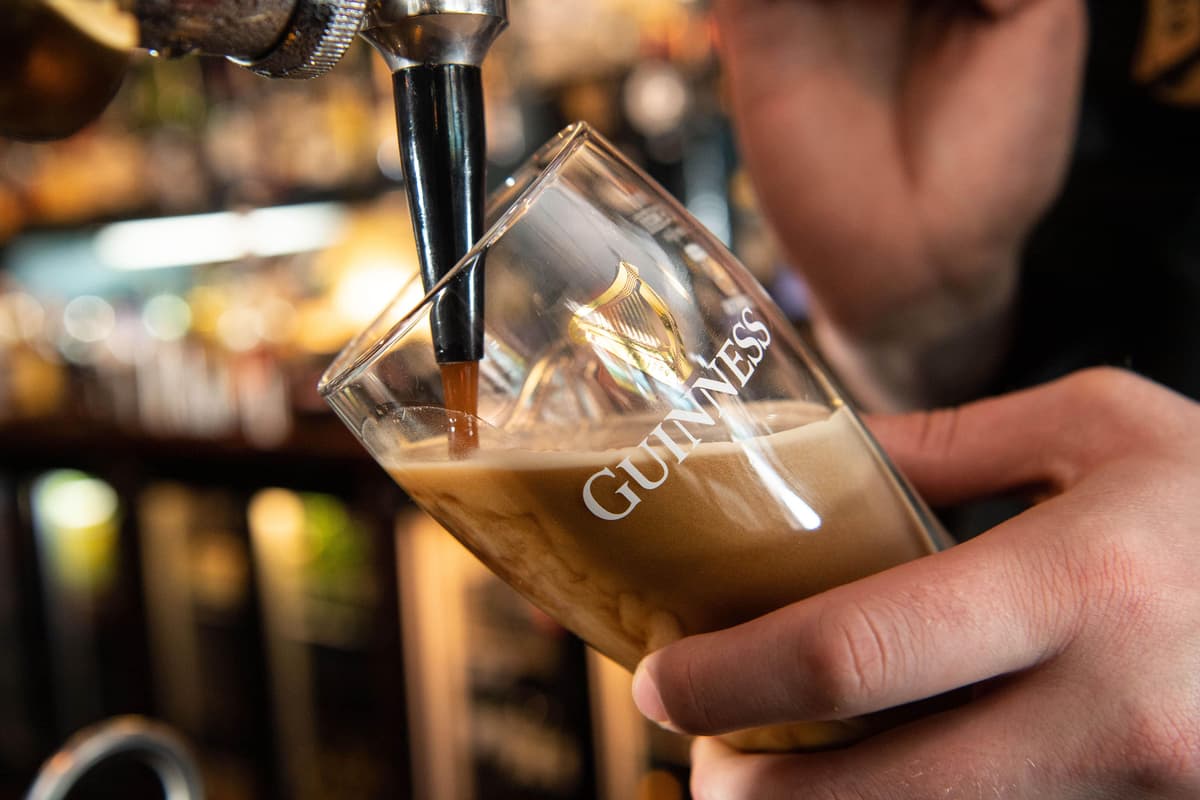
Pubs and restaurants losing business because of weight-loss drugs, report saysRising costs, decreasing disposable income and fat-loss drugs are among the factors impacting bars, pubs and hospitality venues.Pubs reported losing sales due to the increased use of fat-loss drugs (Jeff Spicer/PA)PA ArchiveCraig Meighan2 minutes ago
Pubs and restaurants are suffering from a loss in business as a result of the boom in weight-loss drugs, a new report found.
The SLTA (Scottish Licensed Trade Association) said one in eight (16%) of the 300 pubs, bars, restaurants, and hotels surveyed said visits had reduced because of the drugs.
Another 22% also said their customers had become more “discerning” because of fat-loss treatments.
The popularity of fat-loss drugs has risen dramatically in recent years (Peter Byrne/PA)PA Archive
The SLTA’s Summer On-Trade Market Insight Report said it was among a number of challenges facing the sector.
A majority (58%) of firms surveyed said their business was in decline, despite two thirds saying there had been a boost from the World Cup.
The report found the Commonwealth games “did nothing for sales in pubs and bars”.
Some 71% expect to break even or be profitable – up from 63% in the body’s winter survey.
Forecast trading for the rest of 2026 is also more positive than in the previous survey, with 61% of outlets expecting growth or stability and the number considering closing dropping by 9%.
Colin Wilkinson, SLTA managing director, said: “The World Cup provided a brief sales boost, but the broader economic outlook remains challenging.
“Members report weak consumer confidence as global events prolong economic uncertainty.
“A new trend has also emerged with 16% of respondents saying visits have declined because of the weight-loss drugs phenomenon.”
Mr Wilkinson said Scottish businesses also faced the “unique challenge” of higher commercial rates and energy charges than those elsewhere in the UK.
He said: “Business profitability remains a major concern, so we urge all parties within the Scottish Parliament to place early rates reform, and within the Westminster Parliament a reduction in VAT for the licensed hospitality sector, truly at the heart of their economic strategies.
Prime Minister Andy Burnham has been urged to cut VAT for hospitality businesses (Jack Taylor/PA)PA Wire
“Both governments have recently stated again that one of their core priorities is growing the economy. Well, the time is now – no more just ‘talk the talk’, it’s time to ‘walk the walk’.”
Read More
Andy Burnham cancels engagements following death of his father
Welsh and Scottish FMs announce ‘new era of co-operation’
Andy Burnham’s father Roy, 86, dies after living with Alzheimer’s disease
Winter escapes and activities to end the year in style
He called on the UK Government to copy Ireland and reduce VAT for hospitality firms in the UK.
He added: “We also ask, again, for Scotland’s First Minister to add his support for a VAT reduction for the hospitality sector, something he dodged answering recently when asked by one of his own industry-respected party colleagues Alyn Smith MSP, if he would back the UK-wide ‘VAT’s the Problem’ campaign which is calling on the Westminster government to cut VAT to 10% for hospitality businesses.
“We also ask the Scottish Government to fast-track the review of the commercial rating methodology used for the rating of licensed hospitality venues in Scotland and to engage more closely with the sector.”
Some 97% of businesses surveyed reported an increase in costs, with 57% saying costs had increased significantly above inflation.
There is concern about the future talent pipeline and calls for more support for apprenticeship schemes, the SLTA said.
A spokesperson for the Treasury said: “The Chancellor is fully focused on his priorities, to give families and businesses a bit of breathing space, back British jobs, and drive growth in every postcode, underpinned by a commitment to meet the fiscal rules.
“As has always been the case, decisions on tax are a matter for the Chancellor to set out at fiscal events, rather than routinely commenting on rumour, speculation or proposals.”
MORE ABOUT