
ByJudith Moritz and Daniel Wittenberg, BBC News
- Published26 minutes ago
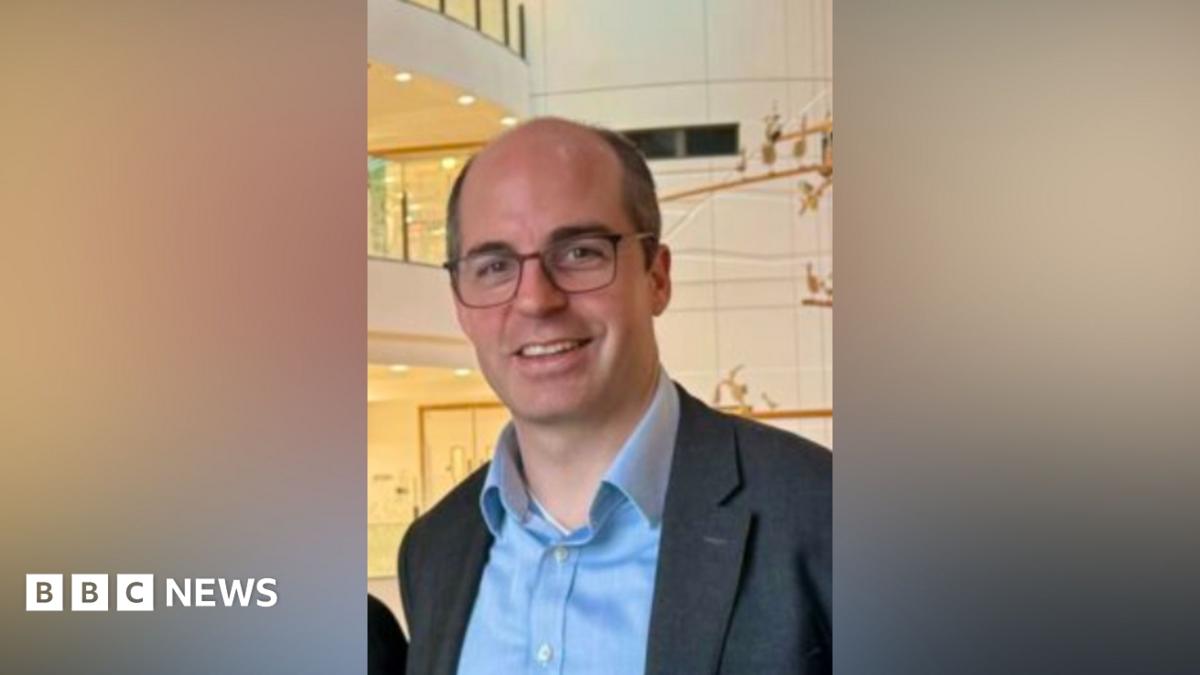
The doctor described during Lucy Letby’s trial as her “boyfriend” can now be identified.
Mark Deakin, who died in July aged 53, had been protected by a court anonymity order that has now been lifted.
Deakin worked alongside Letby, now 36, at the Countess of Chester Hospital during the period in which she murdered seven babies and attempted to murder six others in 2015 and 2016.
Deakin continued his medical career after leaving the Countess of Chester, later working as a consultant at Alder Hey Children’s Hospital in Liverpool.
There have been reports that Deakin died shortly after learning that he had been sacked after it was found he had breached patient confidentiality in text message exchanges with Letby.
It is understood that he had been unwell. An inquest into the circumstances surrounding Deakin’s death will now be opened.
Image source, Cheshire Police
Details of Deakin’s personal interactions with Letby were revealed during the Thirlwall inquiry into how the nurse’s murders were able to take place.
The inquiry heard that the pair had exchanged more than 1,000 Facebook messages and that Deakin helped Letby secure a placement at Alder Hey hospital after she was suspected of murdering babies.
Deakin told the inquiry he had been “misled” and “maybe manipulated” by Letby and that he was tricked into giving her information about babies she had attacked.
He added that it “had been a massive mistake” to help Letby and said he had “a lot of regrets”.
The inquiry is due to publish its findings on 15 September.
Denial
Letby – who has always maintained her innocence – is serving 15 whole life prison terms. The Criminal Cases Review Commission (CCRC) is conducting a review of Letby’s convictions.
At her criminal trial – the longest murder trial in UK history – Deakin gave evidence in relation to several babies. He was granted special measures as well as anonymity. These allowed him to give evidence from behind a screen so that Letby, the public gallery, and the media were prevented from seeing him.
Deakin’s evidence provided detail of some of the emergency calls and resuscitations which he and Letby were jointly involved in. Their long nights of text messaging were laid bare and many of the messages shown to the jury.
When he was sworn in, on the first occasion he testified, Letby burst into tears, in what was the first display of emotion from her during the trial.
During her cross-examination, Letby was forced to deny that Deakin was her boyfriend, though she did accept that they had gone on a trip to London together.
The prosecuting barrister, Nick Johnson KC, said Letby “tried to get out the back of the dock” when the doctor first came to the witness box.
Letby said: “Yes, because I felt unwell.”
Johnson said: “No, it’s because you didn’t like hearing your boyfriend giving evidence, did you?”
Letby said: “That’s unfair.”
Prosecutors also went through a WhatsApp message exchange between Letby and a friend who had teased her for being “flirty” with Deakin.
Johnson said: “She knew you were sweet on Mark, didn’t she?”
Letby said: “What do you mean, sweet?”
Johnson said: “That you had a crush on him.”
“No,” said Letby.
“There was nothing between me and that Mark.”
Johnson told the court that Letby told her friend she had received a “strange message” from the doctor.
Her colleague responded: “Did you? Saying what? Go Commando [laughing face emoji].”
While some media reports have described him as “a key witness”, Deakin was one of many former colleagues of Letby’s whose joint testimony helped to build the prosecution case against her, and none of the convictions rested solely on his evidence.
Get in touch
Tell us which stories we should cover in Cheshire
Read more stories from Cheshire on the BBC, watch BBC North West Tonight on BBC iPlayer and follow BBC North West on X, external. You can also send story ideas via Whatsapp to 0808 100 2230.