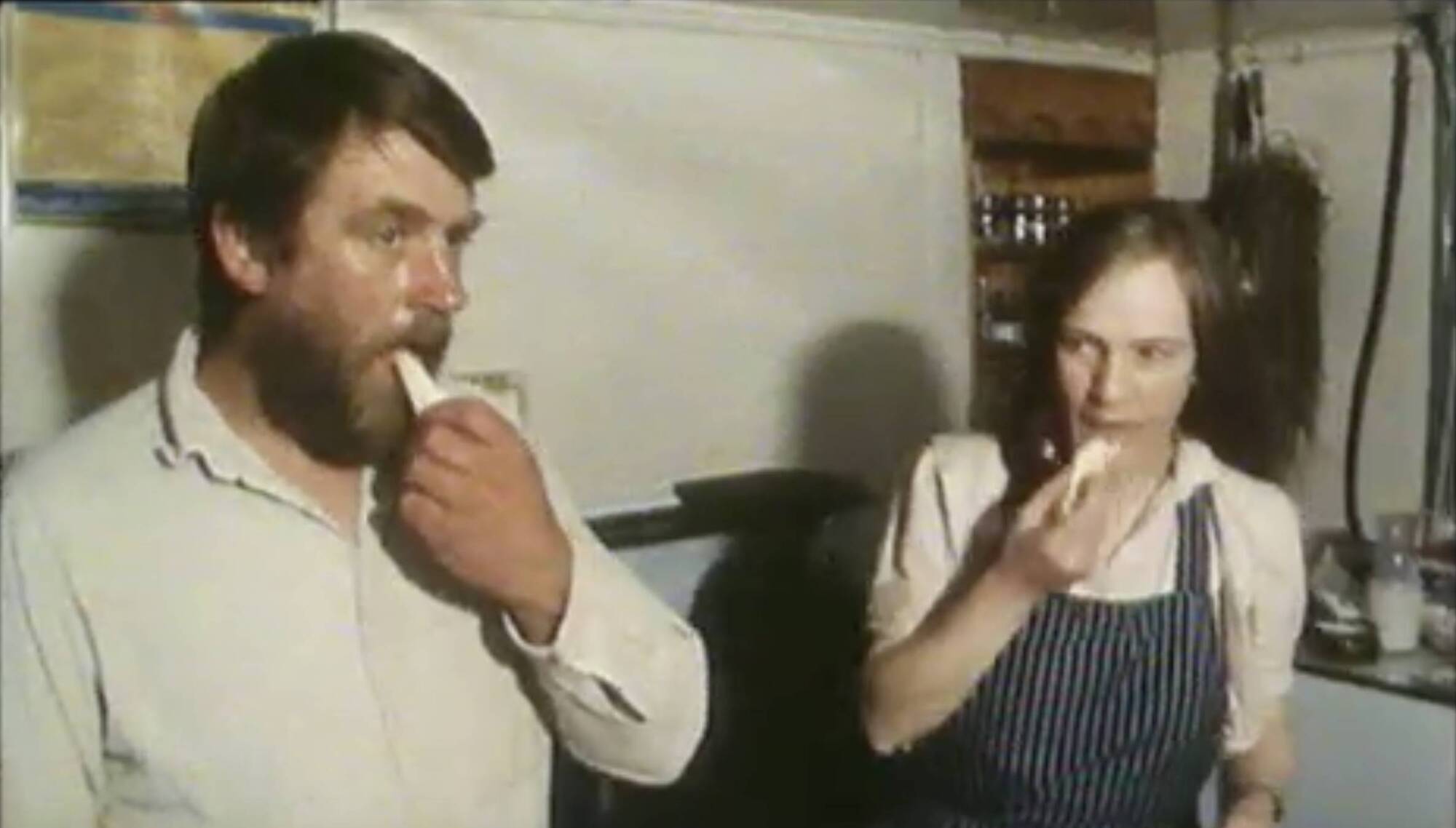
50 years on, how a Cork couple became the big cheese of farmingWhen their cow was producing too much milk in 1976, Veronica and Norman Steele made a life-changing decision, says Robert Hume Tue, 01 Sep, 2026 – 09:00Robert Hume
Fifty years ago, a young couple faced a dilemma as they tried to eke out a life of self-sufficiency on a farm they had bought in West Cork.
Veronica and Norman Steele were “city drop-outs”, having both studied philosophy in Dublin, before pivoting to Eyeries, near Castletownbere, in 1975.
“A career in agriculture was as challenging and interesting as a career in the city could ever be,” wrote Veronica, who died in 2017.
Brisket, their one-horned Friesian cow, was producing three gallons of milk a day, much more than they could consume. So, in 1976, the Steeles — who’d met when Norman came to University College Cork (UCC) to lecture on philosopher Ludwig Wittgenstein — decided to make cheese to preserve their excess milk.
For two years, they stuck to “boring” cheddar. It was bland, but “infinitely better than the sweaty, vac-packed bits available in those days”, said Veronica.
Dozens of recipes in John Ehle’s book The Cheeses And Wines Of England And France encouraged her to experiment with something more “exciting”. That was a matter of trial and error, and saucepans and buckets.
Some cheeses turned out well, others were “bummer”, as she recorded in her ‘cheesemaker’s diary’ (which can be read online). Once, the family dog, Prince, ran off with four little cheddars that were airing on a windowsill and buried them in the garden. However, each failed batch spurred Veronica on. “I was hooked,” she wrote.
The turning point came when she drove to the Dairy Products Research Centre at Moorepark, Carlow, where chief microbiologist Tim Cogan introduced her to biochemistry.
Finally, in 1978, came Milleens, “which then went on to reshape things”, the couple’s son, Quinlan — who now runs the business — tells me. Named after their farm, the semi-soft, rich-textured cheese was described by Veronica as “wild, weird, and wonderful”, with an “aphrodisiac fragrance”. One competition judge said its piquancy was “unmissable at five feet”.
The secrets behind Milleens, said Norman, were the humidity and temperature. “Natural bacteria take over instead of the injected variety,” and the cows could graze on “rich, natural herbs on the hillside”.
Veronica and Norman got in to commercial cheesemaking by mistake. They had given their friend Annie Goulding a present of 12 ounces of Milleens for the Blue Bull restaurant in Sneem, Co Kerry, where she was chef. But instead of eating it herself, Annie tried it out on customers.
By chance, Michelin chef Declan Ryan, from the Arbutus Lodge Hotel in Cork, was dining there that evening. He decided to round off his meal with Milleens and “went mad over it”. Next night, Myrtle Allen, of Ballymaloe House Hotel, was so impressed she “polished off the last sliver”.
The Steeles began making 40 cheeses a day, earning three times as much as if they had sent the milk to the creamery. Leftovers were given to the pigs, so there was no wastage.
At first, cheese connoisseurs were suspicious: It was all very well for Ireland to make cheddars, but not exotic cheeses.
However, as orders flooded in, the couple added a dairy (“cheese palace”) to the house, and extended their herd of cows to 27.
The bulk of the cheese was put on a bus to Cork, or a train to Dublin. But what thrilled Veronica most was to hear that buying a 50-pence piece of Milleens locally — in Eyeries, Allihies, and Castletownbere — had become as ordinary as buying bread or rashers.
As news spread, London journalists arrived. Soon, the Steeles were supplying Milleens far and wide: To prestigious delis, such as Maher’s in Cork, or McCambridge’s, Dublin; and famous restaurants, including Longueville House, Cork; the Coq Hardi, Dublin; Le Fermier Irlandais, Paris; and even London’s Dorchester Hotel.
Dreaming that Ireland might produce “as much, if not more, cheese than any country in the world”, Veronica organised cheesemaking courses and mentored budding cheesemakers.
She inspired Jane Grubb to experiment with Cashel Irish blue; Jeffa Gill with Durrus; Giana Ferguson with Gubbeen; and Sheila O’Sullivan with Derrynafian.
Thanks to a grant from the National Dairy Council and advice from the UCC dairy science and technology department, Veronica co-founded the Association of Irish Farmhouse Cheesemakers in 1983. She also travelled abroad, attending the Salone del Gusto, in Turin, Italy, and even venturing to Ethiopia to teach advanced cheese-making techniques and establish a local artisan movement.
Any fool can make cheese, but it takes genius to ripen it.
Her philosophical training, she believed, had given her “an edge” in identifying what was needed to produce a safe product.
Hers was not a “paternalistic” approach, rather a coming together of equals, an opportunity to see other people’s minds openly at work.
The Steele family business has faced severe challenges. Until the 1990s, they had sold cheese made with raw milk, but a brucellosis outbreak forced them to pasteurise it. In practice, the switch was achieved “overnight”, wrote Veronica, but, for a while, sales were badly hit.
In 2001, their herd of cows had to be culled because of BSE (‘mad cow disease’), and they decided to use milk from neighbouring farms. In turn, European Union milk-quota regulations, Brexit (2016), and the pandemic (2020) nearly destroyed the business, forcing them to focus entirely on the Irish market.
Milleens have won a string of awards, including for best farmhouse cheese (Royal Dublin Society, 1986); top soft cheese (London International Competition, 1990); and ‘Supreme Champion’ (British Cheese Awards,1997), beating almost 500 other cheeses.
At the Irish Cheese Awards in 2015, Veronica received a lifetime achieve-ment award for her outstanding contribution to the farmhouse cheese industry.
How proud she would have been, says Quinlan, to know that in 2018 Milleens won gold at the World Cheese Awards in Norway, out of a record-breaking 3,500 cheeses. In 2019, The Irish Times honoured Veronica Steele as one of the 40 most outstanding women in Irish history.
Since 1976, “everything has changed, yet nothing has changed”, says Quinlan. The science behind cheesemaking has been transformed “exponentially”, he says; and an industrial washer means no more scrubbing cheese moulds. Yet, the business remains a family one, a team continuing “to hone its craft”.
And it was all down to what happened 50 years ago, when Veronica coaxed “an innocent-looking blob of mainly protein and fat” in to a big cheese.
Read More
Darina Allen: I’ve got a glut of courgettes – here are three tasty recipes I’ve been making
Restaurant Chestnut owners reveal why they are closing the Michelin-starred West Cork restaurant
x
185th Anniversary Offer
Six months of digital access for €18.50
Already a subscriber? Sign in
No obligation. Ts&Cs apply.
‘Growing up, I never saw a female bus driver… so I became one’
Jack Anderson: Sydney Swans scandal puts AFL culture under scrutiny again
How Cork couple Norma Murphy and Frankie Sheahan finally brought Oprah Winfrey to Dublin
More in this section
Wine with Leslie: Who says rosé is just for summer? Here are three worth drinking year round
S Restaurant review: West Cork’s Harnen delights after passing of Pilgrim’s
Popular Killarney cocktail and whiskey bar named 2026 Bar of the Year
#Food#Insight