
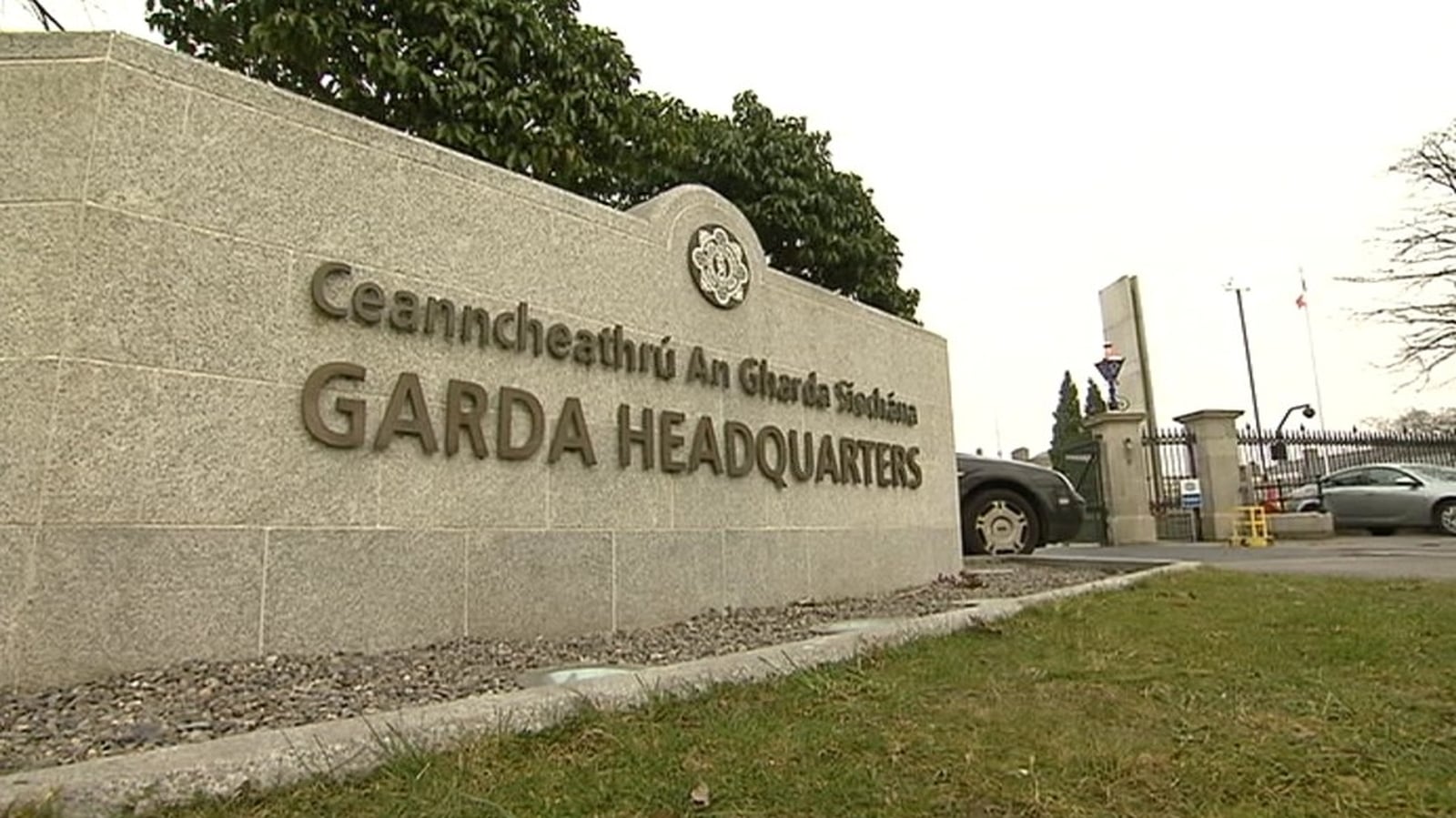
A confidential Garda whistleblower file about a stolen Winchester pump-action shotgun that went missing from Garda custody and ended up in criminal hands a second time was marked for closure without the knowledge or consent of personnel handling it in the Garda Whistleblowers’ Office.
In an RTÉ Investigates documentary to be broadcast on Wednesday night, Rose Sweeney, a senior serving civilian staff member, who is a former protected disclosure manager of An Garda Síochána, said the file was marked for closure without her knowledge or consent, even though her name was attached to it as its case manager.
A permanent staff member in the whistleblowers’ office found that a restricted database holding the file was accessed and an entry made on it recommending the file be closed.
The protected disclosure was made anonymously in February 2024. It raised concerns about what happened in the Winchester shotgun case, but also about the storage and management of weapons in the Firearms Section at Garda headquarters.
A protected disclosure is the legal term for whistleblowing, when employees make allegations of wrongdoing in the workplace.
In a statement, An Garda Síochána said it “considers the area of Protected Disclosures to be of the utmost importance and is committed to ensuring the integrity of the structure, system and process for making and investigating all such reports”.
The Garda Protected Disclosures Office was set up in mid-2017 as part of reforms introduced to protect Garda whistleblowers in response to the Maurice McCabe whistleblowing scandal and the Disclosures Tribunal, which was then underway.
READ: Secret report says gun could have been stolen from Kildare gardaí
Ms Sweeney said that when she learned in late 2024 that an unidentified person with access to the confidential database had made the entry, she immediately contacted Garda Human Resource Management, under whom the independent Protected Disclosures Office sat for administrative purposes at the time.
Two months later, on 14 February 2025, she got a response. She was told that the record would be amended, but that “the matter” had been fully investigated by an internal investigation led by a chief superintendent.
Ms Sweeney told RTÉ Investigates that she had not commissioned any internal investigation, and that the one referred to by HR had nothing to do with her and was entirely separate and distinct from the protected disclosure.
She subsequently learned that the protected disclosure file was transferred to new personnel on 4 February 2025 and was later closed.
Breach
Rose Sweeney said the entry on the restricted whistleblowers’ database meant the Protected Disclosures Office confidentiality — and independence —h ad been breached.
She said she objected to what she describes as the interference with the file, and she said the incident had caused her to lose trust in the organisation.
“Something like that should ring alarm bells in an organisation”, she said.
The alleged interference with a whistleblowing file is one of a number of whistleblower allegations to feature in Wednesday night’s RTÉ Investigates documentary.
Garda whistleblowers to speak out
Garda whistleblowers have come forward to speak publicly for the first time about what they allege are grave issues of interference with and suppression of whistleblowing cases in the force over recent years, despite reforms introduced after the last Garda whistleblowing crisis, which involved a management smear campaign against the whistleblower Sergeant Maurice McCabe and claims by other whistleblowers.
An Garda Síochána said “we encourage and support employees in disclosing wrongdoing and have implemented mechanisms to ensure that workers can raise concerns with the confidence that they will be listened to and that their concerns will be appropriately addressed.”
Its statement noted that, “directly after the publication of the first Disclosures Tribunal report, it is a matter of public record that Commissioner Harris met with the then Sergeant Maurice McCabe to apologise on behalf of An Garda Síochána for his treatment.”
One of the whistleblowers speaking to RTÉ Investigates is the head of the Garda National Technical Bureau, Detective Superintendent Brian O’Reilly.
Commenting on the Winchester pump-action shotgun case, he said that the fact that the shotgun was recovered twice from criminal gangs was “remarkable in the extreme”, and that it remained unaccounted for over a 13 year period was very concerning.
“We don’t know, in that 13 year period, what the gun was used for”, he said. “Was it used for robberies? Was it used for shootings? We have no idea, and that’s the risk the public are facing.”
He said there were clear similarities between the failures in the handling and storage of the Winchester pump-action shotgun in Kildare and the findings of a separate audit of weapons held at Garda headquarters that was carried out in autumn 2019 and early 2020, while the Firearms Section was under his management.
The internal investigation referenced in the response sent to Ms Sweeney from HR was one commissioned by the then Garda Commissioner, Drew Harris in August 2023, months before the protected disclosure was made.
It investigated how the Winchester shotgun ended up in criminal hands in 2023 after being seized by Gardaí in 2009, and its inquiries focused on Kildare Garda station.
It concluded that on the balance of probabilities, the gun was stolen from Kildare Gardaí sometime in a 13 year period between September 2010 and August 2023 but could not determine where, when or how.
‘No merit’
The internal investigation on the Winchester reported back in October 2024. It did not concern or refer to the anonymous protected disclosure.
In turn, the protected disclosure on the Winchester shotgun did not concern or refer to Kildare Garda station. The disclosure contained wider allegations about the management and storage of firearms at Garda headquarters. It alleged a cover-up of the fact that the Winchester shotgun had made its way back into criminal hands and it made broad assertions against the then Commissioner, Mr Harris.
At the time the controversial entry was made to close the Winchester disclosure file on the confidential whistleblowers’ record in late November 2024, the file was listed as “Under Assessment”.
RTÉ Investigates has established that the entry stated: “Subsequent information has identified that there was no merit to the main premise of this anonymous report”, and that it was “now clear that the allegation against the Commissioner is incorrect”. The note recommended that an examiner be appointed to consider the whistleblower file “with a view to closure”.
The entry stated that the main premise of the February 2024 protected disclosure was that the Garda Commissioner had not notified the Minister for Justice of the Winchester issue as was required under then Section 41 of the Garda Síochána Act.
Section 41 required a Commissioner to fully inform the Secretary General of the Department of Justice or the Minister for Justice of serious developments concerning public life and safety or that could adversely affect public confidence in the Gardaí.
Verbal updates
Then Commissioner Drew Harris told an Oireachtas Committee hearing in June 2025 that the reason for an eight month delay before he sent a formal report to the then Minister, Helen McEntee in April 2024 was that he was awaiting the outcome of a preliminary investigation into the matter. But he said that prior to his “full report” to the Minister and the Policing Authority, he provided “verbal updates”. He did not say when the verbal updates were made and by what route.
The anonymous Garda whistleblower’s disclosure also stated: “I am fearful that, like others, I will be targeted and penalised.”
RTÉ Investigates sent An Garda Síochána and its current and former commissioner a number of questions inviting answers and comment in relation to the Winchester gun case and the alleged inference with an anonymous protected disclosure on it.
In a response, An Garda Siochana did not specifically address questions raised concerning the alleged interference with the protected disclosure file. It outlined its commitment to the Protected Disclosure system and referred RTÉ Investigates to a statement made by the Gardaí on the seized firearm in April 2024.
An Garda Síochána Statement of April 2024
“In mid-2023, as part of an operation into a feud between two criminal gangs, a firearm was seized in the midlands and two males arrested and subsequently charged with firearm offences.
Two days later, following examination of the firearms, the Senior Investigating Officer found that one of the firearms – a pump-action shotgun – had previously been seized by Gardaí in the east of the country in 2009 and records showed that it was supposed to be still in possession of Gardaí in the east of the country.
This firearm had originally been stolen in a burglary in 2004 and was recovered by Gardaí during a search of a premises under warrant in the east of the country in 2009.
Within a week of the firearm being seized, a criminal investigation was instigated into how the firearm left the control of An Garda Síochána and came into the possession of the individuals charged with firearms offences.
A substantial number of enquiries have been completed to date and the investigation is in its latter stages.
There has been significant recent public comment, including by Commissioner Harris, on the critical importance of the proper control and recording of evidential material in An Garda Síochána’s possession.
Commissioner Harris has recently provided a report on this matter to the Minister for Justice under Section 41 of the Garda Síochána Act 2005.Commissioner Harris has also provided a report to the Policing Authority.
Commissioner Harris will keep the Minister, and the Policing Authority informed of matters as they arise.”