
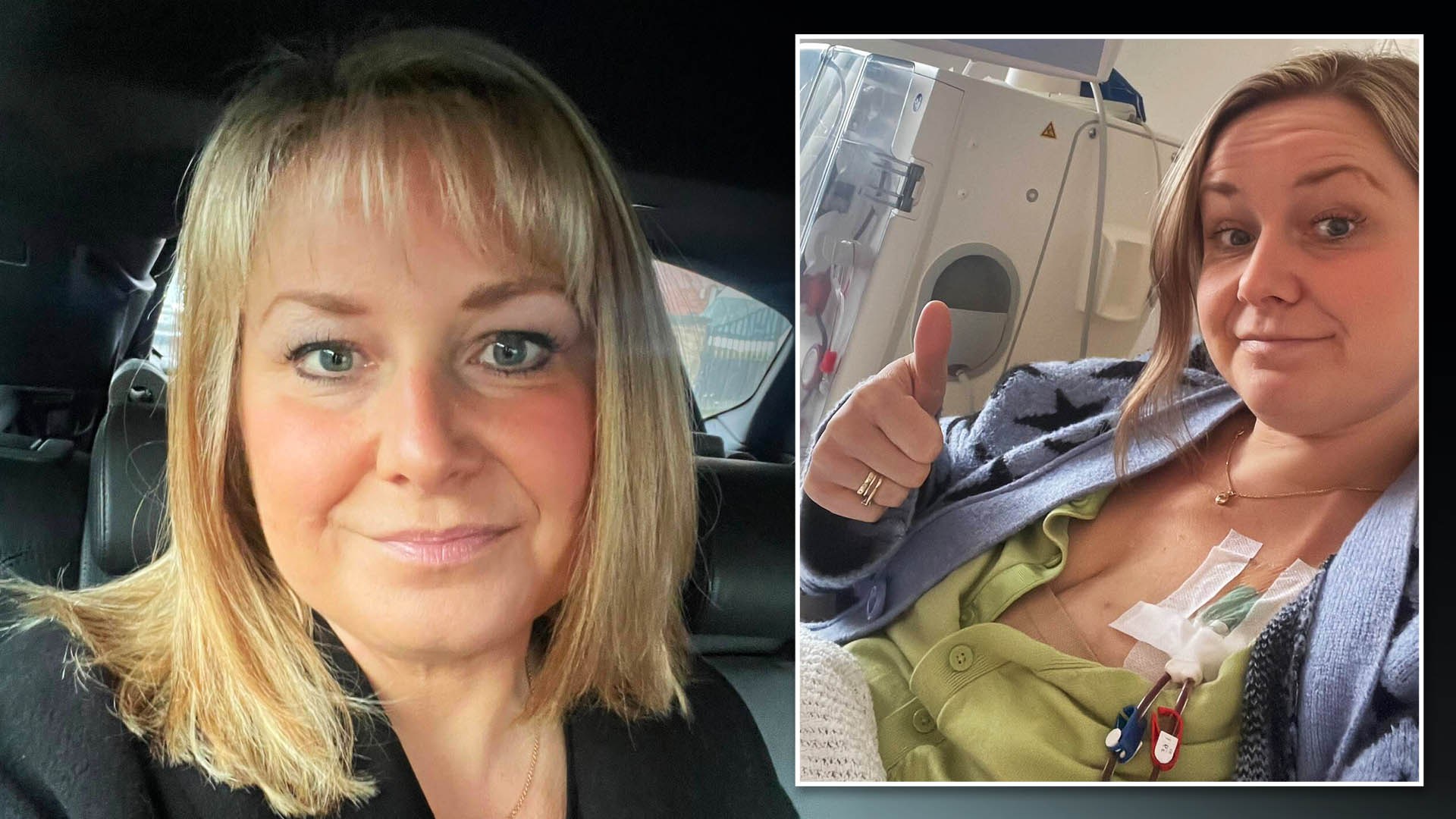
THE only symptom Aneka Murphy had of her “silent killer condition” was fatigue – which was easy to blame on being a working mum-of-four.
So when doctors told her that as a result, her kidneys were failing, she was stunned – she was just 34 years old.
5
5
“I was getting my son ready for football, rushing about making sure he had everything he needed, when my phone rang,” says the primary school teacher from Horbury, West Yorkshire.
“The doctor said: ‘I’ve got your blood test results and you’ve got kidney disease. It’s quite advanced.’”
After being referred to hospital, Anneka was told her kidneys were operating at just 30-44% capacity.
The cause? Years of undiagnosed high blood pressure – when blood pushes against blood vessel walls with too much force.
The condition, also known as hypertension, is very common, affecting around 16 million Brits.
But 6 million of us don’t know we have it, according to charity Blood Pressure UK.
It’s often dubbed a “silent killer”, because it tends to cause no obvious symptoms, and left untreated, it can slowly damage blood vessels and organs.
“Over time, it can significantly increase the risk of heart attack, stroke, heart failure, kidney disease and dementia,” says Dr Chris Arden, GP and council member of the Primary Care Cardiovascular Society.
Now 41, Anneka, who is married to Richard, a driving instructor, is among the 7,000 people on the kidney transplant list.* She’s already waited two and a half years, but could be waiting another five.
“I’m living never knowing when it’s going to happen, and that’s horrific,” she says.
“Every morning I wake up and think: ‘Is today going to be the day?’ I keep a hospital bag in my car.
“I had no idea that high blood pressure could damage your organs, and I know I’m not alone.”
Piling on the pressure
5
Being an unhealthy weight, smoking, excessive drinking and a lack of exercise are among the factors that raise the risk of hypertension.
Genetics, family history, ethnicity and being older are also potential triggers, but sometimes – as in Anneka’s case – the cause is not determined.
“I’ve never smoked or drunk alcohol, I eat a good diet and I was exercising,” she says. And she had no other health issues, aside from an instance of intracranial hypertension in 2013 – a build-up of pressure around the brain, which also causes high blood pressure.
Anneka had surgery to relieve this, which was successful, and she had no problems afterwards. Life went on as normal and she had no reason to visit the GP to have her blood pressure checked.
Her diagnosis in 2019 happened by accident, after she was pricked by a diabetic pupil’s empty insulin syringe in school. Blood tests then showed she had 3b chronic kidney disease (CKD), and her blood pressure was found to be very high, with a reading of 186/110mmHg.
CKD is a long-term condition where the kidneys don’t work as they should, and affects an estimated 7.2 million people in the UK, with high blood pressure, uncontrolled diabetes and heart disease among the leading causes. It can cause weight loss, swollen ankles, tiredness and shortness of breath, though most people don’t have any symptoms.
“If I hadn’t had my needle injury, would I have picked it up? No way. I would have just collapsed one day. I wonder if my blood pressure slowly crept back up again after 2013, but I’ll never know,” says Anneka, who is now an ambassador for Kidney Care UK.
Waiting Game
5
Anneka started taking blood pressure medication after her CKD diagnosis, but within two and a half years, her kidney function had fallen to just 8%. It’s now between 0% and 2%.
The kidneys are the body’s filtering system, cleaning the blood and removing waste products. If they can no longer do that properly, dialysis is needed to do some of the work – but only a transplant can restore full kidney function.
As Anneka waits for hers, she has five hours of haemodialysis at home three times a week – all while continuing to work.
She tried peritoneal dialysis, which filtered her blood through the lining of her abdomen for 10 hours overnight, but it made her unwell. “I was throwing up every day and I was sleeping all the time. I wasn’t functioning,” she says.
Eight people, including her brother, have been tested as potential living donors, but none has been a match.
“It’s a needle-in-a-haystack situation,” says Anneka, who is now desperately waiting for donation from a deceased stranger. “I have an action plan on my cupboard door in the kitchen for if I get the call.”
Know Your Numbers
5
For now, Anneka must remain within two hours of the hospital in case a suitable kidney becomes available, or risk being suspended from the list.
“My life is on hold. It’s mentally exhausting,” she says. She hasn’t been able to go abroad in five years, though Richard and her parents have taken the children – Tobias, 20, Oliver, 19, and twins Beatrice and Sebastian, 17 – on holidays without her to give them a sense of normality.
“I was miserable because I was left behind,” admits Anneka.
“I’m not their normal mum any more. Life is very, very different. I do have moments where I just cry and think: ‘I wish I wasn’t having to do this.’
“When it’s a sunny day, and we’ve had a barbecue, all I want to do is sit in the garden and enjoy myself. But I think: ‘I’ve got to go upstairs and do dialysis now.’ Every day, I also face the reality that I could die from this. It’s terrifying.”
Anneka is urging everyone to check their blood pressure – even if you feel healthy.
Plus, as part of this week’s Blood Pressure UK’s Know Your Numbers Week, the charity has been encouraging people to get checked and take action if needed.
Visit your GP, local pharmacy or a participating supermarket or leisure centre.
- Source: *Kidneyresearchuk.org
- Visit Kidneycareuk.org
Pressure Point
The risk of developing high blood pressure increases with age.
Some people may get headaches, blurred vision and chest pain from the condition, but it usually causes no symptoms.
“The only way to know your blood pressure is to measure it,” says Dr Pauline Swift, chair of Blood Pressure UK.
Do that at pharmacies for free from the age of 40.
Your GP surgery and some workplaces offer testing, too.
It’s considered high if you have a reading of 140/90mmHg or higher in a healthcare setting, or 135/85mmHg if you’re using an at-home reader.
Visit Bloodpressureuk.org.