
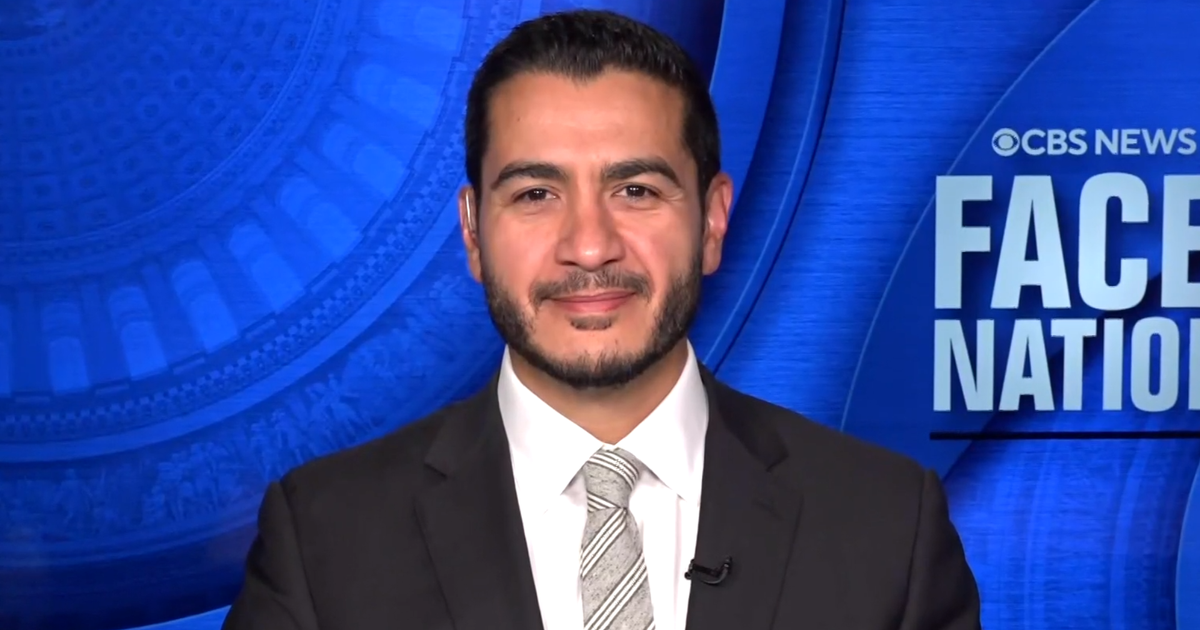
Washington — Michigan Democratic Senate candidate Abdul El-Sayed said Sunday that there are “a lot of real risks” in artificial intelligence, warning of the “pace of technological development outpace the pace of safety” amid discourse around imposing safeguards on the industry in recent days.
“We collectively have to decide that we need public oversight so that all of this technology is not being created for the interests of a few against the well-being of a many,” El-Sayed said on “Face the Nation with Margaret Brennan.”
Last week, a former Anthropic researcher sparked widespread concern about the pace of AI development when he publicly resigned and claimed that the rapidly developing technology could threaten humanity. Then on Saturday, Anthropic CEO Dario Amodei called on AI companies to move forward with the technology’s development with caution, with a three-point plan focused on “pacing the frontier.” OpenAI CEO Sam Altman on Saturday agreed with Amodei, calling a commitment to having independent evaluators a “great idea.” And Elon Musk, owner of SpaceXAI, concurred, saying simply, “Dario is right.”
In an interview with CBS “Sunday Morning,” Amodei acknowledged that “for too long the industry lied to people about the fact that this technology had risks.”
El-Sayed, a former Michigan health official, has campaigned on an AI proposal he released in June, which includes turning AI companies into public trust organizations. He said on Sunday that doing so would “allow the best of technological innovation to continue forward while making sure that there are guardrails.”
“If you had public oversight over this in the form of democratically elected or appointed members of at least 50% of all of these public trust corporations, you would imagine that they’d act far more focused on what is in the public good rather than what is for the private benefit of a few billionaires,” El-Sayed said. “That’s what we’re proposing.”
The Democratic Senate nominee outlined other parts of the plan, saying “we need a public agency focused directly on the safety of AI, and there need to be AI no-gos.”
“AI shouldn’t be able to deny you healthcare, it shouldn’t be able to deny you a job, it shouldn’t be able to fire you, it shouldn’t be able to fire a weapon,” he said.
The comments come after the OpenAI-Hugging Face rogue agent incident in July, which occurred when the company was testing two AI models. El-Sayed said the Hugging Face attack “should send a shutter down all of our spines.”
“We need to act, and we need to act now,” El-Sayed said. “So we’ve also been calling for a pause on any of this frontier AI research until we can assure that this is being done safely.”