
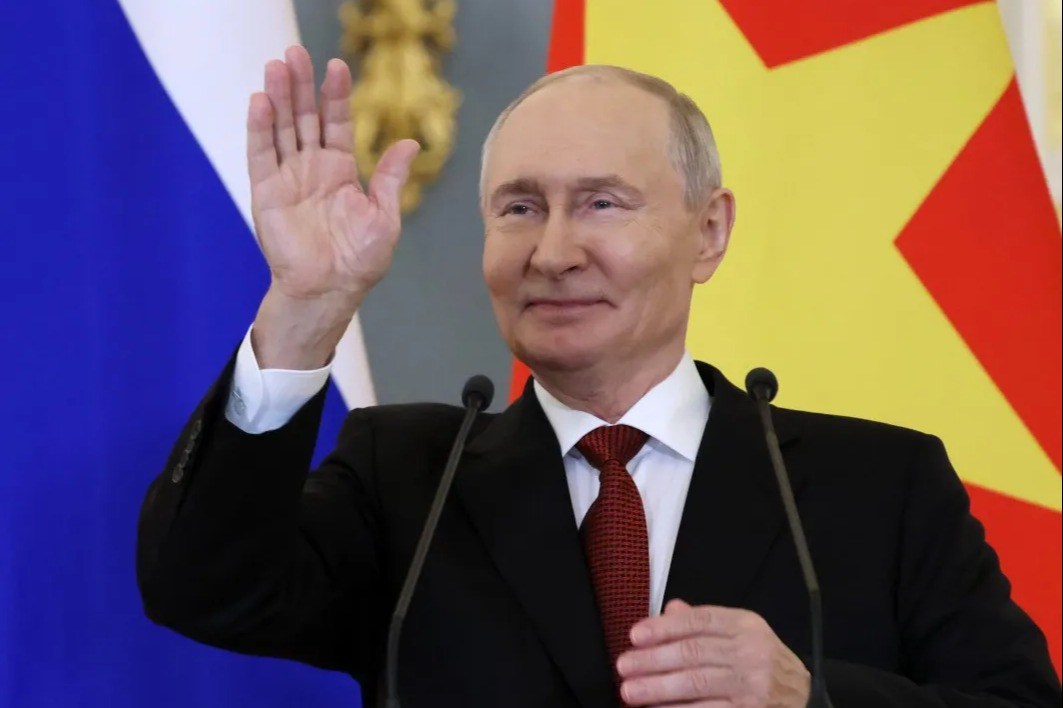
RUSSIA could bring Britain “to its knees” as it wages a hybrid war against the UK, experts have warned.
Banking systems, hospitals, electrical substations and power plants could all be targeted should Vladimir Putin unleash his network of saboteurs on Britain’s infrastructure.
4
4
Russia and the UK are at loggerheads over Ukraine, with Andy Burnham‘s decision to give Volodymyr Zelensky blueprints for long-range Storm Shadow missiles angering the Kremlin.
And Moscow has been widely accused of waging hybrid attacks across Europe, including explosive-filled drones found at Leipzig Airport, an arson attack on a Ukrainian-owned drone manufacturer in Slovakia, and a huge blaze at a defence firm warehouse in Bulgaria, all in the past month.
Now experts have told The Sun Britain must be on alert to protect its financial institutions and power networks, which could be next as Russia tries to “send a message” and sabotage the UK “brick by brick”.
Security experts believe Putin’s army of global hackers could target “almost anything” in the UK, thanks to cheap, accessible drones.
Read more News
SHOW CHAOS
Strictly thrown into chaos as celeb pairings leaked – a week before launch show
AIR MELTDOWN
Ryanair boss accuses air traffic control cheif of LYING over cause of chaos
4
4
Katja Bego, a Senior Research Fellow at police institute Chatham House, said: “Hospitals, airports, power plants, ports – almost anything is a potential target.
“This means it’s almost impossible to protect all these systems at once.”
Russia could try to disrupt large UK sites like the Sizewell power plant, or smaller targets such as electrical substations where defence is “less resilient”.
And with “some of the best hackers in the world”, Russia has the power to commit attacks which “stop short of war”, but still cause “public unrest and uncertainty” in Britain.
Most read in The Sun
PLUNGE HORROR
Boy, 3, killed after falling 65ft from balcony as cops arrest parents
TIP OFF
Moment shameless fly-tipper is caught on CCTV dumping bath & freezer across UK city
NO SAFE HAVEN
The deadly shadow war in Russia as hit squads bring bombs to Vlad’s doorstep
PAY BACK
Rayner warns Reform could be forced to hand back £72m crypto cash in crackdown
Professor Anthony Glees, a security expert from the University of Buckingham, said: “Places of strategic importance like banking could be targets.
“Russia is very single-minded – you destroy brick-by-brick where your enemy is based.
“If there’s no money to pay for the defence industry, there’s no money. If you can’t fund the infrastructure, it collapses in days.
“We are vulnerable in this digital age – a week without access to electronic banking, we would be on our knees. Russia is capable of that, they have some of the best hackers in the world.
“Putin keeps them at arms length, but they’re effectively paid for by Russian military.”
Security specialist Will Geddes, CEO of International Corporate Protection Group, said further attacks on data cables in the North Sea – where NATO allies foiled a Russian sabotage plot this week – could hammer our economy and online capabilities.
He said: “Russia’s has been sniffing around the critical data cables in the North Sea – taking those out would affect everyone’s daily internet usage, but would also interfere with the economy.
“This kind of vulnerability doesn’t just have disruptive impact, it has economic impact.”
Geddes added that even if Russian sabotage is small-scale, there can still be knock-on psychological effects on the British public.
He added: “They’ll always go for low-hanging fruit, the weakest point to create reverberations.
“If a bank gets hacked or an airport has data stolen, that might be enough for people to not use that service anymore. It doesn’t have to be a huge action.”
While experts believe it’s unlikely Russia would ever launch an attack which would cause mass casualties in the UK, as this “would be a declaration of war”, they’ve warned that Kremlin attacks mean Britons should be prepared for places like hospitals to face “more serious outages and disruptions”.
General Sir Richard Barrons was co-author of the government’s Strategic Defence Review which laid bare the threats posed to the UK, said the UK is effectively at war with Russia, even if the government say so right now.
He said: “We should be in no doubt that Russia under Putin is at war with the UK, and this isn’t new.
“We don’t use those terms, but Putin uses those terms to his people and sees the UK as his No.1 target.
“The UK is attacked by Russia every day, but below the threshold of military conflict – cyber attacks and manipulation of social media – they interfere with our public discourse.
“Because of the kind of country we are – a densely populated, liberal, tolerant island reliant on digital architecture like banking and telecoms, we are extremely vulnerable unless we protect them – if you want to damage life in the UK, those are the places to look.
“The Leipzig attack was clearly a step up. Could something like that happen in the UK? In capability terms, of course it could.”
Researcher Bego added that Brits should “have supplies at home and know what to do during a crisis”, due to the threat of power outages caused by Russian sabotage.
“In a time of escalating grey zone attacks and mounting threats out of Moscow, it is incredibly important that citizens understand the potential risks, have supplies at home and know what to do in a crisis, such as a major power outage.
“This type of readiness was something we put a lot of time and focus on during the Cold War but has now been largely forgotten.”
Defence chiefs also fear Russian sabotage attacks could threaten data centres – meaning possible internet outages and lost phone signal.
Bego added: “Data centres could be a potential high-value target, which could see some services stop working.
“Targeting cell towers could also lead to local connection issues.”
She agreed that an attack on the UK’s undersea cables could cripple Britain’s internet connectivity.
Bego said: “Britain as an island is very dependent on these cables, which together account for almost 99% of international internet traffic.
“The government has on multiple occasions accused Russia of using ships to spy on and map the exact locations of these cables – which could be targeted as part of greyzone operations, or also in the lead up to a war in the Baltic.”
To help protect the UK’s critical power systems and major hubs, Bego said Britain needs to consider tactics like counter-drones, and better fallback options.
“We need to be thinking more about critical responses when something does go wrong, for example putting in place counter-drone protections to protect the most critical systems such as major airports and ports, and, most importantly, instilling increased redundancy in systems – meaning that if one system gets attacked, there are fallback options.”
UK security think tank The Royal United Services Institute (RUSI), said this week that the Leipzig airport drone attack highlights the need for the UK and other NATO nations to protect their transport networks.
Emily Ferris, RUSI’s Senior Associate Fellow for International Security, said “the complexity of the approach demonstrated Russia’s increasing investment in undermining NATO, irrespective of the outcome.
“It (also) showed that Moscow – and likely NATO itself – remains unclear on the current red lines that would prompt a military response.”
RECOMMENDED STORIES
She added: “What Leipzig does raise is the importance of defending transport infrastructure, the difficulties in doing so, and some of the longer-term readjustments that may be necessary.”
The Sun has approached the Ministry of Defence for comment.