
analysis
NT Labor is celebrating Yiwarr McGrath’s victory in Mulka, but the party must still work to win back trustAnalysis by Matt Garrick and Jack Hislop
Posted Sun 13 Sep 2026 at 3:25pmSun 13 Sep 2026 at 3:25pmSun 13 Sep 2026 at 3:25pm
The ranks of the Northern Territory parliament feature a grab bag of different backgrounds.
Over the years, the building known as “the wedding cake” has welcomed a school principal, commercial lawyer, AFL players, Aboriginal elders and an Oxford-educated migration expert.
NT Labor scored a new entry into this field overnight with the election of a man with one of the more extraordinary backstories of any politician entering the legislative assembly.
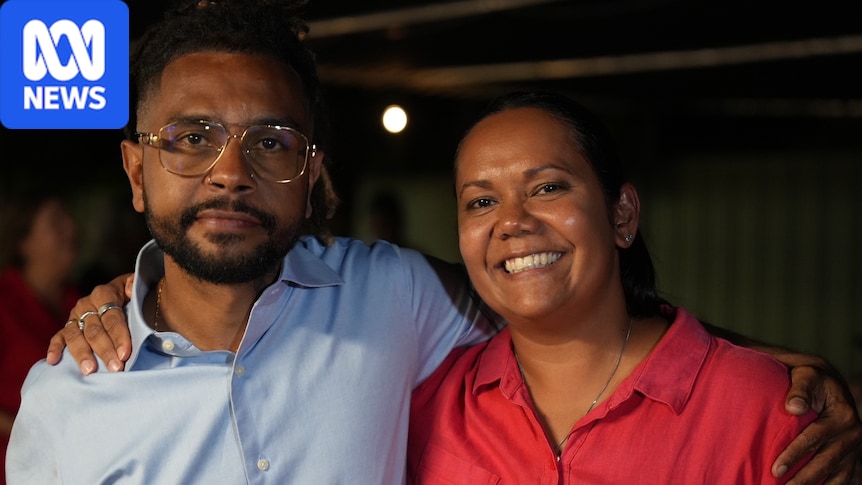
Registered nurse and Yolŋu man Yiwarr McGrath won the Mulka by-election in remote north-east Arnhem Land and will take over from retired independent MLA Yiŋiya Guyula.
As Mr McGrath told the ABC in Nhulunbuy last night, he grew up in the north-east Arnhem Land electorate in poverty, as “an orphan child … not knowing when the next meal is”.
“So, I’m going to come here to the parliament with real life experiences and influence policy for my people and everyone else in this region,” he said.
In Mulka, Mr McGrath’s story is not an isolated one.
Australian Bureau of Statistics data shows east Arnhem Land remains one of the nation’s 10 most disadvantaged local government areas.
A 35-year-old father-of-three, a health professional and a former NT Young Australian of the Year, Mr McGrath will now take his people’s plight into the halls of power.
Six seats and celebrating
NT Labor celebrated Mr McGrath’s victory in Nhulunbuy on Saturday night after he swept up the majority of votes against sole challenger, independent Andrew Blamey.
Mr McGrath’s victory sees NT Labor hit six seats in parliament, and restores the seat of Mulka — formerly named Nhulunbuy — to the party that held it between 1980 and 2016.
There was little doubt NT Labor would reclaim Mulka at the by-election.
The well-resourced party rolled out its biggest players on the campaign trail, from a sitting federal MP and a government minister to former local MLAs and even an ex-NT chief minister.
At the by-election after-party in Nhulunbuy, an elated Opposition Leader Selena Uibo said the win was a “huge boost for our Labor caucus, and of course our Labor party”.
“We want to show Territorians we are there to do the heavy lifting … that we’ve learned from the past,” she said.
“We want to make sure that we can make a strong alternative government come 2028.
“And having six members now in the Labor caucus in the NT parliament will show that we’re a force to be reckoned with.“
NT Labor’s six members — five Aboriginal members from the bush, and one MLA in Darwin — will now come up against the Country Liberal Party (CLP) government’s 17 seat majority.
But with the loss of an independent member following Mr Guyula’s retirement, some fear the major parties aren’t serving the NT community’s best interests.
Loss of crossbench voice
NT Labor’s only challenger for Mulka, Mr Blamey, spoke during the campaign of how he believed Labor and the CLP had continuously let the region down.
“The two major parties have really lost their way [in the NT],” he said.
“When you actually take a step back and look at it, our debt is spiralling out of control, there’s issues throughout the NT … and politicians don’t necessarily have all the answers.
“We need to listen to those voices in our communities.“
Mr Blamey, a father-of-two and human services worker, has lived in the NT for almost 20 years.
He said he was driven to run for Mulka after watching the NT parliament constantly “yo-yo” between Labor and CLP governments, with vastly different agendas and “short-term vision”.
His bid for parliament, if successful, would have kept an independent voice on the crossbench, which after two resignations, has now dwindled to just two independent members.
Uphill battle to win back trust
NT Labor has also recently been mired in issues largely of its own making, including the unceremonious dumping of its deputy leader and an undisclosed speeding ticket scandal.
The party is also yet to put forward any meaty policy positions ahead of the 2028 election, although Ms Uibo insists it is “doing a lot of the background work on policy development now”.
In 2024, the party was decimated by Darwin and Palmerston voters at the NT general election over its handling of high crime rates and the territory’s languishing economy.
So with ambitions to claw back ground in those areas, how will it handle those issues now?
With a caucus mainly from Labor’s left faction, will the party shift away from the tough-on-crime approach under the CLP that has seen a spike in Indigenous incarceration?
Or will it stay the course to try to convince suburban voters it won’t lose control once again?
With Labor’s policy platform still under development, it’s hard to guess exactly which route the party will take, but whichever way it goes, the party has a lot of trust to win back — even with six seats.