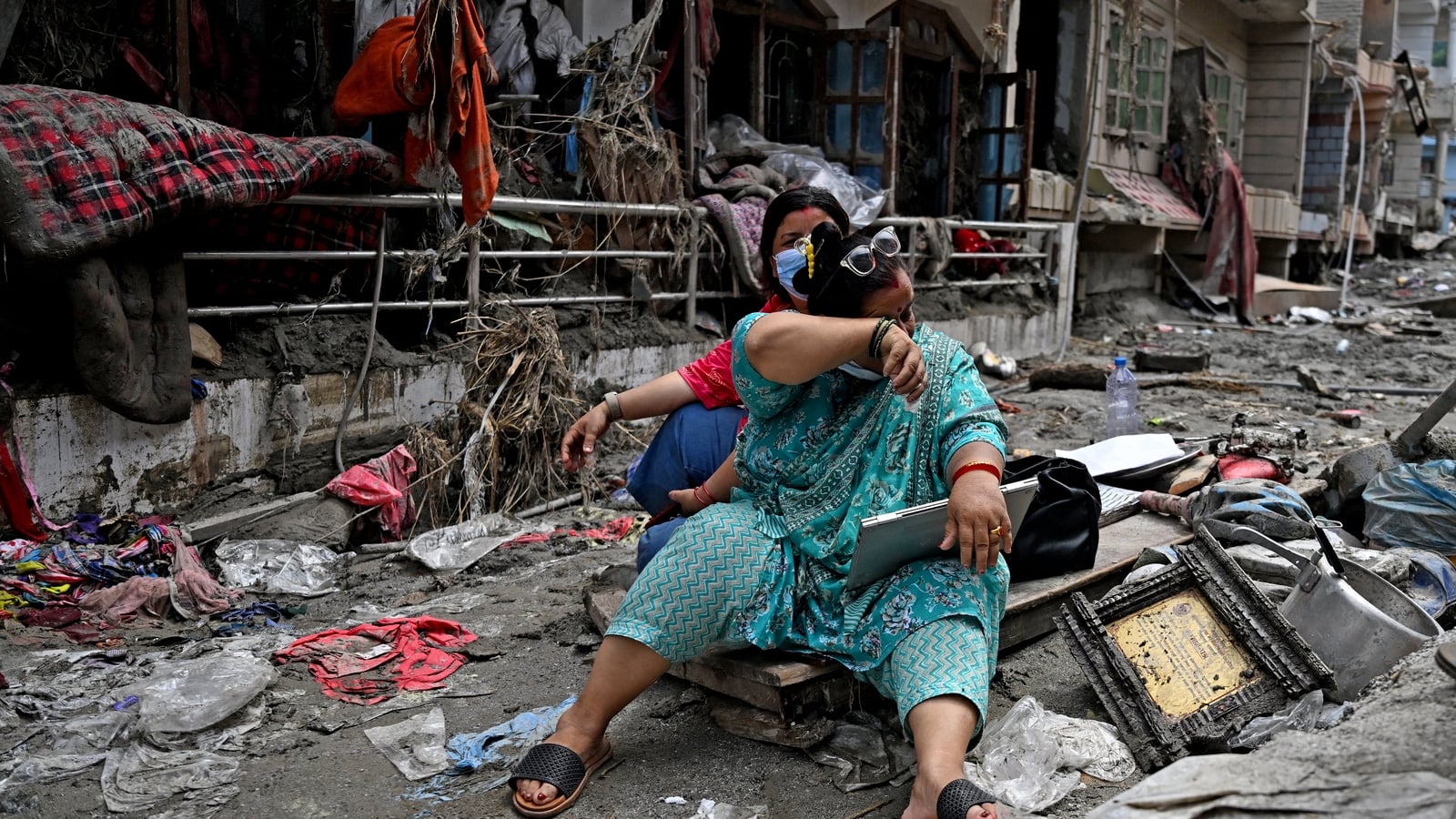
Devastating floods on the Nepal-Tibet border have killed at least 987 people in Nepal, the country’s disaster authority has said, taking the number of overall deaths to more than 1,000.
Chinese state media earlier confirmed 16 people were killed in Tibet, bringing the total toll from last week’s disaster to 1,003.
The number of people missing in Nepal dropped to 3,916, as rescue efforts entered a seventh day, and the bodies recovered rose.
In China, state media say there 546 people missing, taking the number of missing to 4,462. The missing in Nepal include 583 foreign nationals from over 30 nationalities.
Two Irish citizens, who have been named by the Nepalese Tourism Department as 46-year-old Santosh Sahu and 18-year-old Spandan Sahu, are among those missing.
The missing in China includes 261 foreign nationals from 23 countries.
Among the missing foreign nationals, Indians make up one of largest proportions, with 275 citizens and another 128 people of Indian origin missing in Nepal, according to New Delhi.
There are 85 US citizens missing, according to the State Department on Sunday.
There are also 62 Ukrainians, 51 Malaysians, 42 Australians, and 33 British citizens, according to reports, including both Nepal’s tourist board and embassies.
In India, authorities in Uttar Pradesh state said they had recovered 17 bodies from rivers flowing from Nepal, believed to be flood victims.
Indian authorities are seeking to identify them, and they are not included in the toll.
Nepal rescuers reach remote areas
Nepali rescuers have built temporary bridges to reach remote areas and dug through the ruins of hydropower projects in the Himalayas to rescue close to 300 trapped workers following the floods.
About 600 people remain stuck in several devastated hydropower stations that have become the focus of rescue efforts, while Prime Minister Balendra Shah said over 11,000 people have been rescued across the affected region and power and communication lines had been restored in some areas.
“Thousands of citizens have lost their homes, families, loved ones and property,” he said in a social media post.
“The government understands the immense pain they are enduring. The path ahead is to support them through this suffering and help them return to normal life through rehabilitation.”
Rescuers in Nepal dig for survivors at hydropower plant
Rescue teams had managed to restore road networks to Nuwakot, one of the worst-affected districts, facilitating rescue operations and distribution of relief material, Mr Shah said.
A glacier collapse triggered a deluge of ice, rock and mud which swept through the impoverished nation’s border region with China, posing a massive challenge for Nepal’s six-month-old government.
Police official Bipin Regmi said a search team recovered 24 bodies from a house in Betrabati village in Nuwakot district.
“We are reaching new areas and recovering bodies,” Mr Regmi told Reuters.
Aid worth more than $42 million had poured into the country after the disaster, Mr Shah said, and the government expected the contributions to increase.
Neighbours India and China, between whom Nepal is wedged, were helping with rescue efforts, including building bailey bridges to reach remote affected areas.
Rescue efforts focus on hydropower stations
Mr Shah said 279 workers had been rescued from hydropower projects so far where authorities estimated that close to 1,000 people were trapped.
Pictures and videos shared by rescue teams showed earth-moving equipment digging and shovelling mud and rocks under lights in the dark of the night as workers watched.
Soldiers used torchlight in a big pit they had created to look for space to get into one tunnel.
There has been a boom in hydropower projects in Nepal since the turn of the century as the mountainous country sought to take advantage of its Himalayan water resources to address chronic domestic power shortages and exploit prospects for selling electricity to southern neighbour India.
Read More:
Hope and horror: Families in Nepal await news of missing
‘Everything is lost’ – Inside Nepal’s devastated flood zone
How a glacier collapse may have caused Nepal-Tibet floods
Hydropower projects in Nepal’s mountains need tunnels to carry water through the steep terrain, allowing developers to exploit the sharp elevation drop between Himalayan rivers and powerhouses to generate electricity.
China blames global warming
Mr Shah said the catastrophic event signalled the growing risks that the Himalayan region faces.
“The region must therefore remain vigilant. The time has come for us to strongly raise before the international community the disasters we are experiencing as a consequence of climate change,” he said in his post.
Last week’s flood was “caused by glacier instability under the long-term effects of global warming”, China’s state broadcaster said yesterday.