
Advertisement
You have reached your maximum number of saved items.
Remove items from your saved list to add more.
Europe has a greater appeal than ever – in 2025, the Continent welcomed a record 793 million international visitors – but it’s also never been more unevenly loved. For every Parisian and Venetian who loves tourists – and their business – there are droves more who would happily never again hear the clack-clack of suitcases on cobblestones or clumsy attempts to order a beer in the vernacular.
Three of the most visited cities are trying to manage their popularity: Venice now has a peak day access fee, Amsterdam aims to have fewer than 20 million overnight visitors annually, and Barcelona wants to phase out holiday rental apartments by 2028. As a result, the most well-known alternatives – the likes of Milan, Porto and Rotterdam – are getting even busier.
So, what’s the next step for savvy travellers? Why, seek out these countries’ splendid third cities, of course: places which are often culturally rich, historically important and big enough to sustain a long-weekend visit, but where you’ll also encounter lower prices, shorter queues and locals delighted to show off the charms of their neighbourhood. Overcrowded capital cities are going nowhere. Time to go somewhere new.
Basel, Switzerland
The Rhine is the lifeblood of this city; walk alongside it, swim in it and watch the world go by as you sip a spritz at one of its many riverside buvettes (snack stands). “The river is the city’s living room,” says Basel-born resident Marco Greiner. “On a warm summer evening, you might see an office worker, student or chief executive floating downstream, side by side.” Less showy than Zurich or Geneva, Switzerland’s third-largest city sits where Switzerland, France and Germany meet and has one of Europe’s best museum scenes, excellent galleries and design shops and a handsome old town.
Where to stay Der Teufelhof Basel, from $440 a night. See teufelhof.com
Sign up for the Traveller Deals newsletter
Get exclusive travel deals delivered straight to your inbox. Sign up now.
Malmo, Sweden
Advertisement
While not as stately as Stockholm, nor as grand as Gothenburg, Sweden’s third-largest city is youthful, diverse and the perfect size for a short break. Explore cobbled squares, Nordic cafes, canals, design shops and parks dotted with themed playgrounds; swim outdoors at Ribersborgs Kallbadhus and navigate by way of the distinctive Turning Torso skyscraper. Martin Karyd, co-owner of the popular Malmo Saluhall, believes his food market in particular offers an authentic flavour of daily Swedish life: “People, food and languages mix from all over the world here, and that’s when you feel the city’s energy.”
Where to stay MJ’s Hotel, from $240 a night. See mjs.life
Ghent, Belgium
The third-city appeal of Ghent combines medieval charm with the energy of university students and a fast-growing tech scene, fuelled by one of Belgium’s biggest universities and a steady flow of start-ups. Soak up the grandeur of gabled houses, the Gravensteen castle and St Bavo Cathedral’s 15th-century altarpiece by brothers Hubert and Jan van Eyck. Tap into everyday Flemish life by way of waterside bars, vibrant street art and independent shops. “We’re proud,” says Sofie Bracke, Ghent’s deputy mayor, “to have an urban culture shaped by locals who enjoy the good life.“
Where to stay 1898 The Post, from $440 a night. See 1898thepost.com
Trieste, Italy
Advertisement
“Our city is rich in its quality of life,” says Carla Movia, a jewellery designer. “We value time spent with family and friends and in nature.” For Movia, that means local food and wine, eating a pizza in seafront neighbourhood Barcola and buying produce from small nearby farms. This feeling gives Trieste its third-city energy, along with its north-eastern location. Italian, Austro-Hungarian and Slovenian influences are all evident in its historic port, palaces and Habsburg-era neoclassical quarter. There’s literary history, the dramatic Bora wind, the white 19th-century Miramare Castle and easy access to caves and coast too.
Where to stay Grand Hotel Duchi d’Aosta, from $425 a night. See duchidaosta.com/it
Hamburg, Germany
Head to the fish market on a Sunday morning, recommends Ann-Marie Mcaveety from TUI, to get a sense of Hamburg’s character: “Traders selling their catch at full volume, locals queuing for fish rolls and coffee, ships gliding past.” Germany’s second-largest city by population has a third-city feel; it’s a cooler, unmistakably northern alternative to Berlin and Munich, with a spectacular concert hall and famously alternative nightlife district in St Pauli. “The neighbourhoods tell their own stories,” says Ann-Marie, “from Ottensen’s independent vibes to HafenCity, where you’re surrounded by canals, old warehouses and walkways where goods once flowed off the boats.”
Where to stay Fairmont Hotel Vier Jahreszeiten, from $760 a night. See fairmont.com
Lyon, France
“Travel from antiquity to modernity here – feel the endurance of the Renaissance and the audacity of contemporary masters in Lyon’s architecture – and explore the city by foot, by bike, by boat, or at your own pace,” suggests Guillemette Naessens of the Musée des Beaux-Arts de Lyon. This quietly confident city doesn’t have the dominance of Paris or seaside appeal of Marseille, but it does have Roman ruins, traboules (hidden covered passageways), grand squares, lively markets and a renowned gastronomic scene, with a total of 14 Michelin stars. A great base for the Alps and Beaujolais vineyards nearby too.
Where to stay Cour des Loges Lyon, from $450 a night. See radissonhotels.com
Advertisement
Bilbao, Spain
“While the pintxos bars were the draw for me,” says Jess Ellis, a travel writer and photographer, “the surprise of my Bilbao trip was a morning at the Guggenheim. Even if you’re not really an art person, don’t skip it; the building itself is half the experience.” The Frank Gehry-designed museum remains one of Bilbao’s great attractions, but repeat visitors consider it for much more than that: the former port-and-steel city of river walks, pintxos rituals and great restaurants has a strong local Basque identity that feels proudly distinct from the rest of Spain.
Where to stay The Artist Grand Hotel of Art, from $330 a night. See hoteltheartist.com
Utrecht, the Netherlands
“City life doesn’t get much better than this,” enthuses photographer Sven Geerdes. The Utrecht local’s images capture gorgeous moments, “when everything seems to move in harmony. Small boats on the canal and the calm chatter of people dining, in warm sunset colours.” The Netherlands’ fourth-largest city, less business-focused than Rotterdam and less tourist-saturated than Amsterdam, Utrecht boasts a compact canal network with cafes tucked down at water level along the Oudegracht, medieval lanes and the distinctive, free-standing Dom Tower – a 14th-century Gothic church.
Where to stay Grand Hotel Karel V, from $400 a night. See karelv.nl
Braga, Portugal
Advertisement
Braga contains one of the oldest and most devout sides of Portugal, believes Jose Almeida of the tourist board. Founded by the Romans as Bracara Augusta, it later became one of the country’s most important religious centres. “Bom Jesus do Monte, with its Baroque staircase, is proof of this.” It is not Portugal’s third city by size, but it feels like the country’s great northern counterpoint to Lisbon and Porto: spiritual, with ancient Baroque churches, youthful, thanks to its university; and green, close to Minho’s hills, gardens, sanctuaries and fertile countryside.
Where to stay Porta Nova Collection House, from $130 a night. See portanovach.pt
Odense, Denmark
You’d expect the birthplace of Hans Christian Andersen – author of The Little Mermaid and The Ugly Duckling – to have a fairytale feel, and Denmark’s third-largest city, on Funen Island, delivers. Wander along cobbled lanes, taking in colourful old houses, statues, murals and the greenery of 150 parks. Worth a visit are the modern museum dedicated to HC Andersen and Storms Pakhus; Bargroup’s Bjørn Hentze describes the former warehouse turned street-food market as a place where locals and tourists can experience authentic Funen Island through food and lively events.
Where to stay First Hotel Grand, from $250 a night. See firsthotels.com
Liverpool, England
Advertisement
“Few places have had a greater impact on the world through music, culture and history than Liverpool,” says Dale Roberts, tour guide and owner of Dale Liverpool Tours, and a proud Scouser. “But the thing that makes Liverpool truly special is its people. We take pride in being warm, funny, hospitable and always ready to share our city with the world.” To tap into Liverpool’s cultural heritage, visit the Cavern Club, where the Beatles famously played, or take a tour of Anfield, the home of Liverpool Football Club. Historic Royal Albert Dock is also a drawcard, with its museums, shops and restaurants.
Where to stay Innside by Melia, from $228 a night. See melia.com
Zagreb, Croatia
It’s rare that a nation’s capital could be considered its third city (though Australians would surely understand). So it is with Croatia, whose tourism juggernauts Dubrovnik, Split and Zadar tend to leave Zagreb in their wake. There’s plenty of reason to visit this inland capital, however, including a huge number of museums, which range from the serious (Nikola Tesla Technical Museum) to the quirky (Museum of Broken Relationships). “I love history, so there is never a dull moment in my city,” says Lucija Kvorka, a UTracks tour guide who grew up in Zagreb. “The city is also alive and offers plenty of social spaces with cafes, bars and theatres, and the natural surroundings on the outskirts of town provide a great space for activities such as cycling and hiking.”
Where to stay Hotel Esplanade, from $386 a night. See esplanade.hr
Patras, Greece
Greece isn’t exactly famous for its cities: Athens is ever popular, and Thessaloniki is known for its Roman and Byzantine history, but where do you go next if it’s not an island? Patras is Greece’s third-largest city, a festive place with a spring carnival that deserves to be far better known, not to mention a Byzantine-era castle, plenty of taverna-filled squares, and even a Venetian-era hammam. “Patras is also great as a jumping-off point,” says travel writer and Greece expert Flip Byrnes. “You can get everywhere from Patras. You can take a ferry up to Italy, you can get to Kefalonia island in an hour, Corfu isn’t too far away, and straight up you’ve got Lefkada. So it’s a great gateway city.“
Where to stay Moxy Patra Marina, from $120 a night. See marriott.com
Aberdeen, Scotland
Two cities immediately spring to mind when you think of Scotland: Edinburgh and Glasgow, in some ways twins given their size and proximity (about an hour apart), though in other ways polar opposites in culture and atmosphere. What people tend to forget, however, is Aberdeen, the northern “granite city”, known for its classic architecture, maritime history and proximity to Highland culture. Louise Jamieson is an Aberdonian, and assistant manager of Rabbie’s Tours. “Aberdeen combines dramatic coastlines, magnificent castles, breathtaking scenery, and a thriving food scene with iconic landmarks such as Dunnottar Castle,” she says, “showcasing the rich heritage of north-east Scotland.”
Where to stay the historic Fife Arms, from $1153 a night. See thefifearms.com
Innsbruck, Austria
“Some cities are great during the day, others really come alive at night; what I love about Innsbruck is that you get both,” says Helmut Wagner, a UTracks tour manager and Innsbruck resident. “I’ve grown up here and it’s a beautiful historic city with great restaurants, bars and plenty going on in the evenings, but there’s also so much to do during the day: explore the old town, walk along the Inn River, or take a cable car up for incredible views across the Alps.” Though Innsbruck might not have the international fame of Vienna or Salzburg, it does have gorgeous alpine scenery, historic landmarks like the Hofburg Imperial Palace, and all those enviable, year-round outdoor activities.
Where to stay Hotel Sailer, from $287 a night. See sailer-innsbruck.at
Cork, Ireland
If you feel like a chat when you’re in Cork, you’ve come to the right place: this city is famously friendly, the sort of place where you would have to take active measures to avoid meeting locals. Though, why would you? There’s much to love here that puts Cork on par with the likes of Dublin and Galway. “What I love about Cork is that it has a character all of its own,” says Seamus Heaney, the head of Visit Cork. “There’s really incredible food, culture, maritime history and, above all, warm and witty people. Plus, you can enjoy the energy of the city and within half an hour be in Kinsale at the beginning of the Wild Atlantic Way.“
Where to stay The Metropole, from $294 a night. See themetropolehotel.ie
Olomouc, Czech Republic
Set in the east of the Czech Republic, far from busy Prague and overrun Cesky Krumlov, Olomouc has much to offer, only without the crowds. Come here for historical beauty, for the vibrant energy of a university town, and for modern cafe culture. And some peace. “Olomouc is one of Czechia’s hidden gems with beautiful architecture, a historic city centre, and a lively cultural scene,” says Tereza Zdarilova, who grew up in Olomouc and works with Intrepid Travel. “For me, the best way to experience the city in summer is to grab a cold draught beer and some chlebicky [open sandwiches], and head over to Letnak Olomouc for an outdoor movie or a live concert under the stars.”
Where to stay Theresian Hotel, from $244 a night. See theresian.cz
Trondheim, Norway
Torunn Tronsvang, the founder of Norway travel group UpNorway, counts Trondheim among her favourite destinations in the country, despite not being as well-known as Oslo or Bergen. “Trondheim pairs the warm feel of a small town with incredible historic and cultural depth,” she says. “At its heart stands Nidaros Cathedral, built over the grave of Saint Olav, anchoring the city as a sacred pilgrimage site since Viking times. Trondheim is also Norway’s culinary capital, blessed with fertile farmland and nutrient-rich waters.” Trondheim also has a thriving arts scene, highlighted by PoMo, a new contemporary art hub housed in a post office built in 1911, with interiors by French architect India Mahdavi.
Where to stay Britannia Hotel, from $415 a night. See britannia.no
Wroclaw, Poland
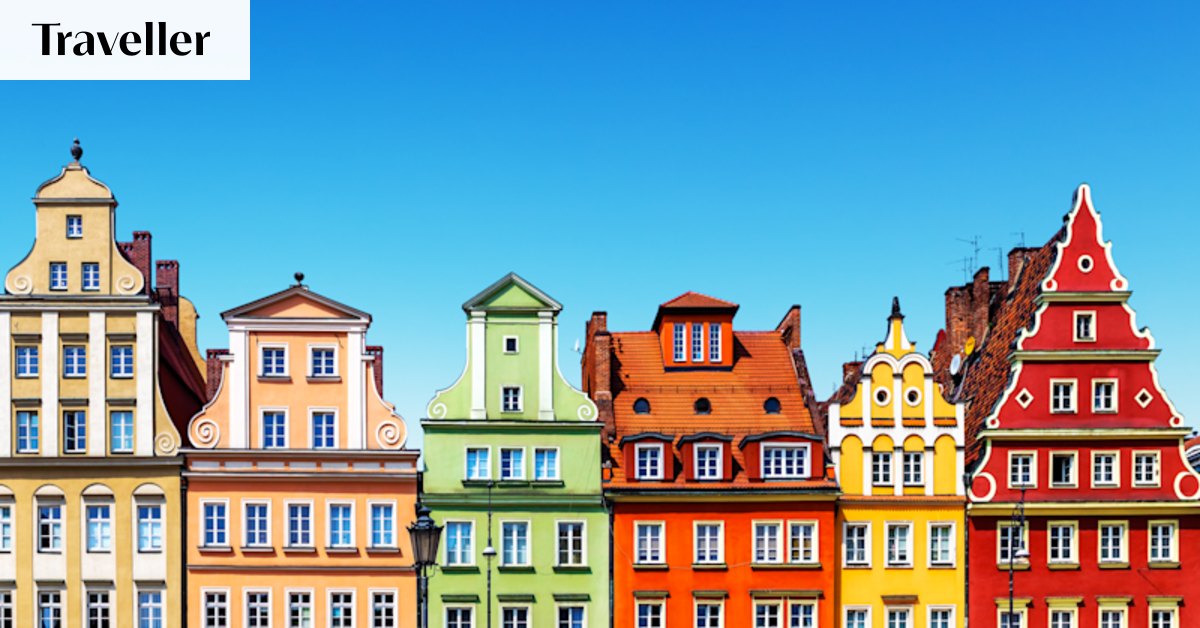
Set in south-western Poland near the border with Czechia, Wroclaw might not slip off the tongue in the same way Krakow and Warsaw do, but it’s a gorgeous city in its own right, known as the “Venice of Poland” thanks to its network of rivers, islands and bridges. Though the historic architecture here is a big draw, this is also a vibrant modern city with plenty to offer all ages. “The beautiful landmarks here reflect centuries of Polish, Czech, Austrian, Prussian, and German influence,” says Piotr Lisowski, a Wroclaw local who works with Intrepid Travel. “There’s also universities, businesses, residents, and a growing number of visitors who contribute to a lively and unique atmosphere. This is a dynamic city that is easy to explore and well-connected to the rest of Europe.”
Where to stay The Hotel Monopol, from $209 a night. See monopolwroclaw.hotel.com.pl
Izmir, Turkey
Istanbul, clearly, is Turkey’s most famous destination – though not, as many people think, its capital. That would be Ankara, its second-largest city. And its third largest? Welcome to Izmir, population almost 5 million, a city enjoying a gorgeous location on the Aegean coast about five hours south of Istanbul, with ferry connections to Athens. Izmir is a historic city, with sites such as the Agora of Smyrna, a well-preserved Roman ruin, and easy access to Ephesus and Pergamon. The city is also known as the heart of Turkey’s street food scene, and an enjoyable place to stroll and explore.
Where to stay the Izmir Marriott, from $375 a night. See marriott.com
with Telegraph, London