
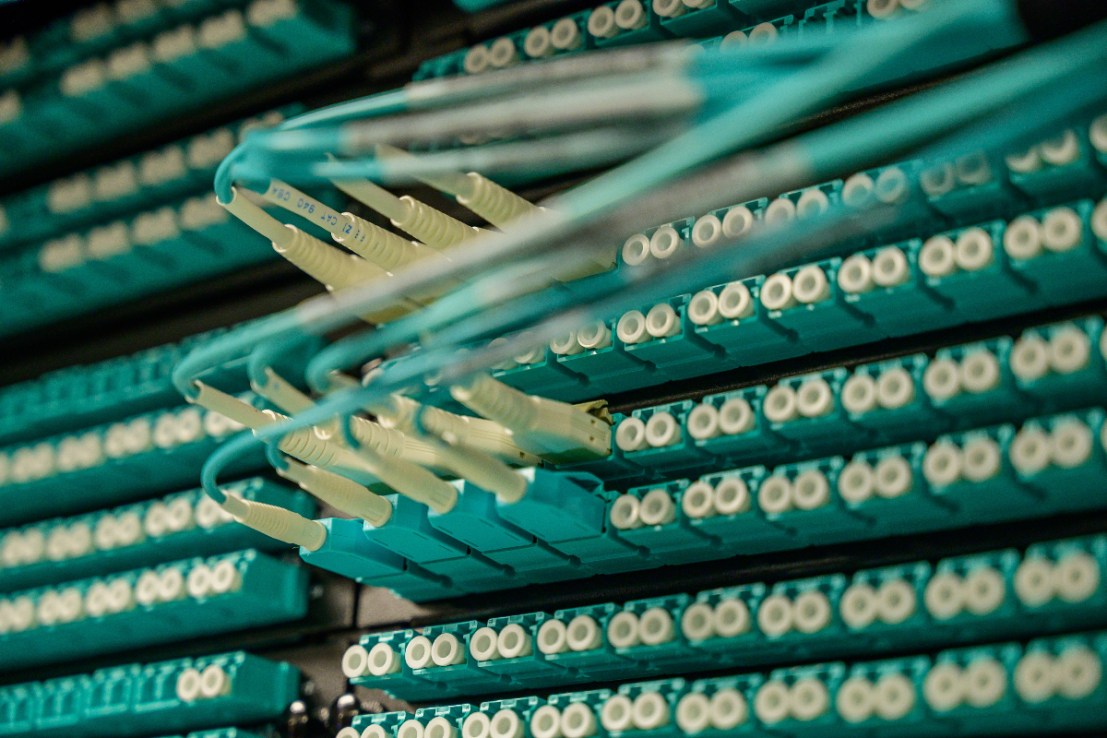
Those looking for the next big thing in a crowded field should look at Credo Technology, the company that provides the connective tissue that knits together AI data centres, writes Abdullah Cheref
By June 2025, everyone chasing the AI boom seemed focused on GPUs. I was more interested in what connected them. Those chips are useless if they can’t actually move data around the server rack.
That’s the bottleneck Credo Technology solves. They build the high-speed interconnects that keep massive data centres from choking. They dominate the advanced copper cables that hyperscalers rely on, giving them strong pricing power. But they aren’t standing still. Through acquisitions like DustPhotonics, they’re expanding that position into optical cables too.
What the money
How did I build conviction before it became obvious? I stopped following the crowd and started looking at where the money was actually going. Instead of chasing headline valuations, I mapped hyperscaler capex and looked for the physical bottlenecks that would benefit.
Credo stood out quickly. While the market was bidding up overextended chipmakers, my framework flagged a company growing revenue 180 per cent year over year, with virtually no debt. It had 67 per cent gross margins, a strong position in data-centre infrastructure, and was already generating real free cash flow, something many AI infrastructure companies couldn’t claim.
The moment it all clicked wasn’t an analyst upgrade. It was standing on an institutional trading floor the morning Credo’s DustPhotonics acquisition broke. As the news hit the wire, the stock jumped 13 per cent.
I watched an $8m buy order flash across a sales trader’s screen. You can’t predict an acquisition from your bedroom. But you can identify the infrastructure changes that make acquisitions like that make sense.
The acquisition showed Credo was pushing beyond its copper business and into optical connectivity. Seeing an institutional desk put serious money behind the same infrastructure shift I’d backed at $73 gave me a different level of confidence in the thesis. I had been early, rather than simply lucky.
Credo Technology: Latest results
However, the bull case comes with real risks. Credo’s top four hyperscaler clients now account for 84 per cent of revenue, with the largest at 33 per cent and the second at 28 per cent as of Q1 FY27. If one of those customers delays an optics deployment, the near-term volatility could be severe.
At 30 times forward earnings, the stock isn’t cheap in absolute terms either. But against a 0.3x PEG ratio and the company’s growth trajectory, I think the valuation still leaves room for further upside if execution continues.
Credo just proved itself again with its Q1 FY27 report, with revenue coming in at $479m, up 115 per cent year on year, and adjusted EPS landing at $1.20. Gross margins held firm at 68 per cent, proof they still aren’t discounting to win volume. But the critical signal was the forward guide. Projecting up to $535m for next quarter tells you that the optical transition is already ramping, and that DustPhotonics is translating into immediate demand. For now, the execution is answering the valuation.
Yet the stock tumbled anyway. After falling 8.65 per cent during the regular session to close at $206.63, shares shed another 10.12 per cent after hours, dropping to $185.72. When a stock runs this hard, it’s priced for perfection. A record quarter and a raised guide weren’t enough to satisfy whisper numbers, giving institutions an easy excuse to book profits. Violent pullbacks are just the price of admission. Look past the immediate noise. The physical demand anchoring my thesis hasn’t changed.
Walking onto that trading floor taught me that institutional investing doesn’t start with a Bloomberg Terminal. It starts with asking the right questions. What had always felt like a closed book became a tangible path. The next test isn’t finding the next Credo. It’s having the discipline to hold through the volatility and let the thesis play out.