
Killarney Brewing set for reopening as new owners reveal a Google search led to €5.5m purhcaseSpirit Capital plan to develop premium Killarney whiskey brand as well as reopening brewery and visitor centre Sat, 12 Sep, 2026 – 06:00Martin Claffey
“The last ticket out of the card machine is still sticking out.”
Walking into the Killarney Brewing and Distilling Company, and its visitor centre, felt like somewhere frozen in time when Spirit Capital project manager Mark Gorman arrived from Switzerland. “It’s very much like walking into a ghost town in some way, but that’s quite exciting.”
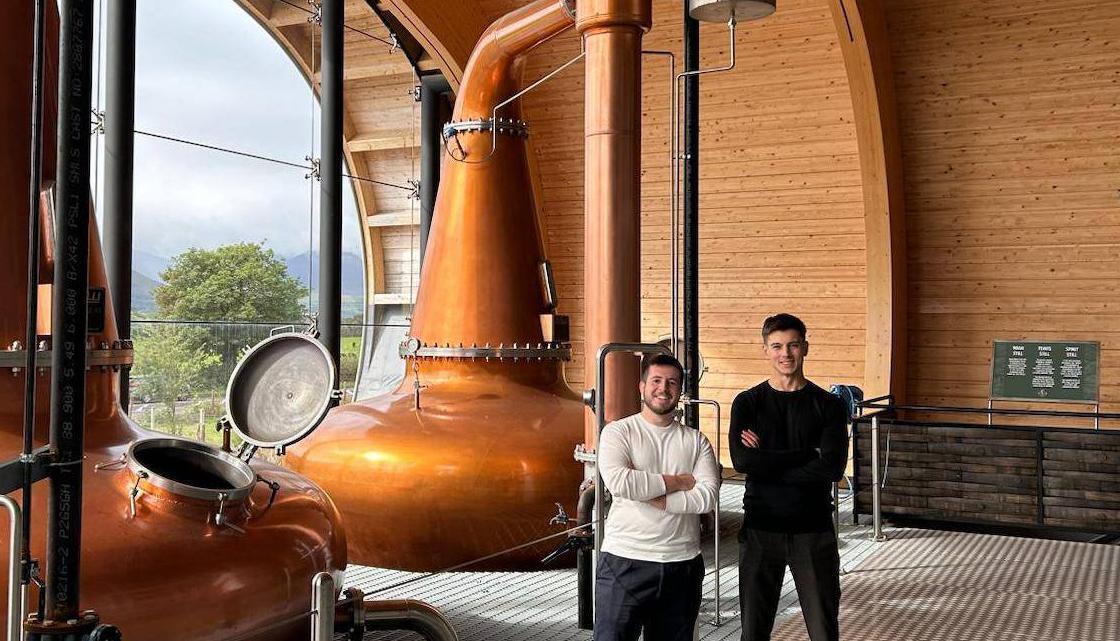
The Killarney Brewing and Distilling Co is now preparing for a new lease of life, as new owners Spirit Capital plan to reopen the brewery and visitor centre in early 2027. Purchased by Spirit Capital in July for a deal worth over €5.5m, the company is currently recruiting a head of production, a distiller, and a brewer.
Renowned in the spirits industry, this will be the first time Spirit Capital has ventured into beer production. The early plan is to revive beer and gin production quickly and get the visitor centre and restaurant back in business, while the longer term vision is to produce a world class Killarney Whiskey for the international market.
“I’m a little bit resistant to calling this a ‘distressed asset’ because that sounds like a sort of private equity group that comes in, puts the money in, flips it, and then somewhere along the way, someone has to lose. That’s not what we do,” said Mr Gorman.
“This is our first international production expansion outside of France. And this is where we want to be for the next 200 years because this facility will outlive me.”
Read More
Tapped out: What went wrong for Killarney Brewing and Distilling?
Irish whiskey industry looks beyond US as Trump tariffs drive global expansion
Blarney Brewing Co expands in Kerry in wake of Killarney Brewing collapse
Spectacular site
The Killarney plan includes reviving the on-site bar and restaurant, as well as developing the 250-capacity function room for full use, both for local and visiting events. Developing the rooftop space into a bar looking out to the Gap of Dunloe is also in the equation. It’s likely the revamp costs will run into millions.
The company is currently in the process of getting Revenue clearance to brew and distill, and is likely to have produced its first beer in November or December 2026. “This is our first brewery in the whole group – the brewery sort of came with the distillery that we were purchasing,” said Mr Gorman.
All going well, it will be a happy new chapter in the tale of Killarney Brewing and Distilling, which had become an Irish business tragedy. Set up by Paul Sheehan, Tim O’Donoghue, and Liam Healy, the trio had high ambitions, grasping the craft brewery zeitgeist and opening the bar and restaurant in Killarney in 2015.
In 2018, the company seemed to be on a winner, with strong investment success and popular produce, and prepared plans for the larger brewery, distillery, and visitor experience. The spectacular tap room and visitor centre opened in 2022, but construction costs and spending had soared in the post-pandemic period, and the fledgling company’s losses soared with them. Hopes of a US partnership failed to materialise, and in April 2025, Killarney went into examinership.
Just three months later, a liquidator was appointed. More than 50 people were left out of work, and the collapse left a trail of creditors, including many locally as well as nationally, and some state bodies, including Kerry County Council and the Revenue Commissioners, with the company owing a reported €8m.
In such circumstances, what’s left on site for the new owner can be stripped to the bones. Not so in Killarney.
“Receivership can be sort of like putting a wallet through a washing machine: getting bits there and here at the end. But I have a huge amount of respect for the condition in which the building has been left,” said Mr Gorman, who has been on site in Killarney for the past four weeks.
“The brewers and distillers took care of the kit and everything is clean, hygienic, in really, really good nick. That’s rare when you buy something out of receivership.”
The 5,760sq m premises at Fossa, had been on sale guiding in excess of €5.5m. In May 2026, Spirit Capital announced they had acquired the site. “Our goal as a group is to make excellent spirits and we have 200 years of doing that,” said Mr Gorman.
Who are Spirit Capital Group?
The Spirit Capital Group is headquartered in Switzerland but its products are primarily produced in France, mainly targeting the premium brand sector. Calvados is the French brandy made from apples instead of grapes, and Spirit’s portfolio includes three Calvados: Calvados Boulard which is exported to 80 countries and is a favourite of duty free export; Calvados Pays D’Auge, and Père Magloire Calvados. “In Ireland, everyone knows Jameson whiskey. In France, everyone knows Père Magloire Calvados,” said Mr Gorman. The group also produces Armagnac Le Marque and Grand Armagnacs Janneau.
“We’re not Diageo and we’re not Pernod Ricard,” he says. “We prefer to be leaders in smaller categories, and we prefer to be a big fish in a small lake than try to dominate the world.”
The Irish investment will be a new departure for Spirit Capital. They haven’t produced beer before, nor whiskey. How Spirit’s new addition joined its heritage brand portfolio was a stroke of luck, a digital stumble on to a hidden gem.
“The next step for us naturally was to get into grain spirit, which is why we were looking to see where could we expand,” said Mr Gorman. “We looked at Scotland a bit, but the focus had always been Ireland because of the historic connection of distilling and the way that the spirits lend themselves to aging as well.
A Google search hit
“But how we actually came across this site was simply me doing a Google search for ‘distillery for sale’. It was a sort of curiosity, and this thing came up in the search. I thought, ‘this looks interesting’,” said Mr Gorman.
“The next week, we were on a flight into Kerry Airport. We put in an offer that same day. That was in December in 2025. And then this is where we are now. We can see that there’s an asset which we can take and which we can take care of for the next 200 years, and this was a no-brainer for us.”
Mr Gorman has emphasised patience in the Spirit Capital plan. “We have the luxury of not having to rush,” he said. “Whiskey takes years to age. We are not thinking: ‘how can I get my money out in three years?’ We have the luxury of doing things step by step. I’ve had a carpenter come around and fix tiny holes in the floor, to make sure it’s perfect. We’ve had people slowly bringing things right back up to scratch, from the boilers up. Making sure we get every step right was the key for us.
“And if we get the small things right, the whole picture falls into place. My goal is to make the best whiskey we can and then expand. The same with the beer.
“Do I need to make a million bottles of beer a year? No, I need to make the best beer that we can, and then we expand. That’s the difference really. It’s not to get something out the door and on the shelf as quick as possible, it’s about making the best thing possible. The best brand, packaging. And the getting out of the door bit, we have the small luxury of having our French distribution network, which is now in 97 countries.
“We can piggyback on that, and it works both ways, because whiskey is much easier to sell than Calvados, but we’re very good at selling Cavados, and one thing pushes the other. In markets where we’re less present, for example, we can lead with the whiskey, and in markets where we are very much established and we know our brand and our quality and our products, we can add the whiskey to those portfolios.”
Canada is among the strong transatlantic markets currently for Spirit Capital but the US isn’t currently a primary market. With the US being is the world’s largest whiskey market – 38% of Ireland’s €930m export market goes there, despite the ongoing turmoil surrounding US president Donald Trump’s tariffs – it could offer opportunity to the company with a well executed Killarney Whiskey.
The Fossa plant has the capacity to produce close to five million bottles of whiskey annually.
“I think we’ll definitely start Ireland and locally and make sure it’s a product that the locals can be proud of, first of all. Then we can look at our more established markets, France and beyond. There’s no point in creating something that doesn’t meet our quality standards. We distill only premium spirits. There’s a lot of craft that goes into a bottle and we want to make sure that the first thing that goes into it is quality.”
The global alcohol market is in a downturn. Pernod Ricard, maker of Jameson, reported a 3.9% organic sales decline in the first half of 2026 (after ‘soft’ demand in the US and China and disruption from the Middle East. Despite the success of Guinness, Diageo has begun a cost-cutting strategy globally as it wrestles with market challenges. Brown Forman, maker of Jack Daniels, this week said alcohol demand, especially in developed markets, will continue to remain under pressure in 2026, and likely 2027. But Mr Gorman said experience has shown the industry is “cyclical, as it’s always been. Now it’s a little bit slower, but we need to be ready once demand picks up again, which we’re already seeing.”
Spirit Capital continues to think big, and outside the box. They have a partnership in the UK with the luxury group Tudor Hotels Collection, and in Cornwall, they are creating a Cornish whiskey made from locally grown grain, to be distilled at Bodmin Jail, which is part of a whole visitor experience which already draws 120,000 people annually. Another of their visitor experience crossovers, much like Killarney.
‘The luxury of time’
Of course, the previous owners back in Fossa also had ambitious plans for Killarney Brewing and Distilling Co, which ended badly. What’s to stop a repeat for Spirit Capital? “I have a lot of respect for the previous guys and I don’t think it was a complete failure, I think they sort of found themselves in the wrong place at the wrong time,” said Mr Gorman. “They couldn’t export to the US which we felt a little bit as well but we’re very lucky to be coming at this with a big base behind us.
“We know how to run a distillery, and with hospitality: we have several restaurants around France as well that are with the distilleries. We have the Calvados Experience visitor centre (an immersive experience attraction at Pont-l’Évêque in Normandy), which is a little bit Disneyland, but very good nonetheless. I think we bring experience but also a kind of Swiss precision that we can do it step by step, and get every single thing right. I think the way the previous guys had it capitalised made them rush.
“That’s quite a fragile structure to have. We’re lucky to be in a position where we have the luxury of not rushing again. It’s the luxury of time, I think, that’s what makes our situation different.
“We’re not a public listed company. Spirits take time. We are thinking about what will Killarney Whiskey be like in 10 or 20 years, not what are we going to push out the door next May.”
x
185th Anniversary Offer
Six months of digital access for €18.50
Already a subscriber? Sign in
No obligation. Ts&Cs apply.
CONNECT WITH US TODAY
NEWSLETTERS
NOTIFICATIONS
Be the first to know the latest news and updates
The Deirdre O’Shaughnessy Podcast: The lasting impact of 9/11 on the people of New York
Eoin Warner: Nature is my refuge in times of intense grief — and times of joy and wonder
Meet the new generation of farmers adapting to an evolving world: ‘It’s a very different way of farming’
More in this section
Apple’s new foldable iPhone will cost almost €2,400: So who is it for?
Michael O’Leary expects airlines to cut winter capacity due to fuel prices
S Business movers: New managing partner for law firm DLA Piper
#Insight#Kerry – News