
Advertisement
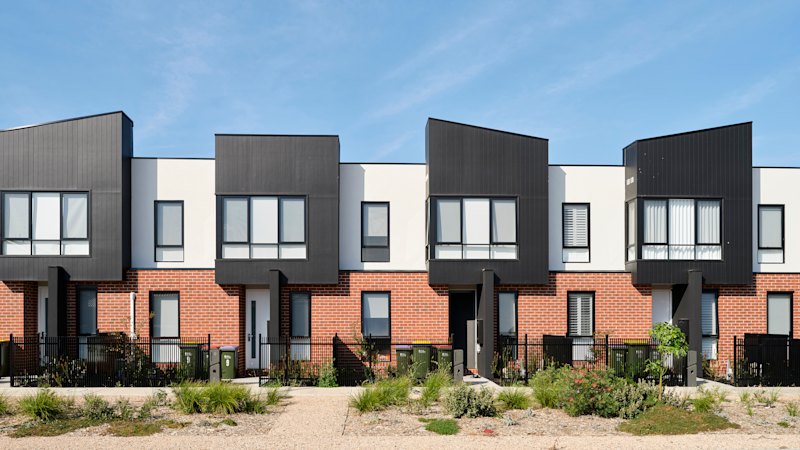
Victorian landowners who want to subdivide their property and build four homes on a single block will be able to get approval within just two weeks.
Planning Minister Sonya Kilkenny announced the change on Wednesday, and said fast-tracking subdivisions would bypass council processes, complex paperwork and lengthy approvals to boost housing supply in Victoria.
Labor has also once again opened the door to reviewing stamp duty, the tax paid on the purchase of homes, which economists have long argued is highly inefficient. The party’s new platform has vowed to consider its effectiveness.
Kilkenny’s planning overhaul will result in subdivision applications that meet building codes being approved within 10 business days, much faster than the existing process, which can take more than two months. There is no minimum block size for subdivision.
Advertisement
The government last year implemented a 10-business-day approval process for landowners subdividing a property in half, which it said had prompted a 50 per cent increase in applications for townhouses and low-rise developments.
“It’s a small step, but it’s going to make a difference,” Kilkenny said of the latest move.
“That means four homes that comply with the townhouse code will be approved in 10 days. Council will not be able to object to the planning application.”
Kilkenny made the announcement at a housing policy debate hosted by the Australian Property Developers Association on Wednesday.
Advertisement
Opposition housing spokesperson David Southwick, One Nation’s Victorian leader Warren Pickering and Family First’s Alex Van Der End were also present at the debate, moderated by former ABC journalist Michael Rowland.
Van Der End replaced Greens housing spokesperson Gabrielle de Vietri, who was absent attending to a family medical situation, the audience was told. Southwick and Pickering received a generally warm reception from the crowd of property developers compared with Kilkenny, who has served as planning minister for nearly four years.
In 2023, the state government pledged to build 800,000 homes over the next decade, including through higher density activity centres around transport hubs in established suburbs. Kilkenny defended Labor’s record, despite only about 50,000 homes being built annually since then, below its 80,000 target.
“Every state in Australia and nations around the world are struggling with this issue of a housing challenge,” she said.
Advertisement
Housing was a key feature in the Labor Party’s new policy platform, which noted the party would work to “support fast approvals for planning applications, building on reforms already made”.
The platform also stated Victorian Labor would work to “consider the effectiveness of stamp duty”, a tax paid to the government on property sales that is a major source of revenue. It is due to bring in $10 billion this financial year, according to budget forecasts.
Labor has abolished stamp duty for homes under $600,000, and it is applied at lower rates for properties up to $750,000.
While the policy platform included a foreword from Premier Ben Carroll, it was created by the Labor Party in consultation with stakeholders and does not necessarily represent future government policy.
Advertisement
Property industry figures argue government red tape and taxes have restricted their ability to deliver housing for Victorians. Kilkenny acknowledged there were challenges facing the sector, but pointed to construction material costs and also “events that are happening elsewhere in the world”.
“I will talk up Victoria because I know that Victoria is the fastest-growing economy over the past 10 years,” Kilkenny said during the debate.
“One in three first home buyers in Australia are from Victoria. We have the most affordable homes for first home buyers. We have the most affordable rent here in Victoria.”
The Coalition, if elected, will abolish stamp duty for homes up to $1 million and focus on lowering property taxes, boosting supply in outer-urban greenfields and expanding high-density housing in the inner city.
Advertisement
Southwick said the Coalition would offer certainty and hope to property developers, guaranteeing that it would not impose new or increased taxes on the industry should it form government after November’s state election.
Southwick said the government’s plan to build high-density housing around activity centres was “trying to redirect people” to established suburbs, rather than letting demand guide supply.
“If people want to live in an apartment in inner Melbourne, then great. If someone wants to live in high rise, low rise, great,” he said. “I think it’s important for the market to dictate that.”
He also said property developers should be consulted more often.
Advertisement
“We need to build homes alongside the people in the room today,” Southwick said.
Pickering also said property taxes and red tape needed to be cut.
“We’re seeing red, blue, black and green tape become an impediment to all projects across the state,” he said.
Pickering said a One Nation government would impose a “two-out-one-in policy” on red tape to reduce regulation. He said businesses should receive a guarantee from the government that regulatory goalposts would not shift in the time between approvals and delivery.
Start the day with a summary of the day’s most important and interesting stories, analysis and insights. Sign up for our Morning Edition newsletter.
You have reached your maximum number of saved items.
Remove items from your saved list to add more.
More:
Angus Delaney is a state political reporter at The Age. Email him at [email protected] or contact him securely on Signal at angusdelaney.31Connect via email.AdvertisementAdvertisement